
Synthetic Oil vs. Conventional Oil: What Changes Under the Hood
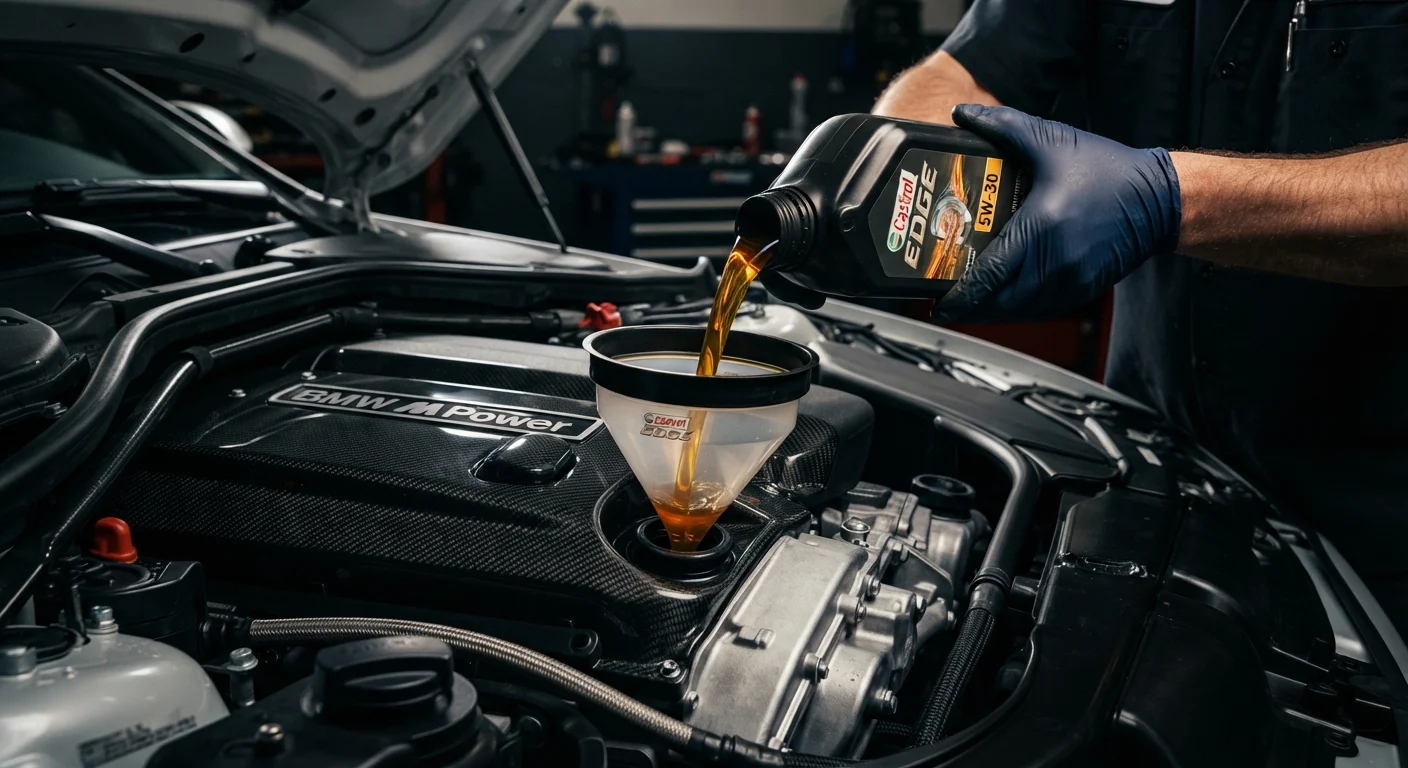
Photo credit: TopInfoTabs.com | Easy Insights For Inspiration
In this article
A side-by-side look at how synthetic and conventional motor oils perform differently across temperature, longevity, and engine protection.
Key Takeaways
- Synthetic oil is refined and chemically engineered, giving it more uniform molecules than conventional oil.
- Synthetic oil generally lasts longer between changes - often 7,500 to 10,000+ miles versus 3,000 to 5,000 for conventional.
- Conventional oil can be appropriate for many older or low-stress engines when changed on schedule.
- Temperature performance is a key differentiator - synthetic flows better in cold starts and resists breakdown in heat.
- Always follow your vehicle manufacturer's oil specification, not just general advice.
How These Two Oils Are Made - and Why It Matters
Conventional motor oil starts as crude petroleum that's extracted, refined, and blended with additive packages. The refining process removes many impurities, but the resulting oil still contains molecules of varying sizes and shapes - a structural inconsistency that affects how oil behaves under pressure and temperature stress.
Synthetic oil takes a different path. It's either built from scratch using chemical synthesis or produced by further processing a petroleum base into a far more uniform molecular structure. That consistency is the key engineering advantage: the molecules flow more predictably, resist breakdown longer, and perform more reliably at temperature extremes. Full synthetics and synthetic blends (partial synthetic, partial conventional) sit between the two ends of this spectrum.
For a deeper look at how viscosity grades interact with oil type, see our engine oil explainer.
| Criterion | Synthetic Oil | Conventional Oil |
|---|---|---|
| Base material | Chemically engineered molecules | Refined crude petroleum |
| Cold-start protection | Flows faster at low temps | Slower to circulate when cold |
| Heat resistance | High - resists thermal breakdown | Moderate - degrades faster under heat |
| Typical change interval | 7,500-10,000+ miles (varies by vehicle) | 3,000-5,000 miles (varies by vehicle) |
| Sludge resistance | High | Lower over extended use |
| Modern engine compatibility | Required by many new engines | Suitable for many older engines |
| Cost per quart | Generally higher | Generally lower |
Temperature, Longevity, and Engine Protection
Cold-weather performance is one of the starkest differences. At start-up, oil must circulate quickly before metal surfaces make unlubricated contact - the moment when most engine wear occurs. Synthetic oil's uniform molecules allow it to flow faster at low temperatures, reducing that critical gap between ignition and full lubrication.
At the other extreme, engine heat causes oil to oxidize and thin out. Conventional oil's more varied molecular structure makes it more susceptible to thermal breakdown, forming sludge and varnish deposits over time. Synthetic resists this degradation longer, which is why it can support extended drain intervals - commonly 7,500 to 10,000 miles or more, versus the 3,000-5,000 mile guidance often associated with conventional oil.
~40%
Engine wear occurs at cold start
Industry engineers widely cite cold-start lubrication as the period responsible for a disproportionate share of total engine wear over a vehicle's life.
7,500-10,000 mi
Typical synthetic oil change interval
Many vehicle manufacturers now specify extended drain intervals for full synthetic oil; always verify against your owner's manual.
It's worth noting that the old "change every 3,000 miles" rule is a common misconception for modern vehicles. Our article on car maintenance myths covers this and other frequently misunderstood service intervals.
Which Oil Does Your Engine Actually Need?
The most reliable answer is in your vehicle's owner's manual. Manufacturers engineer engines around specific oil specifications - including viscosity grade and oil type. Many turbocharged, direct-injection, and high-performance engines now require synthetic oil by design. Using conventional oil in an engine specified for synthetic isn't just suboptimal; it can void warranty coverage or accelerate wear.
For older vehicles with higher mileage, the choice isn't always clear-cut. Some aged engines with worn gaskets or seals may actually respond better to conventional oil, which can be slightly thicker in ways that help seal small gaps. A qualified mechanic can evaluate your specific engine's condition before any switch.
Mixing Synthetic and Conventional Oil
Synthetic and conventional oils are chemically compatible - mixing them won't cause immediate engine damage. However, mixing dilutes the performance advantages of synthetic. If you top off with conventional oil in a pinch, plan to complete a full oil change at the next service interval. Always confirm the oil type and viscosity grade your vehicle requires before adding any oil.
Driving behavior also plays a role. Stop-and-go city driving, towing, extreme temperatures, or sustained high-RPM operation all put greater stress on oil - conditions where synthetic's durability advantage becomes more meaningful in practice.

Author
Cars & Driving Editorial Team
Cars & Driving Editorial Team is the collective byline for our editorial team and contributor network. Articles published under this byline or an editorial pen name are researched, written, and reviewed according to our editorial standards for clarity, consistency, and independence before publication.
View all articles →