
Dress Codes Decoded: Casual, Smart Casual, and Business Casual Side by Side
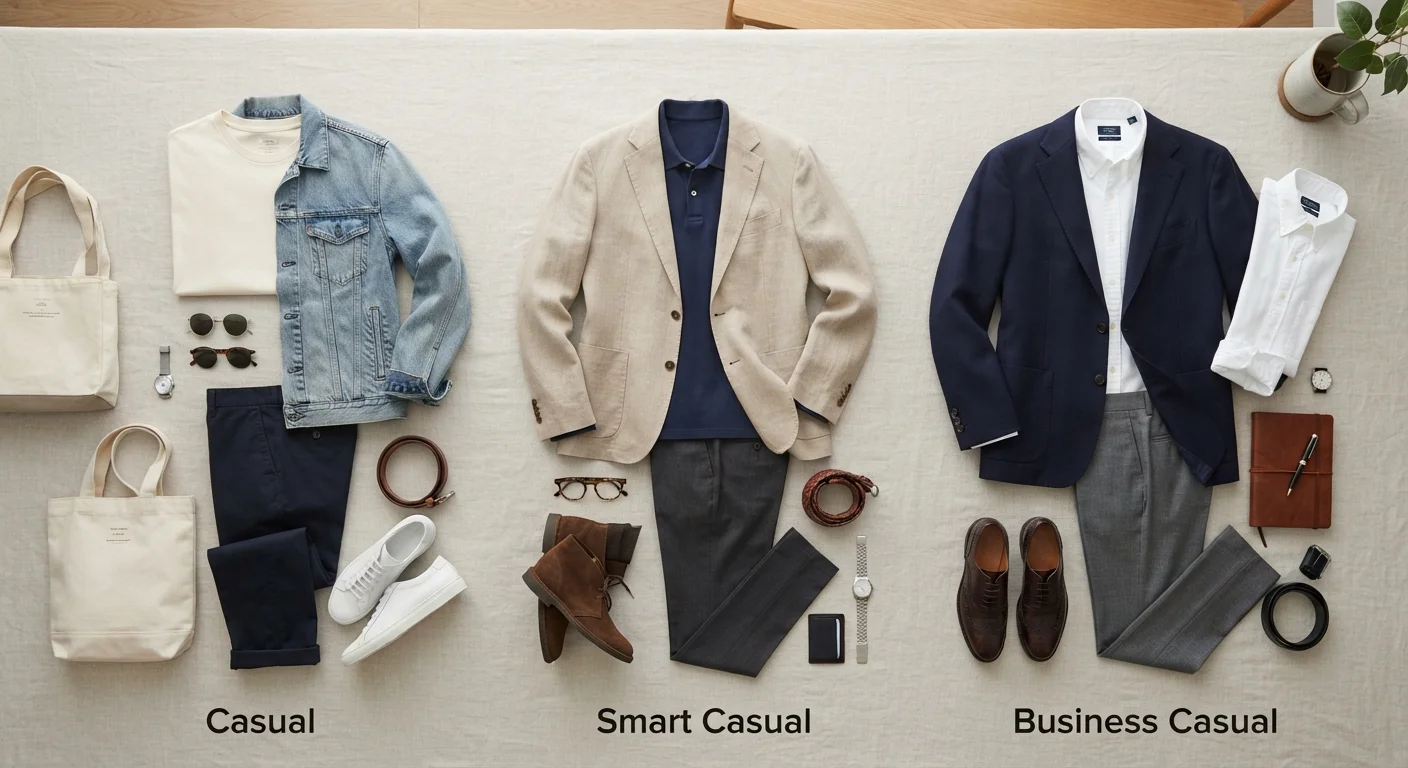
Photo credit: TopInfoTabs.com | Easy Insights For Inspiration
In this article
Confused by vague dress code labels? This side-by-side breakdown clarifies the real differences so you can dress appropriately with confidence.
Key Takeaways
- Casual, smart casual, and business casual exist on a spectrum - each has distinct signals that go beyond just 'dressy' or 'relaxed.'
- Context and industry matter enormously; business casual in a law firm looks different from business casual at a tech startup.
- A handful of versatile pieces can cross all three categories depending on how they're styled and combined.
- When in doubt, dressing slightly more polished than the stated code is almost always safer than underdressing.
Why These Three Labels Cause So Much Confusion
Ask ten people what "smart casual" means and you'll likely get ten different answers. Unlike black tie - which has a fairly clear rulebook - these mid-range dress codes were never formally defined, which is exactly why they trip people up. They evolved organically across different industries, regions, and social contexts, and they've shifted considerably as workplace norms have relaxed over the past two decades.
The confusion is real, but it's also solvable. Rather than memorizing a rigid checklist, it helps to understand the intent behind each code: what impression is it meant to create, and for what setting? Once you reframe dress codes as communication tools rather than arbitrary rules, choosing the right outfit gets a lot more intuitive. For a broader look at dressing across different contexts while keeping your personal style intact, see how to adapt your look to different settings.
Breaking Down Each Dress Code
Casual
Casual is the most relaxed of the three - but that doesn't mean anything goes everywhere. True casual dressing prioritizes personal comfort and self-expression over any external expectation. Think well-fitting jeans, T-shirts, sneakers, hoodies, and joggers. The key qualifier is well-fitting: casual doesn't mean sloppy. Clothes that are clean, intact, and appropriately sized still signal self-respect without requiring any formality.
Smart Casual
This is where most of the confusion lives. Smart casual asks you to look intentional and put-together without tipping into office territory. It bridges the gap by pairing relaxed pieces with elevated ones - a structured blazer over a clean white tee, chinos with leather loafers, or a midi dress with minimal accessories. The word "smart" is doing real work here: it implies a conscious, considered approach to your outfit rather than whatever was on the floor.
Business Casual
Business casual signals professionalism without requiring a full suit. It typically means tailored trousers or neat chinos, button-down shirts or blouses, structured dresses or skirt suits, and closed-toe shoes. Denim is usually a no (though some relaxed workplaces have loosened this), and loud logos or athletic wear are generally out. The challenge is that "business casual" reads differently by industry: a financial firm and a design agency may use the same label but expect very different outcomes.
| Casual | Smart Casual | Business Casual | |
|---|---|---|---|
| Typical setting | Everyday errands, weekends, informal gatherings | Dinners out, social events, creative offices | Traditional workplaces, client-facing roles |
| Bottoms | Jeans, joggers, shorts | Chinos, dark jeans, tailored trousers | Tailored trousers, neat chinos, skirts |
| Tops | T-shirts, hoodies, casual tees | Blouses, button-downs, smart knits | Button-downs, blouses, structured tops |
| Footwear | Sneakers, sandals, slip-ons | Loafers, ankle boots, clean sneakers | Flats, loafers, heels, dress shoes |
| Outerwear | Denim jacket, hoodie, casual coat | Blazer, leather jacket, trench coat | Structured blazer, tailored coat |
| Denim allowed? | Yes - any wash or style | Yes - dark, clean, well-fitted | Rarely - industry-dependent |
| Formality level | Low | Medium | Medium-high |
The Pieces That Work Across All Three
A well-curated wardrobe doesn't need three separate sections for each dress code. Certain pieces are genuinely chameleon-like depending on how you style them. Dark, well-fitting jeans, for example, can read as casual with a graphic tee, smart casual with a tucked-in blouse and ankle boots, or even business casual in more creative industries when paired with a blazer.
A tailored blazer is perhaps the single most versatile item in this context. Thrown over a simple outfit, it immediately shifts the formality dial upward without feeling stiff. Similarly, clean leather or leather-look sneakers can navigate between casual and smart casual with ease, while a structured tote bag elevates almost any look. For a deeper look at pieces that genuinely transition across settings, discover the types of garments that truly work across multiple settings.
Style Your Staples Smarter
Before buying new pieces specifically for a dress code, try restyling what you already own. A blazer, a pair of dark trousers, and one quality shoe option can collectively unlock smart casual and business casual looks from an otherwise casual wardrobe. Building up rather than starting over is almost always the more practical - and sustainable - approach.
Reading the Room When the Code Is Ambiguous
Real life rarely comes with a detailed dress code explanation. Wedding invitations say "cocktail attire" or nothing at all. Job listings describe culture as "casual" but interview in structured offices. Here are a few practical approaches when you're unsure:
- Default up, not down. When in doubt, being slightly overdressed is almost universally more forgivable than being underdressed in professional or social settings.
- Research the environment. If you're interviewing or attending an event at a specific organization, look at how people dress in their public photos or social media presence.
- Ask directly. For events especially, there's nothing awkward about asking the host what they envision. Most people appreciate that you care enough to ask.
- Use the occasion type as a guide. A daytime outdoor gathering skews casual; an evening dinner party skews smart casual or above.
Your personal style doesn't have to disappear within any of these codes. Conventional dressing rules are full of assumptions - the goal is always to wear what genuinely suits you within a given context, not to perform someone else's idea of appropriate.

Author
Style & Beauty Editorial Team
Style & Beauty Editorial Team is the collective byline for our editorial team and contributor network. Articles published under this byline or an editorial pen name are researched, written, and reviewed according to our editorial standards for clarity, consistency, and independence before publication.
View all articles →