
Dressing for Different Contexts Without Losing Your Style Thread
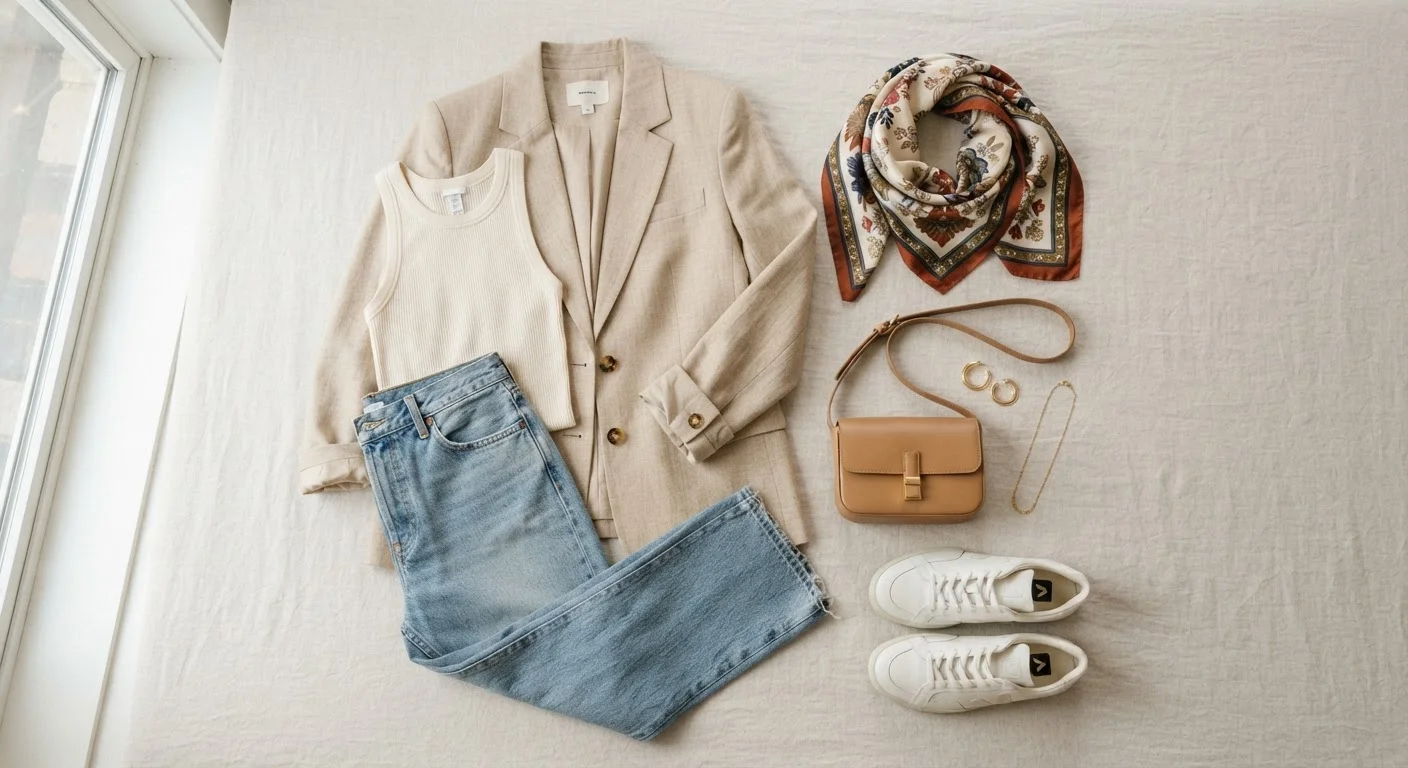
Photo credit: TopInfoTabs.com | Easy Insights For Inspiration
In this article
Work, weekends, formal events — how to adapt your look to different settings while keeping your underlying aesthetic coherent and recognisable.
Key Takeaways
- A personal style thread is a consistent set of aesthetic signals - colour, silhouette, mood - that persists across contexts.
- Context adaptation is about shifting register, not abandoning your identity entirely.
- Versatile anchor pieces make moving between work, weekends, and formal settings far less stressful.
- Knowing your core preferences simplifies getting dressed without endless second-guessing.
- Style longevity comes from self-awareness, not trend-chasing.
What a Style Thread Actually Means
Think of your style thread as the invisible line connecting every outfit you wear - the recognisable quality that makes a photo of you at a wedding and a photo of you at brunch both unmistakably you. It isn't a uniform or a rigid set of rules. It's a constellation of preferences: the colours you keep returning to, the silhouettes that feel like home, the mood you want to project without having to explain it.
The challenge most people face isn't that they lack style - it's that they feel pressured to compartmentalise it. Work you becomes someone else. Party you becomes someone else again. The result is a wardrobe full of outfits that don't feel connected, and a persistent low-level anxiety about getting dressed.
If you're still working out what your thread even is, Building a Style Identity from Scratch offers a solid starting point before diving deeper here.
Identifying Your Core Aesthetic Signals
Before you can carry your style across contexts, you need to know what it actually consists of. Aesthetic signals tend to cluster into a few categories:
- Palette: Are you drawn to muted earth tones, crisp monochromes, or saturated colour? Most people have a natural gravitational pull toward a relatively narrow range - even if they don't consciously name it. Neutral Colours vs. Bold Colours can help you map where you land.
- Silhouette: Relaxed and fluid, or structured and tailored? A mix of both? Your silhouette preference often stays stable even when individual pieces change.
- Texture and fabric mood: Matte linens, glossy satins, worn-in denim - texture communicates tone before anyone reads a detail.
- Finishing touches: Minimal or layered accessories? Polished shoes or casual ones? These micro-decisions accumulate into a signature.
Write these down. Genuinely. The act of articulating your signals makes them portable - you can apply them to any context deliberately rather than by accident.
Try the "three outfit test" when auditing your closet: pick an item and quickly imagine three different outfits across three different contexts. If you can't get to three, the piece may be limiting your range more than you realise.
Versatility is most easily measured in combinatorial potential - how many different contexts a single piece can serve, not just how many times you've worn it.
When shopping, carry a phone photo of two or three current outfits you genuinely love. Hold a potential new piece up against them mentally - does it share your palette, silhouette, or texture family? If not, pause before buying.
Visual reference anchors you to your actual style signals rather than in-store lighting and trend pressure, which are both notoriously persuasive in the moment.
Mapping Contexts Without Losing Yourself
Every context has an unspoken dress code - not just the formal ones. A creative office, a weekend farmers market, a black-tie dinner, and a casual friend's birthday all carry different register expectations. The goal isn't to ignore those expectations; it's to meet them on your own terms.
A useful mental model: think of context as adjusting the volume of your style, not the station. You're not switching from jazz to heavy metal - you're turning it up or down, making it louder or quieter for the room.
For a clearer breakdown of how dress codes actually differ day to day, Dress Codes Decoded is worth bookmarking.
Context Adaptation Is Not Compromise
Meeting a dress code isn't the same as erasing your style identity. Every creative constraint - a formal event, a conservative office - is also an invitation to find how your aesthetic works within new parameters. Many people find that constraint sharpens rather than limits their sense of self.
The most important question to ask in any new context isn't "what do people here wear?" - it's "how can I meet this room's expectations while keeping at least one aesthetic signal that's mine?" That might be your palette, your shoe choice, or a specific accessory. One anchor is enough.
Building a Wardrobe That Travels Between Worlds
A context-fluid wardrobe isn't a capsule wardrobe in the minimalist-magazine sense - it's a wardrobe built around pieces with genuine range. The distinction matters: range comes from cut, quality, and styling potential, not from being generically inoffensive.
Some characteristics to look for in high-range pieces:
- Neutral or signature-palette base: Pieces in your core colours naturally integrate across outfits and contexts.
- Clean construction: Well-cut basics read as intentional whether dressed up or down.
- Styling flex: A piece that can be tucked, layered, belted, or worn differently across looks is doing more work than one that only functions one way.
For a deeper look at which garment types genuinely bridge day and evening, Clothes That Do Double Duty is a practical companion read. And if you want to take the guesswork out of getting dressed on busy mornings, Getting Dressed Faster Without Sacrificing How You Look covers wardrobe organisation and outfit formulas that save real time.
80%
Of wardrobe items rarely or never worn
Research by wardrobe consultants and consumer behaviour studies consistently suggests most people wear a small fraction of what they own on a regular basis.
3-5
Core aesthetic signals most people settle on
Style practitioners generally observe that a coherent personal aesthetic typically centres on a small cluster of consistent preferences in colour, silhouette, and texture.
Practical Outfit Formulas for Each Context
Formulas aren't about being boring - they're about removing friction so your style thread does the heavy lifting. Here's how to build one for each major context you navigate:
Professional Settings
Start with your silhouette preference in a structured form. If you love relaxed fits, look to wide-leg trousers in a refined fabric rather than sweats. Keep your palette consistent, and let footwear elevate the overall register.
Casual / Weekend
This is where your thread gets to breathe most freely. Lean into your texture preferences and bring in any bolder palette moments you tone down elsewhere. The formula: one anchor piece in your signature style + comfortable base + one intentional detail.
Formal Events
Formal doesn't mean anonymous. Your silhouette preference and palette can absolutely translate - a structured gown in your signature earth tones, or a sharp suit in a colour you love. Focus the "formality" in fabric weight and finish rather than abandoning everything familiar.
One Signature Detail Goes a Long Way
Even in the most formal or constrained dress context, you can usually preserve one personal aesthetic signal - a distinctive watch, a shoe in your signature palette, or a particular fabric texture. That single anchor is enough to feel like yourself rather than a costume. Over time, these consistent details become part of how people recognise your style.
Dressing for Your Body Shape is also worth revisiting here - many outdated rules are context-specific and don't hold up across the board.
Keeping Your Style Thread Strong Over Time
Style threads evolve - that's healthy. What you want to avoid is reactive dressing, where every trend cycle or new job pulls you in a direction that doesn't actually reflect who you are. The best safeguard is the habit of dressing with intention - making decisions from your aesthetic centre rather than from anxiety or external pressure.
A practical check: before adding something new to your wardrobe, ask whether it shares at least two signals with what you already own and love. Not as a rigid gate, but as a moment of deliberate reflection.
For a broader look at what separates a durable aesthetic from a passing phase, Style Longevity is an honest, useful read. Your style thread isn't something you build once and archive - it's a living practice of knowing yourself and letting that knowledge show.
“Style is a way of saying who you are without having to speak.”
— Rachel Zoe, Fashion designer and stylist

Author
Style & Beauty Editorial Team
Style & Beauty Editorial Team is the collective byline for our editorial team and contributor network. Articles published under this byline or an editorial pen name are researched, written, and reviewed according to our editorial standards for clarity, consistency, and independence before publication.
View all articles →