
Getting Dressed Faster Without Sacrificing How You Look
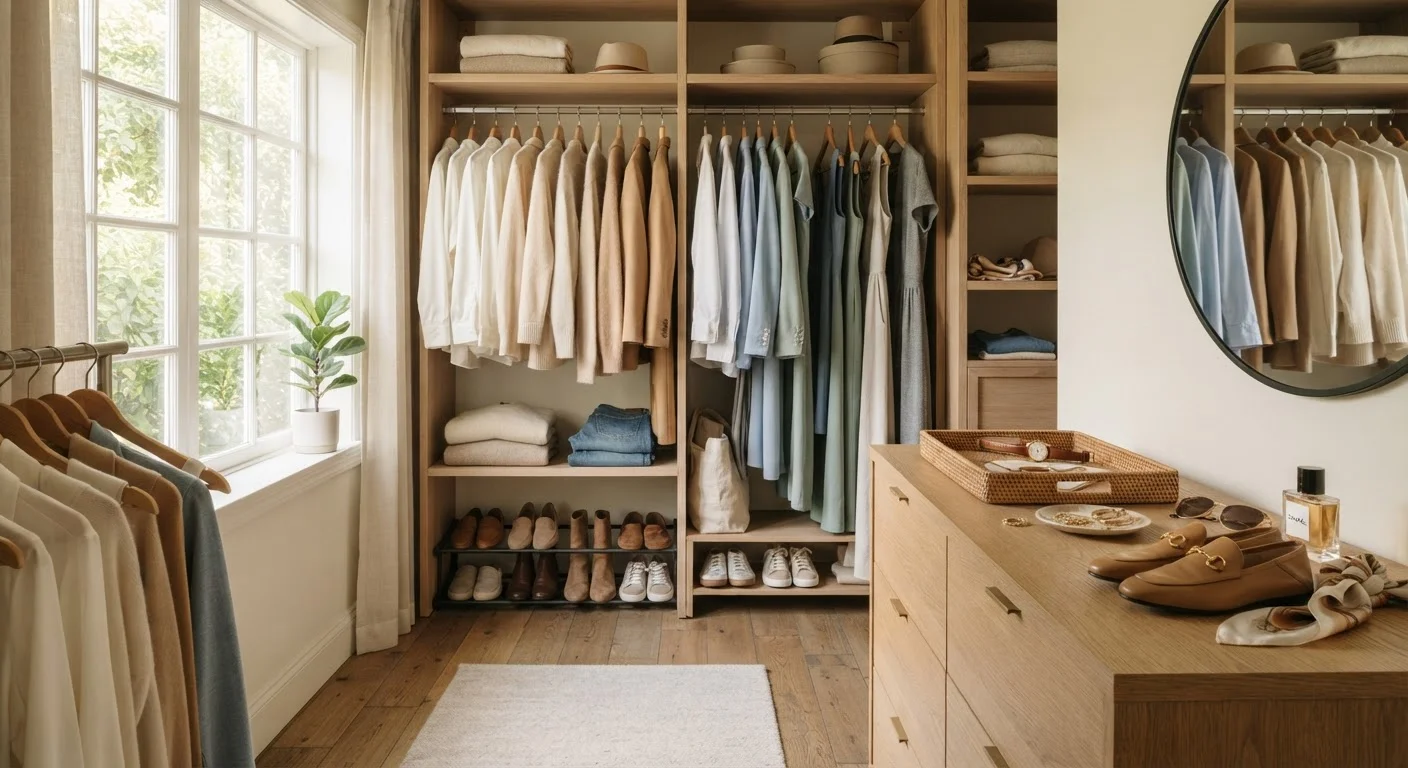
Photo credit: TopInfoTabs.com | Easy Insights For Inspiration
In this article
Practical steps to streamline your morning routine — from organising your wardrobe to building outfit formulas that take the guesswork out of getting ready.
Key Takeaways
- A decluttered, organized wardrobe cuts decision time dramatically every single morning.
- Outfit formulas - reliable clothing combinations - eliminate daily guesswork without sacrificing style.
- Planning outfits the night before is one of the highest-impact habits you can build.
- Versatile pieces that work across multiple settings reduce the number of decisions you face.
- Confidence in how you dress comes from systems, not from owning more clothes.
Why Getting Dressed Takes Longer Than It Should
For most people, the time lost in the morning isn't spent actually getting dressed - it's spent making decisions. A crowded closet full of mismatched items, no clear plan, and the low-grade pressure to look pulled-together combine to create a friction loop that's hard to escape when you're already watching the clock.
The good news is that this is almost entirely a systems problem, not a style problem. You don't need more clothes, a bigger closet, or a natural talent for putting outfits together. What you need are a few lightweight habits that front-load the thinking so your mornings run on autopilot.
This guide walks you through exactly that - practical steps you can start acting on today, without overhauling your entire wardrobe or lifestyle.
What you will need
What You'll Need
The tools required here are minimal - most of what makes this work happens at the level of habit and organisation rather than equipment. That said, a few physical supports make the process noticeably smoother.
Slim velvet hangers
Maximize closet space and keep clothes visible and accessible at a glance.
Clear storage bins or shelf dividers
Group folded items by category so you can locate pieces instantly.
A full-length mirror
Lets you do a quick, confident final check before walking out the door.
A small notebook or notes app
Record outfit formulas and combinations that you know work well together.
How to Dress Faster Without Losing Your Look
Follow these steps in order the first time through. Once the habits are in place, they take almost no active effort to maintain.
Edit your wardrobe down to what you actually wear
The single biggest drag on morning speed is a crowded closet full of items you overlook every day. Go through your wardrobe and set aside anything that doesn't fit well, doesn't suit your life right now, or hasn't been worn in over a year. You don't need to purge everything at once - even removing a third of low-use items creates noticeable breathing room.
What remains should feel cohesive: pieces in a colour range that largely works together. This is the foundation that makes everything else faster. For a deeper dive into choosing versatile pieces intentionally, see our guide to building a capsule wardrobe.
Identify three to five outfit formulas that reliably work for you
An outfit formula is a repeatable structure - for example, straight-leg trousers + a fitted knit top + loafers, or dark jeans + a tucked shirt + a blazer. You're not wearing the same outfit twice; you're applying the same reliable blueprint with different specific items each time.
Think back to the outfits you've received compliments on, or days when you felt genuinely put-together. Write those combinations down. Three to five solid formulas cover most of your weekly needs. Our full guide to outfit formulas walks you through finding the combinations that fit your specific lifestyle.
Plan tomorrow's outfit the night before
This step alone can reclaim five to ten minutes every morning. Before bed, check tomorrow's weather, your schedule, and any specific demands on your look - then choose your outfit and lay it out or hang it visibly. Include shoes and any key accessories so there's nothing left to figure out under time pressure.
If your schedule varies significantly across the week, a quick Sunday evening scan of the coming days lets you spot any gaps - a meeting that needs a smarter look, or a casual Friday - before they become morning scrambles.
Invest in pieces that genuinely transition across settings
Versatile pieces reduce the mental load because one item satisfies multiple contexts. A well-cut blazer can anchor a work meeting and still look intentional over weekend denim. A quality knit midi skirt might move from the office to dinner with a simple shoe swap.
The key is scrutinizing versatility honestly rather than aspirationally - ask whether a piece actually fits your real schedule, not an idealized version of it. Our piece on clothes that transition from day to evening covers exactly what makes a garment genuinely multi-use.
Set up your space to support speed
Your physical environment either helps or fights you. Keep the items you reach for most often at eye level and within easy reach. Store accessories - the things that tend to slow you down most - in one predictable spot. If you need a belt or specific earrings to complete a look, they should be findable in seconds, not minutes.
A full-length mirror near your exit point lets you do one quick, confident check rather than multiple trips back to the bedroom. Small spatial adjustments like these compound across every single morning.
Pairing Your Outfit Routine with Your Skincare Routine
Once your outfit is decided the night before, your morning becomes a cleaner sequence: skincare, then get dressed, then go. Our morning skincare routine checklist pairs well with this approach - covering the steps from cleansing through SPF so both routines run smoothly side by side.
Keeping the Momentum Going
The steps above work best when they're treated as a loop rather than a one-time project. Every few months, revisit your wardrobe briefly - pull out anything that's shifted out of rotation and check whether your outfit formulas still match your actual life. Seasons change, schedules shift, and a quick reset keeps the system working smoothly.
If your week spans genuinely different contexts - structured workdays, active weekends, the occasional formal event - it's worth thinking through how your core formulas adapt across those settings. Our piece on dressing for different contexts without losing your style thread covers exactly how to stay coherent across varied demands without starting from scratch each time.
Style Confidence Is a System, Not a Feeling
Feeling good about how you're dressed most mornings isn't a personality trait - it's the result of having reliable systems in place. If you find yourself second-guessing your outfits regularly, the issue is usually structural rather than personal. Building a few consistent habits removes the friction that undermines confidence. Explore everyday habits for wardrobe confidence to go further.
Don't Confuse a Uniform with a Formula
Outfit formulas give you structure while preserving variety. A personal uniform - wearing essentially the same outfit daily - goes further and has real trade-offs worth understanding before committing. If you're curious whether that approach suits you, our balanced look at the upsides and downsides of a rigid personal uniform is worth reading first.

Author
Style & Beauty Editorial Team
Style & Beauty Editorial Team is the collective byline for our editorial team and contributor network. Articles published under this byline or an editorial pen name are researched, written, and reviewed according to our editorial standards for clarity, consistency, and independence before publication.
View all articles →