
Home Workouts vs. Gym Sessions: What Changes and What Doesn't
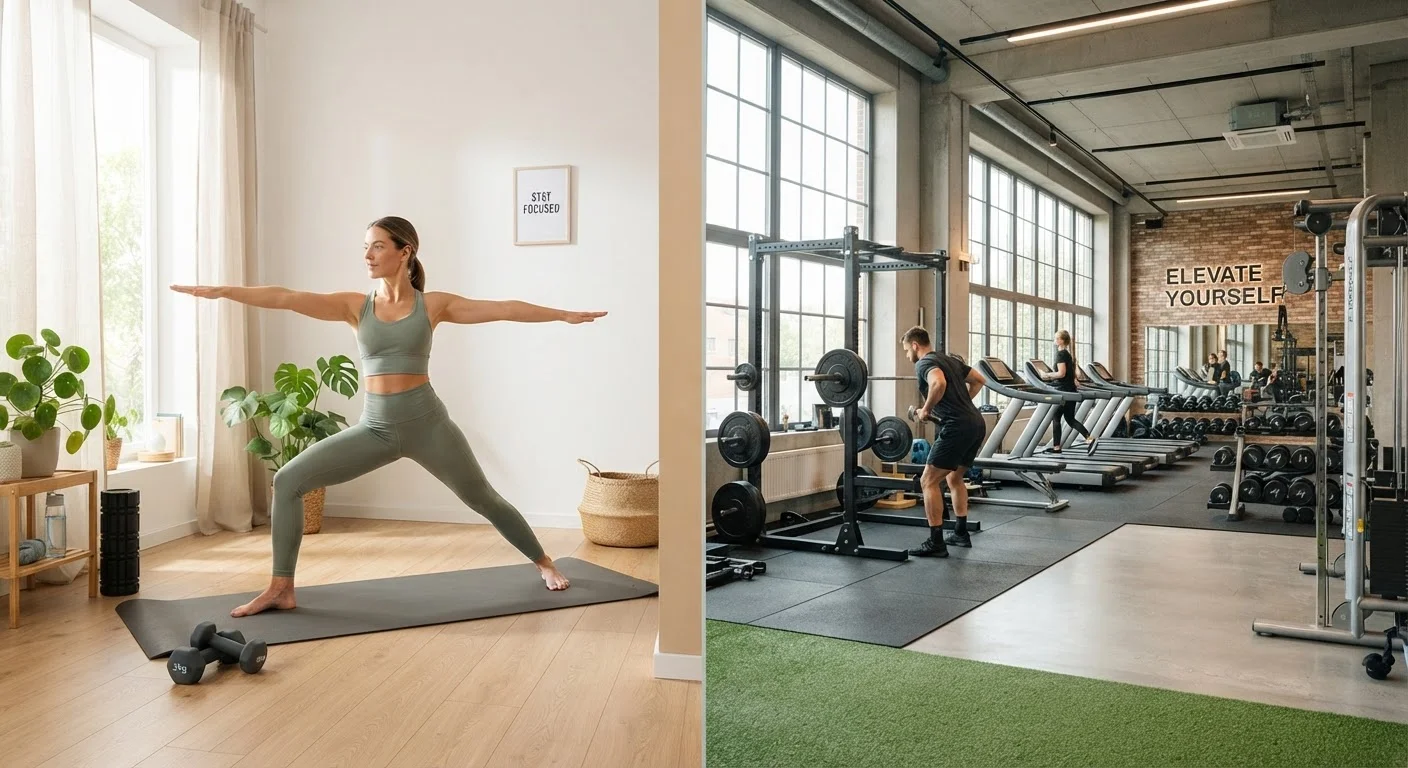
Photo credit: TopInfoTabs.com | Easy Insights For Inspiration
In this article
Location shapes your options, but does it limit your results? A practical comparison of exercising at home versus in a gym environment.
Key Takeaways
- Exercise location affects convenience and equipment access, but not the fundamental principles of effective training.
- Home workouts can produce comparable fitness gains to gym sessions when programmed consistently.
- Gyms offer equipment variety and social accountability that are genuinely difficult to replicate at home.
- The most effective routine is whichever one you will actually stick to over time.
- Cost, space, and personal motivation style are the most practical factors to weigh when choosing.
What Actually Differs Between the Two Environments
The honest answer to whether home or gym training is better is that location changes the logistics, not the biology. Muscles respond to progressive challenge, adequate recovery, and consistent repetition - none of which require a specific address.
That said, the practical differences are real and worth examining clearly.
| Criterion | Home Workouts | Gym Sessions |
|---|---|---|
| Equipment variety | Limited to what you own | Broad, immediately accessible |
| Upfront cost | Low to moderate (basic kit) | Low (membership fee) |
| Ongoing cost | Minimal after setup | Recurring monthly fees |
| Commute required | None | Yes |
| Social / accountability cues | Self-generated | Built into the environment |
| Space needed | Moderate (clear floor area) | None at home |
| Suitability for heavy lifting | Limited without investment | Strong |
| Flexibility of schedule | Maximum - train any time | Dependent on gym hours |
Equipment access is the most meaningful distinction. A gym gives you immediate access to barbells, cable machines, free weights across a wide range, and often cardio equipment - all without the upfront cost of buying them. At home, your toolkit depends on what you've invested in. Bodyweight exercises, resistance bands, and a pair of adjustable dumbbells cover a wide range of training goals, but maxing out a heavy deadlift or using a cable pulley system requires either a gym or a significant home setup.
Space and environment also shape the session. Home training eliminates commute, wait times for equipment, and the social friction some people find draining. Gym training provides a dedicated space where the only purpose is to exercise - a psychological cue that many find valuable for focus and consistency.
What Stays the Same Regardless of Location
The principles that drive fitness results are consistent regardless of where you train. Progressive overload - gradually increasing the challenge placed on your body - is the cornerstone of both strength and conditioning improvement. Whether that means adding reps to a push-up variation at home or adding a plate to a barbell at the gym, the mechanism is identical.
~73%
Gym members who report inconsistent attendance
Industry estimates suggest a large majority of gym members use their memberships far less frequently than intended, pointing to adherence as the central challenge.
Equal gains
Home vs. gym resistance training outcomes
A 2021 study published in the International Journal of Exercise Science found comparable muscle and strength gains between home-based and gym-based resistance training when volume was matched.
2-3x
Frequency linked to meaningful fitness improvement
General physical activity guidelines from the U.S. Department of Health and Human Services recommend at least 150 minutes of moderate activity weekly, achievable in either setting.
Recovery, sleep, and nutrition are also location-agnostic. These factors have an outsized influence on fitness outcomes compared to any equipment choice. A well-rested person training at home with bodyweight will generally outperform a poorly-recovered person using every machine in a commercial gym.
Programming consistency matters more than environment. Research consistently supports the idea that adherence - simply showing up regularly - is the strongest predictor of long-term fitness progress. If the gym commute becomes a barrier that leads to skipped sessions, a home routine wins by default. If working from home creates too many distractions to train effectively, a gym may provide necessary structure.
For readers thinking through how to balance different training types, our guide to balancing strength training and cardio covers how to weigh those choices within either environment.
Building a Routine That Works for Your Reality
The most useful framework is to treat this less as a permanent either/or decision and more as a logistical fit question. Consider a few factors honestly:
- Time availability: How much of your exercise window would commuting consume?
- Motivation style: Do you need external cues and social energy, or do you prefer independent, self-directed effort?
- Goals: Bodyweight fitness, general conditioning, and flexibility training translate well to home environments. Heavy resistance sports, powerlifting, and certain machine-based rehab protocols are harder to replicate.
- Budget: Gym memberships carry recurring costs; home setups have higher upfront costs but lower ongoing expense.
No Single Environment Guarantees Results
Fitness marketing often frames the gym as essential or home training as a compromise. Neither framing is accurate. What matters is whether the environment supports your consistency over weeks and months - not which setting looks more impressive. Experiment, adjust, and prioritize the option you'll actually use.
Many people find that a hybrid approach - maintaining a home routine as their baseline and using a gym selectively - offers the best of both. If you're ready to structure your week without a membership, our weekly movement plan for non-gym exercisers offers a practical starting point.
And if your current setup - home or gym - feels like it's stopped working, recognizing the signs that your routine needs adjusting can help you identify what to change.
This article is for general informational purposes only and does not constitute medical or personalized fitness advice. Consult a qualified health or fitness professional before beginning or significantly changing an exercise program, particularly if you have any existing health conditions.

Author
Health & Wellness Editorial Team
Health & Wellness Editorial Team is the collective byline for our editorial team and contributor network. Articles published under this byline or an editorial pen name are researched, written, and reviewed according to our editorial standards for clarity, consistency, and independence before publication.
View all articles →