
Common Myths About Pet Nutrition, Corrected
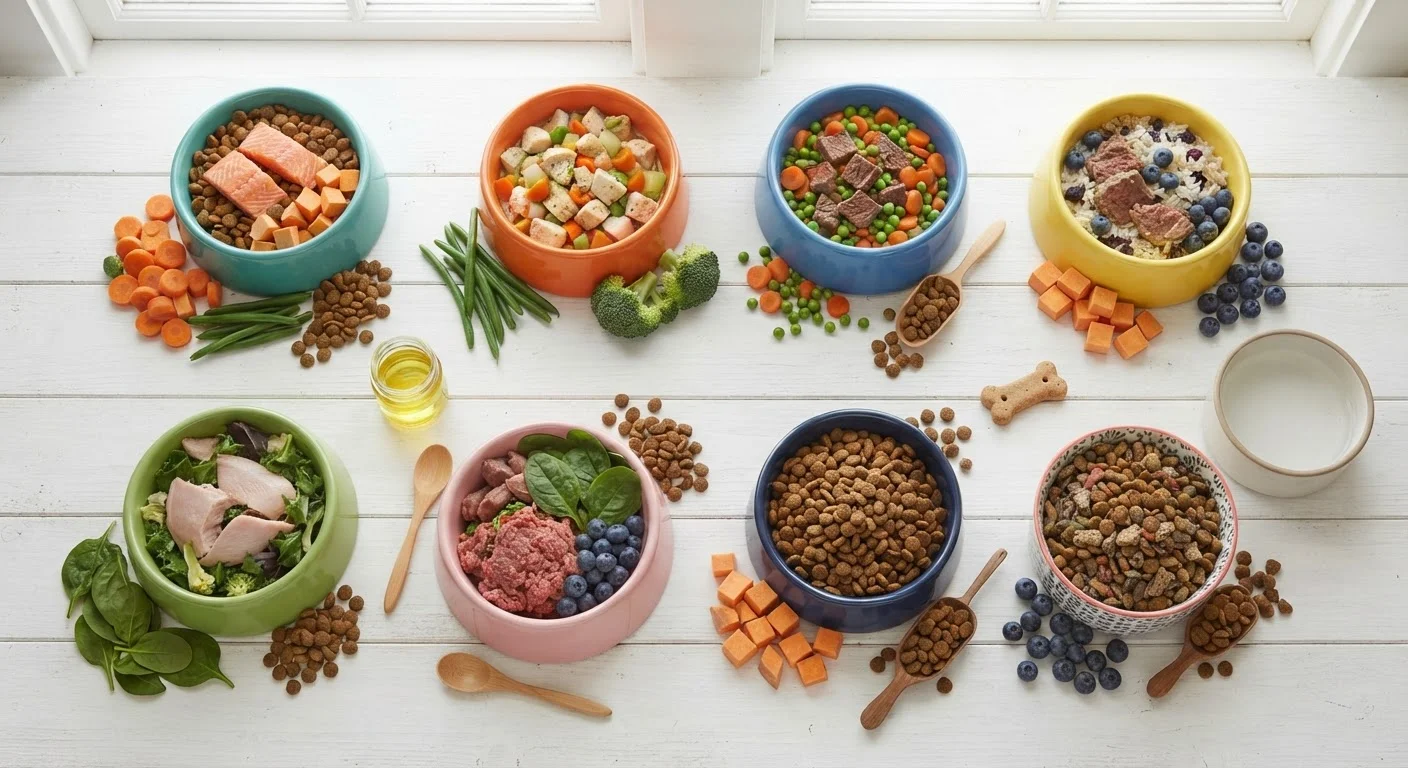
Photo credit: TopInfoTabs.com | Easy Insights For Inspiration
From grain-free diets to raw feeding, several widely held beliefs about pet food don't hold up to scrutiny. Here's what the evidence actually says.
Key Takeaways
- Grain-free diets are not inherently healthier for most dogs or cats and may carry cardiac risks.
- Raw diets pose genuine bacterial contamination risks to both pets and the humans who handle them.
- Ingredient order on a pet food label reflects weight before cooking, not nutritional value after processing.
- By-products in commercial pet food are not the same as low-quality filler - many are nutrient-dense.
- A pet's ideal diet depends on life stage, health status, and species - not trends or marketing.
Why Pet Nutrition Myths Persist
Pet owners are more engaged than ever in what goes into their animals' food bowls - and that curiosity is a good thing. But it also creates fertile ground for misinformation. Marketing language, anecdotal social media posts, and well-meaning but inaccurate advice from neighbors can make it genuinely difficult to separate evidence from noise.
The myths below are among the most widely repeated in pet nutrition. Each one is corrected using the current scientific and veterinary consensus. As always, any significant changes to your pet's diet should be discussed with a licensed veterinarian who knows your animal's individual health history.
For a deeper look at how to make sense of packaging claims, see our guide on reading pet food labels without the confusion.
Myth
Grain-free diets are healthier for dogs because dogs didn't evolve to eat grains.
Fact
Most dogs digest grains well, and grain-free diets have been linked to a potential increased risk of dilated cardiomyopathy (DCM) in some breeds.
The domestic dog has co-evolved alongside humans for thousands of years and shows genetic adaptations for starch digestion not found in wolves. The notion that grains are inherently harmful to dogs lacks scientific support. More significantly, the FDA began investigating a possible association between grain-free diets - particularly those high in legumes and potatoes - and DCM, a serious heart condition, following a cluster of reports in breeds not typically predisposed to the disease. The investigation is ongoing, but the concern is taken seriously by veterinary cardiologists. Grain-free formulas are not automatically dangerous, but they should not be chosen based on the assumption that they are inherently more natural or nutritious.
Myth
Raw meat diets are more natural and therefore safer and healthier than processed pet food.
Fact
Raw diets carry documented risks of bacterial contamination and nutritional imbalance, with limited clinical evidence of superiority over balanced commercial food.
Raw diets - particularly those involving uncooked meat, bones, and organs - can harbor pathogens including Salmonella, Listeria, and E. coli. These pose health risks to pets and, critically, to the people handling the food, particularly children, elderly individuals, and immunocompromised household members. Multiple veterinary and public health organizations, including the American Veterinary Medical Association (AVMA), have published position statements cautioning against raw diets for these reasons. Additionally, home-assembled raw diets are frequently nutritionally incomplete without careful formulation by a board-certified veterinary nutritionist. For a thorough comparison of the evidence, see our article on raw diets vs. commercially prepared pet food.
Myth
Meat by-products in pet food are waste material and offer no nutritional value.
Fact
By-products such as organ meats, liver, and lung are nutrient-dense ingredients commonly used in high-quality commercial pet foods.
The term "by-product" sounds off-putting, but in the context of pet food regulation, it refers to animal parts other than skeletal muscle meat - including liver, kidneys, spleen, lungs, and tripe. Many of these are richer in specific vitamins and minerals than muscle meat alone. Liver, for instance, is an excellent source of vitamin A, B vitamins, and iron. The regulatory definition specifically excludes hair, hooves, horns, teeth, and similar materials from the by-product category used in feed. Whether a by-product ingredient is high or low quality depends on its source and processing - not simply the word itself appearing on a label. For help interpreting what label terms actually mean, see our guide on reading pet food labels.
Myth
The first ingredient on a pet food label is always the dominant nutrient source.
Fact
Ingredients are listed by pre-cooking weight, meaning a moisture-heavy ingredient like chicken can rank first even if it contributes less dry-matter protein than other components.
Ingredient lists follow a pre-processing weight order. Fresh chicken, for example, may be listed first because it weighs a great deal before cooking - but once moisture is removed during processing, it may contribute proportionally less protein than a lower-listed ingredient like chicken meal, which is already a concentrated dry protein source. This is not inherently deceptive, but it means that reading ingredient order alone is an incomplete way to assess nutritional content. The guaranteed analysis panel - which lists minimum protein and fat percentages and maximum moisture and fiber - provides more actionable nutritional information than ingredient rank.
Myth
Cats can eat the same food as dogs without any significant nutritional difference.
Fact
Cats are obligate carnivores with several unique dietary requirements - including taurine and arachidonic acid - that dog food does not reliably provide.
Cats lack certain metabolic pathways that dogs and humans use to synthesize essential nutrients. They cannot produce adequate taurine (an amino acid critical for heart and eye health), arachidonic acid (a fatty acid), or preformed vitamin A from plant precursors - all of which must come directly from animal-sourced ingredients in their diet. Dog food is not formulated to meet these feline-specific requirements and should never be used as a sustained replacement for cat food. Long-term feeding of dog food to cats can result in serious, preventable nutritional deficiencies. The format differences between wet and dry food also interact with feline hydration needs - explored in our article on wet food vs. dry food for cats and dogs.
What the Evidence Actually Recommends
Veterinary nutritionists consistently emphasize that no single diet format - raw, grain-free, home-cooked, or otherwise - is universally superior. The right food for a given pet depends on species, breed, age, weight, activity level, and any diagnosed health conditions. Dogs and cats have meaningfully different metabolic needs; a diet appropriate for one is not automatically suited to the other.
~70%
Pet owners who believe grain-free diets are healthier
Survey data cited by veterinary nutritionists suggests a substantial majority of dog owners associate grain-free formulas with improved health, despite limited supporting evidence.
1 in 3
Home-prepared pet diets with nutritional deficiencies
Research published in veterinary nutrition journals has found that a significant proportion of home-cooked pet diet recipes available online fail to meet established nutrient minimums.
Commercial pet foods that carry the AAFCO (Association of American Feed Control Officials) nutritional adequacy statement have met minimum nutrient profiles established for specific life stages. That statement doesn't evaluate ingredient quality in the way consumers often assume, but it does provide a meaningful baseline for nutritional completeness. You can learn more about evaluating diet options in our overview of raw diets vs. commercially prepared pet food.
Dietary Switches Warrant Veterinary Input
Switching a pet to a significantly different diet - whether raw, home-cooked, or a novel commercial formula - can have real health consequences if done without professional guidance. Rapid diet changes can also cause gastrointestinal upset. Always transition foods gradually and consult your veterinarian, especially for pets with existing health conditions, food sensitivities, or life-stage considerations such as pregnancy or senior age.
Pet nutrition science continues to evolve. What was considered best practice a decade ago may be refined or revised as longer-term studies become available. Staying connected with your veterinarian - rather than relying solely on product marketing or online communities - remains the most reliable way to support your pet's long-term health. For broader context on how nutrition myths take hold, our Pet Health and Wellness hub is a good starting point.
This article is for general informational purposes only and does not constitute veterinary or medical advice. Consult a licensed veterinarian before making significant changes to your pet's diet.

Author
Pets & Animals Editorial Team
Pets & Animals Editorial Team is the collective byline for our editorial team and contributor network. Articles published under this byline or an editorial pen name are researched, written, and reviewed according to our editorial standards for clarity, consistency, and independence before publication.
View all articles →