
5G: What the Network Upgrade Really Changes for Ordinary Users
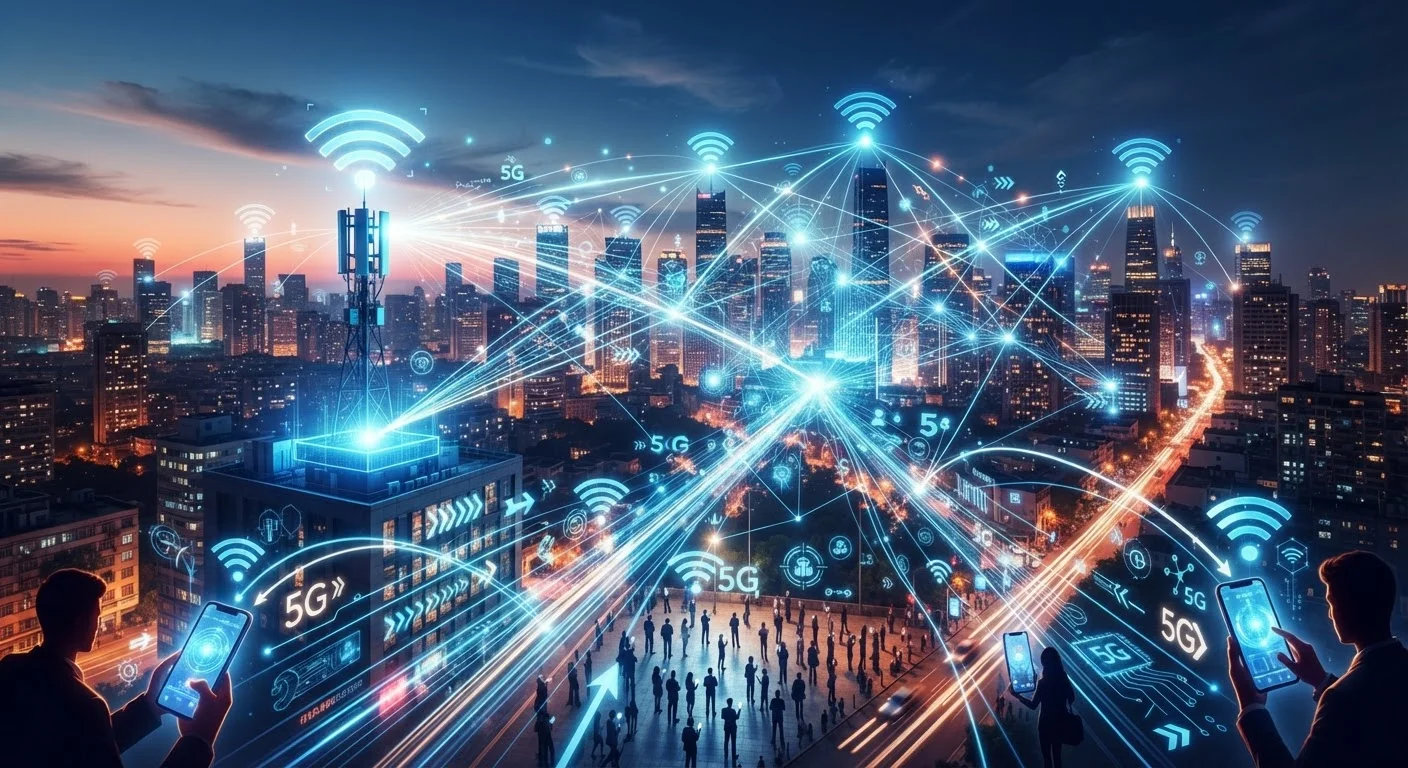
Photo credit: TopInfoTabs.com | Easy Insights For Inspiration
In this article
5G promises a lot, but the real-world experience varies widely. Understand what the technology does — and doesn't — change for daily use.
Key Takeaways
- 5G delivers meaningfully faster speeds than 4G in areas with mid-band or mmWave coverage.
- Low-band 5G - the most widely deployed type - often feels similar to 4G LTE in daily use.
- Latency improvements matter more for gaming and video calls than raw download speed.
- A 5G-capable phone does not guarantee a 5G experience; network availability depends entirely on your carrier and location.
- For most users, upgrading to 5G is worthwhile when replacing a phone, but it alone rarely justifies an early upgrade.
The Gap Between the Promise and the Reality
Since carriers began rolling out 5G networks, the marketing has been consistent: transformative speeds, instantaneous downloads, a connected future arriving now. The reality for most users is more nuanced. Whether 5G changes your daily experience depends almost entirely on which flavor of 5G you can actually access.
Networks are built in layers. Low-band 5G operates below 2 GHz, reaching the farthest distances and penetrating buildings well - but delivering speeds that are frequently indistinguishable from strong 4G LTE. Mid-band 5G, typically in the 2.5-6 GHz range, is where tangible improvements emerge: sustained download speeds that can reach several hundred megabits per second in real-world conditions. High-band mmWave 5G is the headline act - capable of multi-gigabit speeds - but it's currently limited to dense urban pockets, stadiums, and select venues because its signal doesn't travel far or penetrate obstacles easily.
Understanding which band your carrier has deployed in your area is the single most important factor in setting expectations. Checking your carrier's coverage map and filtering by band type - not just by the presence of a "5G" marker - will tell you more than any specification sheet.
Coverage Maps Tell Only Part of the Story
Carrier coverage maps typically show whether a given area has any 5G signal, but they often don't distinguish between low-band, mid-band, and mmWave deployments at a glance. Some carriers offer band-specific filtering as a secondary option. Third-party tools that aggregate user-reported speed data can also provide a more practical picture of what to expect at specific locations.
What Actually Changes in Daily Use
For the majority of everyday tasks - social media, email, web browsing, streaming music - even 4G LTE delivers more than enough throughput. Where 5G shows a genuine advantage is in specific, high-demand scenarios.
- Large file downloads: Downloading a full HD film, a software update, or a podcast queue completes noticeably faster on mid-band 5G compared to 4G LTE.
- Crowded venues: 5G's ability to handle more simultaneous connections per cell tower translates to more reliable speeds at concerts, stadiums, or busy transit hubs - situations where 4G networks become congested.
- Low-latency applications: Latency - the delay between sending a request and receiving a response - drops significantly on 5G. This matters for cloud gaming, real-time video calls, and applications that rely on rapid back-and-forth data exchange.
- Mobile hotspot performance: Sharing a 5G connection with a laptop produces a meaningfully better experience than sharing 4G for tasks like video conferencing or large uploads.
Most users won't notice a difference during routine use. The gains are real, but they're situational. Just as mobile OS updates matter most for what's running quietly in the background, 5G's advantages often show up precisely when you're not expecting to notice them - in a crowded airport or when downloading something large on the go.
~400 Mbps
Typical mid-band 5G download speed
Real-world speed tests from network analytics firms consistently place mid-band 5G median download speeds well above 4G LTE averages, which typically range from 30-50 Mbps in comparable conditions.
~23 ms
Median 5G network latency
According to network performance data from analytics providers like Opensignal, 5G latency improvements over 4G are measurable, with implications for gaming and real-time communication applications.
3x
Device capacity increase per tower
5G network architecture supports significantly more simultaneous device connections per cell than 4G LTE, which is why crowded-venue performance tends to improve even when peak speeds aren't dramatically different.
Device Compatibility and What Your Phone Actually Does
A phone marketed as "5G-ready" still needs a matching network connection to unlock those speeds. The hardware - specifically the modem chipset inside the phone - determines which 5G bands the device can connect to. Many mid-range phones support low-band and mid-band 5G but not mmWave. Flagship devices typically support all three, though mmWave antennas require specific placement on the phone's frame.
It's also worth remembering that a phone's cellular performance is only one piece of its overall experience. Common usage habits - including how you manage background apps and battery - can affect how well a device sustains demanding 5G connections over time, since the modem draws more power when actively searching for or maintaining a 5G signal in fringe coverage areas.
For those considering how SIM technology interacts with network access, the shift toward eSIM is a separate but related consideration - eSIM versus physical SIM cards doesn't directly affect 5G speeds, but it does shape how easily you can switch carriers to find better coverage.
Check Your Battery Usage After Enabling 5G
5G radios - especially when searching for a signal in mixed-coverage areas - can drain battery faster than 4G. Many phones offer a setting to limit the device to LTE when 5G coverage is weak, which can meaningfully extend battery life without sacrificing much real-world performance in those locations. Look in your cellular or network settings for an option labeled "LTE preferred" or "Auto 5G."
When Upgrading for 5G Makes Sense - and When It Doesn't
If you're already planning to replace an aging phone, choosing a 5G-capable model is straightforward future-proofing - the incremental cost difference between 4G and 5G hardware has largely disappeared at most price tiers. Buying 5G capability now means your phone remains compatible as networks mature and mid-band coverage expands further.
Upgrading a perfectly functional 4G phone solely to access 5G is a harder case to make. If you live or work primarily in areas served only by low-band 5G, the day-to-day experience won't justify the cost. Coverage maps for your specific carrier - filtered to show mid-band availability in the places you spend most of your time - are the most honest decision-making tool available.
For home connectivity, 5G fixed wireless internet has emerged as a practical broadband option in some regions. The performance characteristics differ from cellular mobile use and are worth evaluating separately from the question of what 5G does for your phone. Home network setup considerations remain relevant regardless of whether your broadband connection is fiber, cable, or 5G fixed wireless.
The network will keep improving. Mid-band buildout is ongoing, and the practical ceiling for ordinary users will rise over the next several years. The technology is real and the improvements are measurable - the key is matching your expectations to the network that actually exists in your location today.
Frequently Asked Questions

Author
Tech & Gadgets Editorial Team
Tech & Gadgets Editorial Team is the collective byline for our editorial team and contributor network. Articles published under this byline or an editorial pen name are researched, written, and reviewed according to our editorial standards for clarity, consistency, and independence before publication.
View all articles →