
Why Minimum Payments Feel Safe but Often Aren't
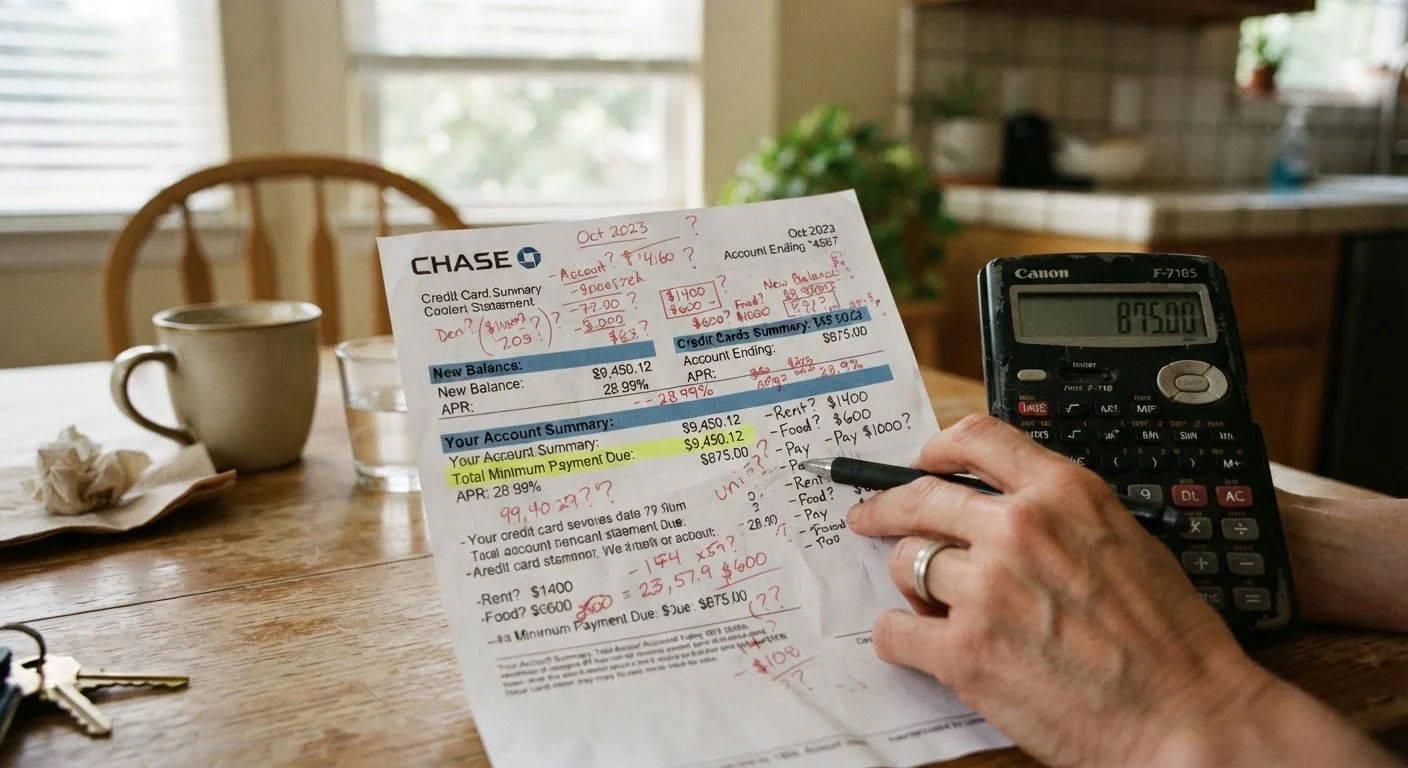
Photo credit: TopInfoTabs.com | Easy Insights For Inspiration
In this article
Understand the mechanics behind minimum payment calculations and the long-term consequences of relying on them month after month.
Key Takeaways
- Minimum payments are designed to keep accounts current, not to efficiently eliminate debt.
- Interest compounds on remaining balances, meaning small monthly payments can extend debt for years.
- Credit utilization - not just payment history - affects your credit score significantly.
- Automating payments above the minimum is one of the most effective habit changes available.
- Even modest increases to monthly payments can reduce total interest paid by hundreds of dollars.
The Psychology of the Minimum Payment
Credit card statements are designed to show you a path of least resistance: a minimum payment that keeps your account in good standing. For many cardholders, that number feels like a green light - proof that everything is under control. It rarely is.
The minimum payment is typically calculated as either a flat dollar amount (often $25-$35) or a small percentage of the outstanding balance - commonly 1% to 2% - whichever is greater. Some issuers add the monthly interest charge on top. The result is a figure just large enough to prevent a missed-payment flag on your credit report, but often too small to make meaningful progress against the principal.
Understanding this distinction - between staying current and paying down debt - is foundational to stronger credit health. For a fuller picture of how interest compounds on revolving balances day by day, see The Real Cost of Carrying a Credit Card Balance.
Treating the minimum payment as the "correct" monthly amount rather than a floor.
Why it happens: Statements present the minimum prominently, and paying it on time feels responsible. It avoids late fees and keeps the account current, which reinforces the habit.
Ignoring total interest cost when evaluating a balance.
Why it happens: Credit card statements historically emphasized monthly payment amounts, not the total cost of slow repayment. The long-term figure is easy to overlook.
Assuming on-time minimum payments fully protect your credit score.
Why it happens: Payment history is the single largest factor in most credit scoring models, so making payments on time feels like a complete solution. Credit utilization is less visible but nearly as impactful.
Continuing to use a card while only paying the minimum on the existing balance.
Why it happens: The account is open and available, and the minimum keeps it in good standing. Many cardholders don't realize that new purchases immediately begin accruing interest when a balance is already carried.
Waiting for income to increase before raising monthly payments.
Why it happens: It can feel rational to defer extra debt payments until finances improve. In practice, future income windfalls rarely get directed toward old balances.
What the Numbers Actually Show
Consider a $3,000 balance on a card with a 22% annual percentage rate (APR). Paying only the minimum each month - starting around $60 and declining as the balance shrinks - could take over 14 years to pay off and cost more than $3,500 in interest alone. That means you'd pay more than double the original balance.
14+ years
Time to repay $3,000 at 22% APR on minimums
Illustrative calculation based on a typical minimum payment formula (1-2% of balance) and a 22% APR, a rate within the common range reported by the Consumer Financial Protection Bureau.
~30%
Credit utilization threshold widely cited by experts
Credit scoring models such as FICO weight utilization heavily; most guidance suggests keeping usage below 30% of available credit to avoid score suppression.
Raising the monthly payment to a fixed $150 instead could eliminate the same debt in roughly two years and cut total interest to under $700. The difference isn't a financial trick - it's just math. Yet the minimum payment framing makes the lower number feel sufficient.
This dynamic also affects your credit utilization ratio - the share of your available credit that you're currently using. Carrying a high balance relative to your credit limit, even while making every minimum payment on time, can suppress your credit score. Payment history and utilization together account for the two largest components of standard credit scoring models. For more on how credit score calculations actually work, Credit Score Myths That Keep People From Improving Their Finances separates common misconceptions from the evidence.
Minimum Payments Don't Stop Interest from Compounding
When you carry a balance, interest accrues daily on what you owe. A minimum payment may barely cover that month's interest charges, leaving the principal almost untouched. Over months and years, this means you can make dozens of on-time payments and still owe close to what you originally charged. Paying more than the minimum - consistently - is the only way to make meaningful progress against the principal balance.
Building Habits That Actually Reduce Debt
Breaking the minimum-payment cycle doesn't require a dramatic financial overhaul. It requires a deliberate decision to pay more - and then making that decision automatic so it doesn't depend on monthly willpower.
Start by identifying a fixed payment amount above the minimum that fits your cash flow. Even an extra $20-$30 per month compresses repayment timelines noticeably. Once you've set that number, automate it through your bank or card portal so it goes out on the same day each month without requiring a manual choice.
If budgeting feels like the missing piece, Building a Monthly Budget That You'll Actually Stick To provides a practical framework for identifying where money is going and carving out room for higher debt payments. And if automation appeals to you more broadly, Automating Your Savings: Strategies for Consistency Without Constant Willpower applies the same principle to building savings in parallel.
The broader context for all of this lives in Debt & Credit: A Comprehensive Guide for Everyday Consumers, which covers repayment strategies, credit score improvement, and long-term financial planning in one place.
Autopay Set to 'Minimum' Is Not Enough
Many cardholders set up autopay and assume they're covered. If that autopay is set to the minimum payment amount, you're automating a slow repayment cycle - not solving the problem. Check your autopay settings and update the amount to a fixed figure that exceeds the minimum. Automating the right number is powerful; automating the wrong one just makes the habit harder to notice.
This article is for general informational purposes only and does not constitute personalized financial or credit advice. Consult a qualified financial adviser or credit counselor for guidance specific to your situation.

Author
Money & Finance Editorial Team
Money & Finance Editorial Team is the collective byline for our editorial team and contributor network. Articles published under this byline or an editorial pen name are researched, written, and reviewed according to our editorial standards for clarity, consistency, and independence before publication.
View all articles →