
Small Pets, Big Responsibilities: Guinea Pigs, Rabbits, and Hamsters
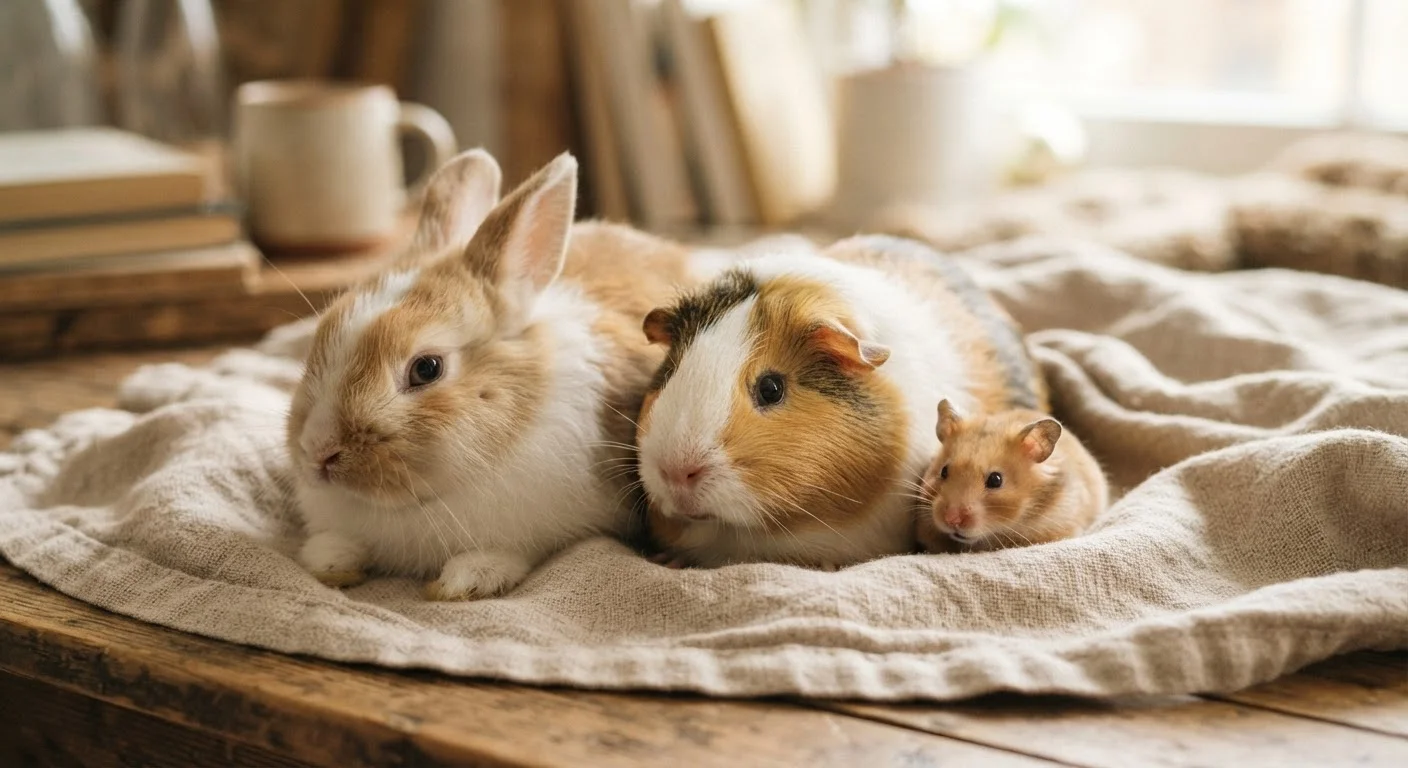
Photo credit: TopInfoTabs.com | Easy Insights For Inspiration
In this article
Small mammals are often underestimated in their care needs. Learn what housing, diet, handling, and health monitoring look like for common small pets.
Key Takeaways
- Guinea pigs are highly social and generally do best when housed in same-sex pairs or small groups.
- Rabbits need significantly more space and exercise than most people expect - a small cage alone is insufficient.
- Hamsters are nocturnal and solitary; handling them during the day can cause stress-related biting.
- All three species require species-specific diets; seeds and sugary treats are often inappropriate defaults.
- Regular, gentle health checks at home complement - but never replace - veterinary care from an exotic-animal-experienced vet.
Why Small Pets Are Bigger Commitments Than They Look
Small mammals are routinely underestimated. Because guinea pigs, rabbits, and hamsters are compact, quiet, and commonly sold in pet stores, they're often assumed to be effortless starter pets. That assumption sets up both the animal and the owner for disappointment. Each of these species has evolved specific behavioral, dietary, and environmental needs that don't shrink with their body size.
Before comparing the three, it helps to understand that all of them are prey animals. This shapes how they respond to handling, loud environments, and even illness - prey animals instinctively mask vulnerability, which means a sick animal may appear healthy until a problem is advanced. For a deeper introduction to monitoring any small pet's wellbeing, understanding normal vital signs is a practical starting point.
| Guinea Pigs | Rabbits | Hamsters | |
|---|---|---|---|
| Social needs | Highly social; pairs recommended | Social but solitary housing possible | Strictly solitary |
| Activity pattern | Diurnal (daytime active) | Crepuscular (dawn and dusk) | Nocturnal (nighttime active) |
| Minimum space | 7.5+ sq ft floor space | Large pen plus daily free-roaming | 40" × 20" enclosure minimum |
| Diet complexity | High (daily vitamin C required) | High (hay-dominant, limited pellets) | Moderate (varied omnivore diet) |
| Handling temperament | Generally calm with regular handling | Ground-level interaction preferred | Stress-sensitive; patience essential |
| Lifespan (approximate) | 5-7 years | 8-12 years | 2-3 years |
Housing and Space: More Room Than You Think
Housing is where expectations most commonly diverge from reality. Guinea pigs need a minimum of 7.5 square feet of floor space for a single animal - more for pairs, which are recommended given their social nature. Wire-bottom cages are harmful to their feet; solid-floor enclosures with appropriate bedding are essential.
Rabbits require the most space of the three. A rabbit confined to a small hutch without daily free-roaming time can develop skeletal problems and significant behavioral stress. A rabbit-proofed room or large pen allowing several hours of exercise daily is closer to the appropriate standard. Behavioral cues of distress - such as repetitive circling or bar-chewing - are common in confined rabbits.
Hamsters are surprisingly active at night, running several miles on a wheel in the wild. A minimum cage footprint of 40 inches by 20 inches is widely recommended by small-mammal specialists, with a solid-surface wheel of at least 10 inches in diameter. Hamsters are solitary and should be housed alone to prevent aggression.
Quarantine New Animals Before Introductions
If you are adding a second guinea pig or rabbit to an existing group, keep the new arrival in a separate enclosure for at least two to three weeks. This reduces the risk of transmitting illness to your current pets. Even animals that appear healthy can carry pathogens without showing symptoms. Consult your exotic vet about appropriate introduction steps after the quarantine period.
Diet: Species-Specific Needs That Are Often Misunderstood
All three animals are frequently fed inappropriate diets, often because seed mixes and sugary treat sticks are prominently packaged as staple foods. Here's what each species actually needs:
- Guinea pigs cannot synthesize their own vitamin C and must receive it daily through fresh leafy greens such as romaine lettuce, bell peppers, and parsley. Timothy hay should make up the bulk of their diet, supplemented with a small amount of pellets formulated specifically for guinea pigs.
- Rabbits are obligate herbivores for whom unlimited fresh timothy hay is the dietary cornerstone - it supports dental wear and gut motility. Fresh leafy greens round out the diet; pellets should be limited to a small portion for adult rabbits, and fruit given only as an occasional treat due to sugar content.
- Hamsters eat a mixed omnivore diet. A good-quality hamster-specific pellet or block forms the base, supplemented with small amounts of fresh vegetables and occasional protein sources like plain cooked egg or mealworms. Seed-only mixes allow selective eating and frequently result in nutritional imbalance.
Monitoring body condition is a useful at-home tool; body condition scoring applies to small mammals as well as dogs and cats.
Handling, Socialization, and Behavioral Needs
How and when you interact with each species matters considerably. Guinea pigs vocalize through a range of sounds - purring, wheeking, and chutting - and tend to become calmer with consistent, gentle handling. They are diurnal (active during daylight), making them more compatible with a typical household schedule.
Rabbits are crepuscular, most active at dawn and dusk. They are intelligent animals capable of learning their name and basic cues; positive reinforcement techniques translate well to rabbit training. Rabbits rarely enjoy being picked up - they prefer ground-level interaction - and improper lifting can result in spinal injury from kicking.
Hamsters are nocturnal and are easily startled when woken during daylight hours. Biting is often a stress response rather than aggression. Building trust through slow, scent-based introductions before attempting handling can significantly reduce this. Children should always be supervised, and expectations should be calibrated accordingly.
Understanding each species' natural behavioral rhythms is foundational to a rewarding relationship. For broader context, a first-time owner's health and care foundation covers enrichment and socialization in more depth.
8-12 years
Typical domestic rabbit lifespan
Rabbit welfare organizations note that many owners are unprepared for this commitment when adopting what they assume is a short-lived pet.
~5 miles
Distance hamsters may run nightly in the wild
Research on wild hamster behavior highlights how critical a large, stimulating enclosure and adequate wheel size are for captive animals.
Health Monitoring and Veterinary Care
Small mammals hide illness well. Owners who check their pets only casually may miss early warning signs. A weekly hands-on assessment - checking teeth, coat, eyes, nose, and general weight - gives a consistent baseline. Any sudden change in appetite, droppings, energy, or posture warrants prompt veterinary attention.
All three species should see a veterinarian experienced with exotic or small animals, not a general dog-and-cat practice unless that vet has demonstrated small-mammal expertise. Common conditions vary by species: guinea pigs are prone to respiratory infections and bladder stones; rabbits are susceptible to GI stasis (a life-threatening slowdown of gut motility) and dental disease; hamsters frequently develop wet tail (a stress- or bacteria-related intestinal condition) and cheek pouch impaction.
Grooming is also part of health maintenance - nail trimming and coat checks are relevant for all three species. Long-haired guinea pig breeds, in particular, require regular brushing to prevent matting.
This article is for general informational purposes and does not constitute veterinary advice. Always consult a qualified exotic animal veterinarian for guidance specific to your pet's health and care needs.

Author
Pets & Animals Editorial Team
Pets & Animals Editorial Team is the collective byline for our editorial team and contributor network. Articles published under this byline or an editorial pen name are researched, written, and reviewed according to our editorial standards for clarity, consistency, and independence before publication.
View all articles →