
Cat Training Myths That Most Owners Still Believe
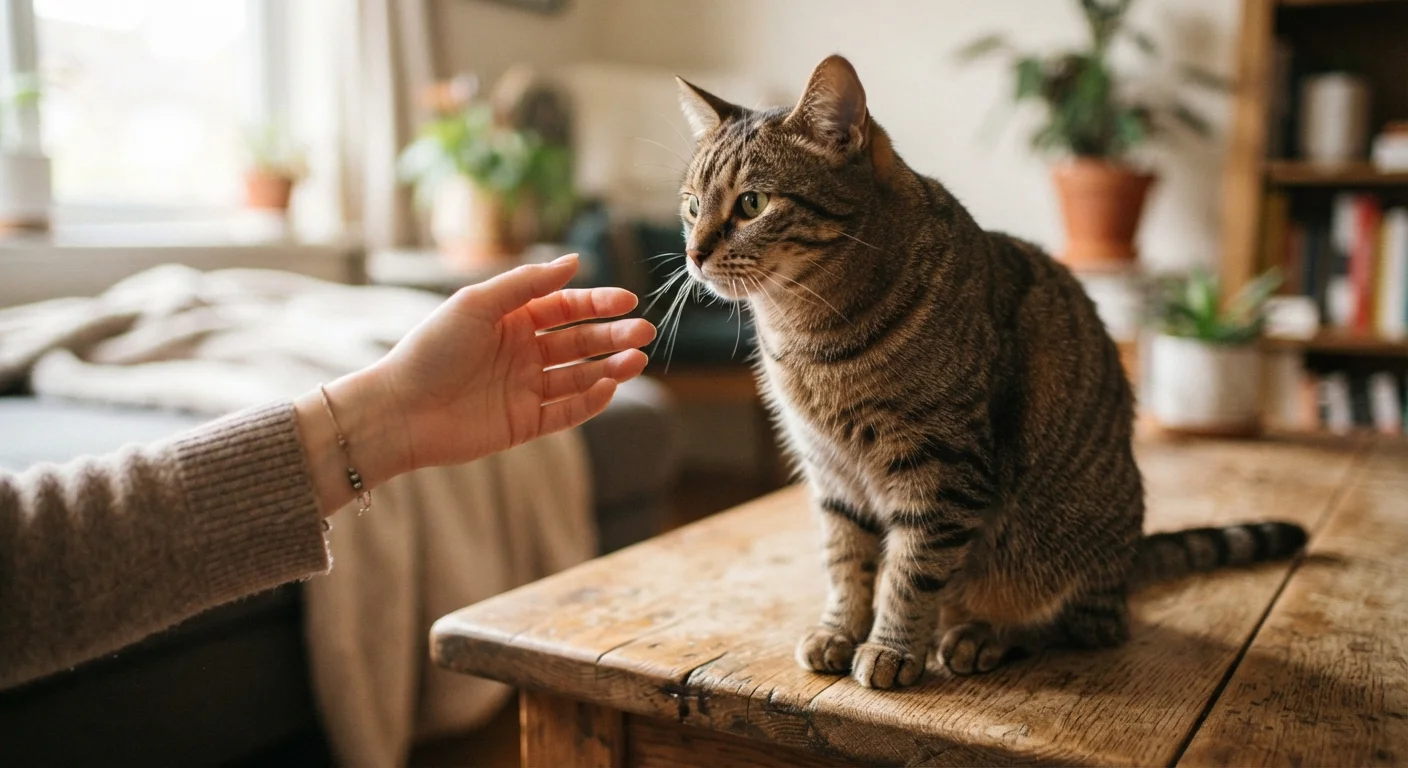
Photo credit: TopInfoTabs.com | Easy Insights For Inspiration
Cats can absolutely be trained. We separate stubborn myths from the facts about feline learning and behavior.
Key Takeaways
- Cats can be trained using positive reinforcement - they are not inherently untrainable.
- Punishment-based methods are ineffective and can damage your bond with your cat.
- Short, frequent training sessions work far better than long, infrequent ones.
- Cats learn on their own timeline; patience and consistency are essential.
- Understanding feline motivation, especially food and play rewards, is key to success.
Why Cat Training Myths Persist
Dogs have long dominated the pet training conversation, leaving cats with an undeserved reputation as animals that simply cannot - or will not - be taught. That reputation has calcified into a set of myths that many owners accept without question. The result: cats that could thrive with structured guidance instead live in homes where their behavior is misunderstood and their potential goes untapped.
Feline learning is well-documented in animal behavior research. Cats respond to operant conditioning - specifically positive reinforcement - in ways that are consistent and measurable. The myths below aren't harmless misconceptions; they actively prevent owners from building a more communicative, rewarding relationship with their cats. Understanding the science behind how cats actually learn is the first step. For a deeper look at those principles, see our guide to reward timing and consistency in pet training.
Myth
Cats are untrainable - they're too independent to learn commands.
Fact
Cats are fully capable of learning cues and behaviors through consistent positive reinforcement.
The independence cats display is a temperament trait, not evidence of a learning deficit. Research in animal cognition confirms that cats understand cause and effect, recognize their names, and can learn a range of behaviors - from sitting on cue to using a specific scratching surface. The key difference from dogs is motivation: cats are less inherently social-reward driven, so training must be built around what the individual cat values, typically high-value food treats or play. The method works; it simply requires adapting to feline priorities rather than canine ones.
Myth
You have to punish a cat when it misbehaves, or it will never stop.
Fact
Punishment is ineffective with cats and often makes behavior problems worse.
Cats do not connect a punishment delivered even a few seconds after a behavior with that behavior itself. What they do register is that the person or hand delivering the punishment is a source of unpleasant experiences - which erodes trust and can increase anxiety-driven behaviors. Animal behavior specialists consistently recommend redirecting unwanted behavior and rewarding the alternative. If a cat is scratching the sofa, providing an appropriate scratching post and rewarding its use is far more effective than any corrective response after the fact.
Myth
Older cats can't be trained - it has to happen when they're kittens.
Fact
Cats of any age can learn new behaviors; the process may simply take more patience with older individuals.
The "critical period" of early socialization influences a cat's comfort with novelty and handling, but it does not close the window on learning. Older cats have well-established habits, which can mean some behaviors take longer to modify, but they retain the cognitive capacity to form new associations throughout their lives. Adult and senior cats are successfully trained in shelters and rescue settings every day - for carrier comfort, voluntary veterinary handling, and basic household manners. Age is not a barrier; consistency is the variable that matters most.
Myth
Cats only do what they want - there's no real way to motivate them.
Fact
Cats are highly motivated by specific rewards; identifying those rewards is what unlocks training.
This myth confuses cats' selectivity with a lack of motivation. Cats are not unmotivated - they are discerning. A treat that a dog would eat enthusiastically may hold zero interest for a particular cat, making it a poor training reward. But offer that same cat a small piece of cooked chicken or a 30-second play session with its favorite toy, and motivation is immediately apparent. Effective cat training starts with a "reward inventory" - figuring out what your specific cat reliably wants - and then using those items strategically. Cats also tend to work for rewards more readily when slightly hungry, so timing sessions before meals can help.
Myth
Cats scratch furniture out of spite or bad temperament.
Fact
Scratching is a normal, instinctive behavior that serves specific physical and communicative functions.
Cats scratch to maintain claw health, stretch muscles in their shoulders and back, and deposit scent from glands in their paws - a form of territorial communication. None of this is spite; it is biology. Furniture becomes a target when appropriate scratching surfaces are unavailable, poorly placed, or not appealing to that individual cat. Redirecting scratching successfully means providing surfaces that match the cat's preferences in texture and orientation (vertical versus horizontal), placing them near the spots the cat already favors, and making the furniture itself temporarily less appealing. Scratching behavior can be managed; it cannot be eliminated, nor should it be.
Putting the Facts Into Practice
Dismantling these myths is only useful if it changes how you interact with your cat. A few practical principles follow directly from what the evidence tells us.
Keep sessions short. Two to five minutes per session is genuinely enough. Cats have strong associative memory but limited tolerance for repetition in a single sitting. End each session while your cat is still engaged - not after interest has flagged.
Find the right reward. Some cats are highly food-motivated; others respond better to a brief play interaction with a wand toy. Experiment to identify what your individual cat values most, then use it exclusively during training so it retains its motivational pull.
Time your marker precisely. Whether you use a clicker or a short verbal cue like "yes," the signal must occur within a second of the desired behavior. Delayed feedback confuses the association and slows learning significantly.
Be consistent across the household. If one person rewards a cat for jumping on the counter while another discourages it, the cat receives conflicting information and the behavior becomes unpredictable. Everyone in the home needs to apply the same rules.
Avoid Punishment-Based Techniques
Spraying cats with water, startling them with loud noises, or physically correcting them are approaches that can increase stress and anxiety without teaching the cat what to do instead. A frightened cat is not a learning cat. If you are struggling with a persistent behavior problem, a certified applied animal behaviorist or veterinary behaviorist can provide targeted, humane guidance.
Training is also a practical window into your cat's overall health. A cat that suddenly loses interest in food rewards, seems lethargic during sessions, or displays behavioral changes outside of training may be experiencing a health issue. Always consult a veterinarian if you notice unexplained shifts in your cat's behavior or appetite. This article provides general educational information and is not a substitute for professional veterinary guidance.

Author
Pets & Animals Editorial Team
Pets & Animals Editorial Team is the collective byline for our editorial team and contributor network. Articles published under this byline or an editorial pen name are researched, written, and reviewed according to our editorial standards for clarity, consistency, and independence before publication.
View all articles →