Term Life vs. Whole Life Insurance: Understanding the Core Differences
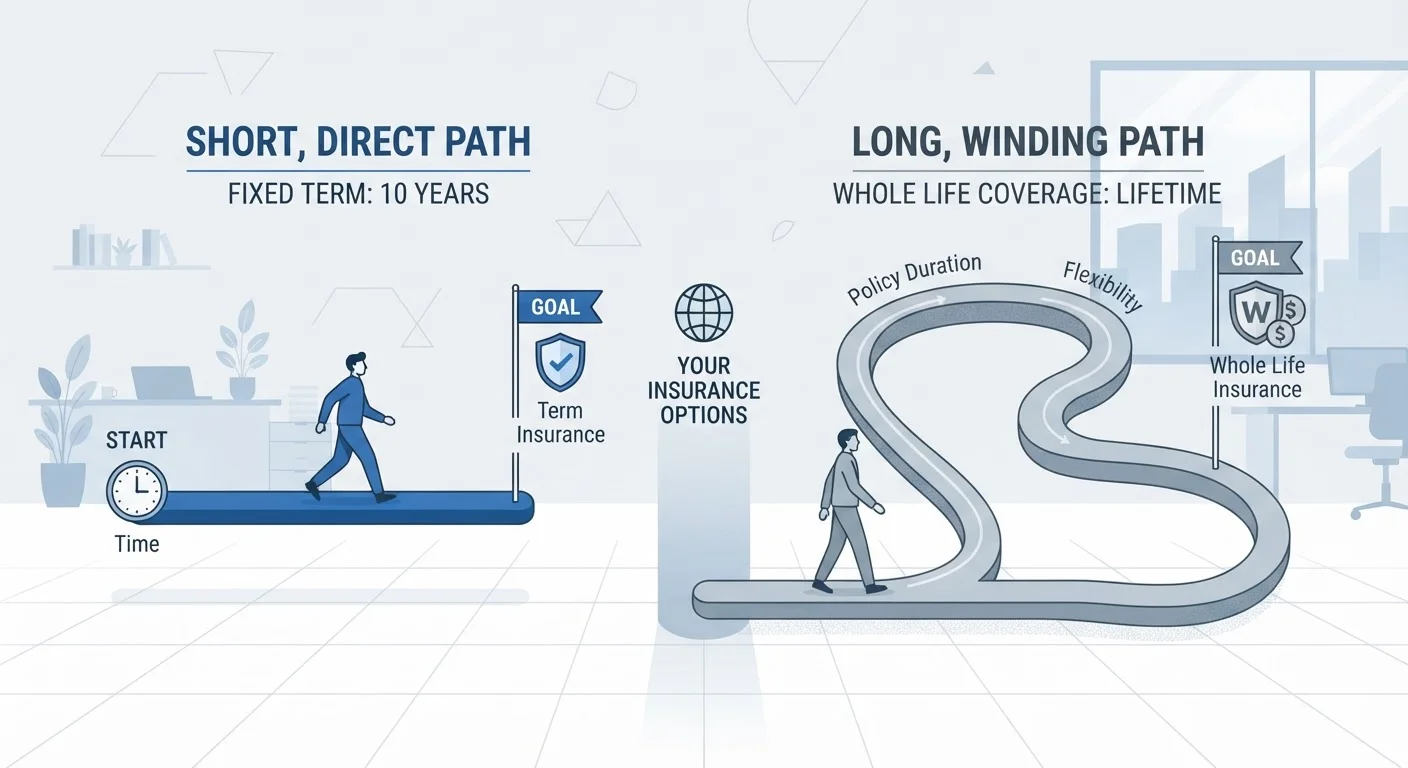
Photo credit: TopInfoTabs.com | Easy Insights For Inspiration
In this article
Term and whole life insurance serve very different purposes. See how they compare on cost, coverage duration, and financial structure.
Key Takeaways
- Term life covers you for a fixed period; whole life covers you indefinitely as long as premiums are paid.
- Whole life premiums are typically several times higher than term life premiums for equivalent death benefits.
- Whole life policies build cash value over time; term life policies do not.
- Neither policy type is universally superior - the right choice depends on your financial goals and life stage.
- Always read a policy's full terms and consult a licensed insurance professional before purchasing coverage.
What Each Policy Actually Does
Term life insurance provides a death benefit for a specified period - commonly 10, 20, or 30 years. If you die during the term, your beneficiaries receive the payout. If the term ends and you are still living, coverage simply stops (unless you renew or convert). There is no accumulated value.
Whole life insurance is a form of permanent life insurance. It combines a death benefit with a cash-value account that grows over time at a rate defined in the policy. Because coverage is designed to last a lifetime, the insurer must eventually pay a claim - making the product fundamentally different in risk structure from term. If terms like "death benefit," "rider," or "premium" feel unfamiliar, our plain-English insurance glossary can bring you up to speed quickly.
How Cost and Premiums Compare
Premium differences between the two products are significant and worth understanding clearly before making any coverage decision.
| Criterion | Term Life | Whole Life |
|---|---|---|
| Coverage duration | Fixed term (e.g., 10-30 years) | Lifetime (permanent) |
| Premium cost | Generally much lower | Significantly higher |
| Cash value | None | Builds over time, tax-deferred |
| Death benefit certainty | Only if death occurs during term | Guaranteed if premiums are maintained |
| Complexity | Simple, straightforward | More complex financial structure |
| Policy loans | Not available | Available against cash value |
| Best suited for | Time-limited income protection | Lifelong coverage and estate planning |
For a healthy individual in their 30s, a 20-year term policy with a $500,000 death benefit might carry a monthly premium well under $50. A comparable whole life policy could cost several hundred dollars per month - sometimes five to ten times more. That gap exists because whole life premiums must fund both the death benefit and the cash-value account, and because permanent coverage carries greater actuarial certainty of payout.
It is also worth noting that term premiums stay fixed for the coverage period but can rise sharply if you renew after the initial term expires, since you are then older and may have new health conditions.
~$30
Approximate average monthly term premium (20-year, $250K, healthy 30s)
LIMRA and industry surveys suggest healthy applicants in their 30s often secure 20-year, $250,000 term policies for roughly $25-$35/month, though actual rates vary by insurer, health class, and state.
~6x
Typical whole life premium multiple vs. comparable term
Insurance industry analyses consistently show whole life premiums running approximately five to ten times higher than term for equivalent death benefit amounts, depending on age and health.
54%
US adults with some form of life insurance coverage
According to LIMRA's 2023 Insurance Barometer Study, roughly 54% of American adults reported owning life insurance in some form.
The Cash Value Question
Whole life's cash-value component is frequently cited as an advantage, but it warrants a clear-eyed look. A portion of each premium is credited to a cash-value account that grows tax-deferred at a guaranteed (though generally modest) rate. Policyholders can borrow against this value or, in some cases, make withdrawals - though loans accrue interest and unpaid balances reduce the death benefit.
Proponents argue cash value provides a savings mechanism alongside coverage. Critics note that the internal rate of return on cash value is often lower than what the same premium dollars could earn in a diversified investment account - though comparing the two is not straightforward, since whole life blends insurance protection with the savings element. This is an area where the value vs. price distinction matters: a higher premium is not necessarily a better deal if the incremental financial benefit does not match your actual needs.
Policy Loans Are Not Free Money
Borrowing against a whole life policy's cash value does not require repayment on a fixed schedule, but unpaid loan balances accrue interest and are deducted from the death benefit paid to your beneficiaries. If a policy lapses with an outstanding loan, a taxable event may occur. This is an important detail to clarify with a licensed agent before relying on cash-value access as part of a financial plan.
Term policies accumulate no cash value. When the policy ends, you have nothing to draw on - but you will also have paid substantially less over the same period.
Deciding What Fits Your Situation
Most financial educators suggest starting with a clear statement of what you need life insurance to accomplish. If the primary goal is replacing your income during the years dependents rely on you - mortgage, children's education, a spouse's financial security - term life is often the more cost-efficient vehicle. The coverage aligns with the finite window of that need.
Permanent coverage may make sense if you have long-term estate planning objectives, a dependent who will require financial support indefinitely (such as a child with a disability), or if you have already maximized other tax-advantaged savings vehicles and the cash-value component has a concrete role in your plan. These are nuanced decisions; our guide to assessing how much coverage you actually need walks through the key questions to frame your thinking.
If you are new to insurance generally, understanding insurance from the ground up offers a solid foundation before diving into specific product decisions.
This article is for general informational and educational purposes only and does not constitute personalized insurance, financial, or legal advice. Policy terms, premiums, and coverage vary by provider and individual circumstances. Always review actual policy documents carefully and consult a licensed insurance professional before making coverage decisions.

Author
Smart Shopping Editorial Team
Smart Shopping Editorial Team is the collective byline for our editorial team and contributor network. Articles published under this byline or an editorial pen name are researched, written, and reviewed according to our editorial standards for clarity, consistency, and independence before publication.
View all articles →