
Physical vs. Chemical Sunscreen: What Sets Them Apart
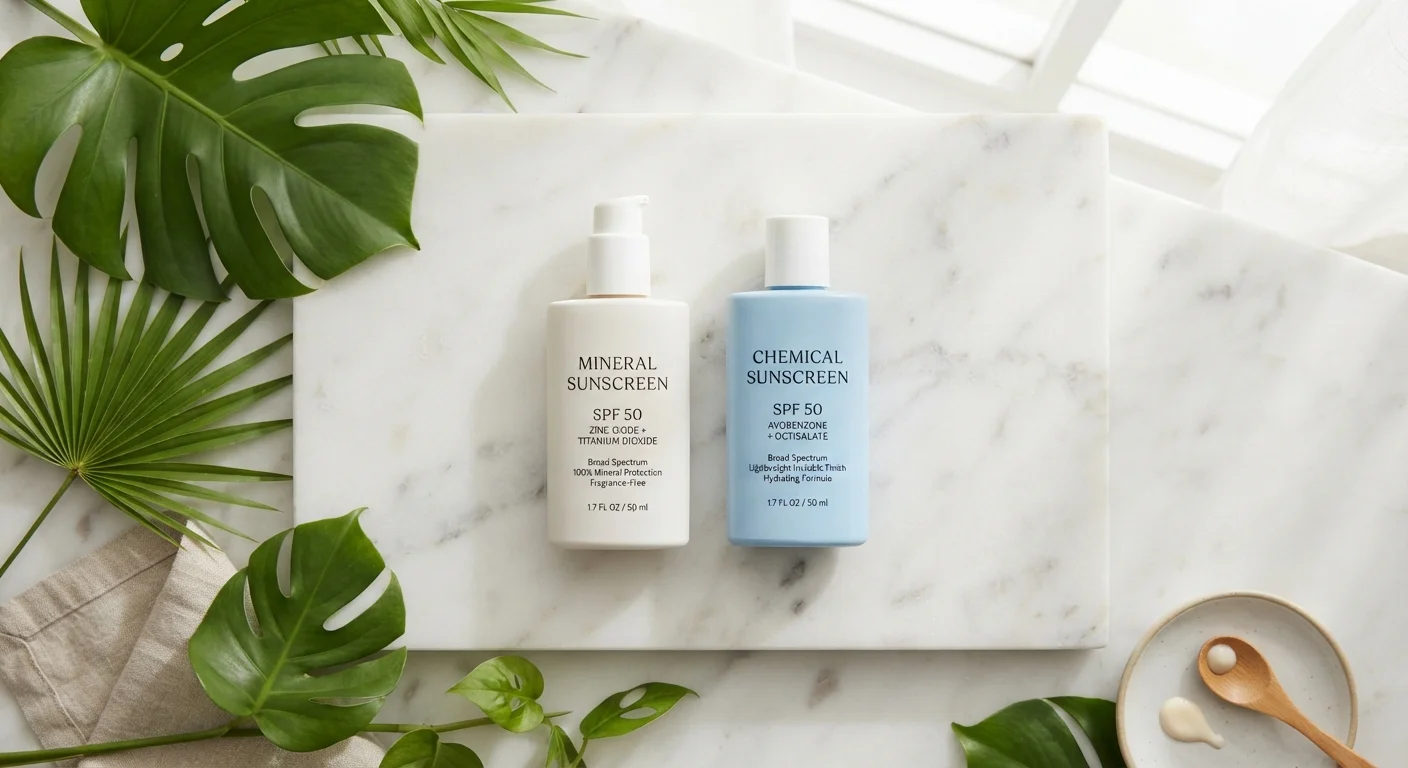
Photo credit: TopInfoTabs.com | Easy Insights For Inspiration
In this article
Two types of sunscreen, two different mechanisms. Understand how each works and what factors might make one a better fit for your skin.
Key Takeaways
- Physical sunscreens use mineral ingredients like zinc oxide or titanium dioxide to deflect UV rays.
- Chemical sunscreens absorb UV energy and convert it to heat through a chemical reaction.
- Physical formulas are generally considered gentler for sensitive and reactive skin types.
- Chemical sunscreens tend to feel lighter and blend invisibly, making them popular for daily use.
- Both types can be effective when applied correctly and reapplied regularly.
- No sunscreen type eliminates the need for other sun protection habits like seeking shade.
How Each Type Works
The most fundamental difference between physical and chemical sunscreens is how they interact with UV radiation - and that distinction shapes nearly everything else about them.
Physical sunscreens (also called mineral sunscreens) rely on active mineral ingredients - typically zinc oxide, titanium dioxide, or both. These minerals sit on the surface of the skin and act as a physical barrier that reflects and scatters UV rays before they can penetrate. Because they work by deflection rather than absorption, they offer broad-spectrum coverage and start working immediately after application.
Chemical sunscreens use carbon-based compounds - such as avobenzone, oxybenzone, octinoxate, or homosalate - that are absorbed into the skin. Once there, they act like a sponge, absorbing UV radiation and converting it into heat energy, which is then released from the skin. Chemical formulas typically need about 20 minutes after application to reach full effectiveness.
| Criterion | Physical Sunscreen | Chemical Sunscreen |
|---|---|---|
| Active Ingredients | Zinc oxide, titanium dioxide | Avobenzone, oxybenzone, octinoxate |
| How It Works | Reflects and scatters UV rays | Absorbs UV energy, releases as heat |
| Time to Effectiveness | Immediate upon application | ~20 minutes after application |
| Texture & Finish | Thicker; possible white cast | Lightweight; sheer or invisible |
| Sensitive Skin Suitability | Generally well-tolerated | May irritate some sensitive skin types |
| Layering Under Makeup | Can feel heavy; may affect coverage | Blends easily; makeup-friendly |
| Broad-Spectrum Coverage | Yes (especially zinc oxide) | Yes, when formulated correctly |
It's worth noting that some formulas combine both types of filters, often called hybrid sunscreens, aiming to capture the benefits of each approach. For a deeper look at what sunscreen labels actually mean, see our guide to common sun protection myths.
Skin Type, Texture, and Wear
Beyond the science, your everyday experience with a sunscreen - how it feels, how it looks on your skin, and how well it fits into your routine - often comes down to skin type and formula texture.
Physical sunscreens have historically had a thicker consistency and can leave a white or chalky finish, particularly on deeper skin tones. However, formulation technology has improved significantly, and many modern mineral sunscreens are much more wearable. They remain a strong consideration for people with sensitive, acne-prone, or post-procedure skin because mineral filters are generally non-irritating and non-comedogenic (meaning they're less likely to clog pores).
Chemical sunscreens are typically lighter in texture - often water-thin or lotion-like - and absorb without residue, which is why they're a staple for those who layer skincare or wear makeup. The tradeoff is that some chemical filter ingredients have been associated with skin sensitivity in certain individuals, and a small number of people find them irritating.
~70%
US adults who don't apply enough sunscreen
The American Academy of Dermatology has noted that most people apply far less sunscreen than the amount used in SPF testing, significantly reducing real-world protection.
2 hours
Recommended reapplication interval during sun exposure
Both the FDA and major dermatology organizations recommend reapplying sunscreen every two hours outdoors, regardless of whether it is physical or chemical.
Whichever type you lean toward, the most effective sunscreen is ultimately the one you'll apply generously and reapply consistently - generally every two hours during sun exposure, or after swimming or heavy sweating.
This article is for general informational purposes only and does not constitute medical or dermatological advice. Consult a qualified healthcare professional for guidance tailored to your specific skin concerns.

Author
Style & Beauty Editorial Team
Style & Beauty Editorial Team is the collective byline for our editorial team and contributor network. Articles published under this byline or an editorial pen name are researched, written, and reviewed according to our editorial standards for clarity, consistency, and independence before publication.
View all articles →