
Gadgets That Quietly Simplify Daily Routines
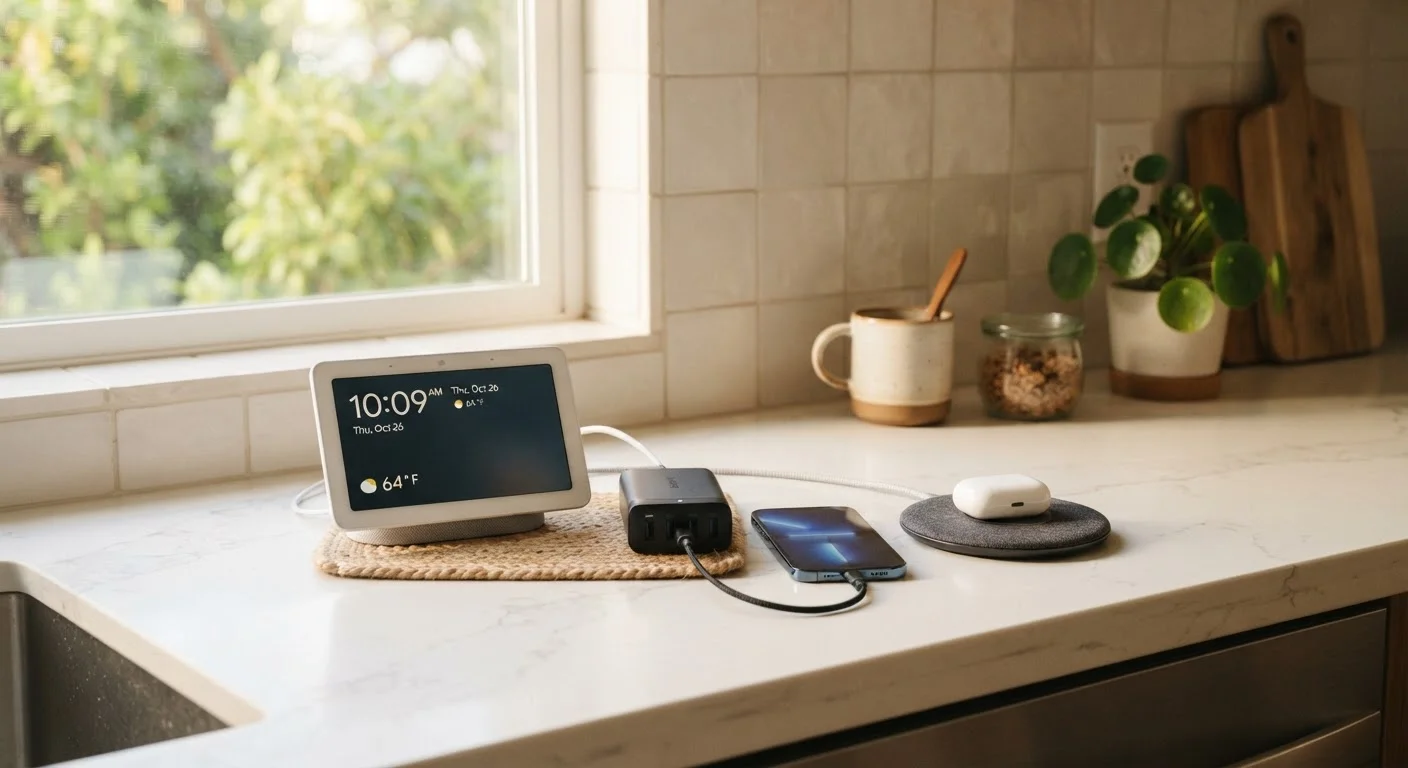
Photo credit: TopInfoTabs.com | Easy Insights For Inspiration
In this article
Not every useful home gadget is a headline product. Here are understated devices — and why each earns its counter space.
Key Takeaways
- Understated gadgets often deliver more lasting value than headline-grabbing smart home systems.
- The most useful devices solve specific, recurring friction points rather than adding new complexity.
- Setup simplicity and reliability matter more than feature counts for daily-use devices.
- Understanding trade-offs before purchasing prevents gadgets from becoming expensive clutter.
- A single well-chosen device in the right context can reclaim meaningful time each day.
Why Quiet Gadgets Often Win
The most talked-about consumer electronics are rarely the ones doing the most useful work. Voice assistants, robot vacuums, and connected lighting systems attract attention - but the devices that genuinely simplify daily life tend to be the ones that solve a specific, repeatable friction point without introducing new complexity in return. They don't require firmware updates, app accounts, or integration troubleshooting. They just work.
That distinction matters because gadget fatigue is real. A device abandoned in a drawer after two weeks costs the same as one used every day for five years. The question worth asking before any purchase isn't "is this impressive?" but "does this remove something I find consistently annoying?" The items below were chosen with that filter applied.
Before You Buy: Total Cost and Compatibility
Some gadgets that appear inexpensive at purchase carry ongoing costs - replacement consumables, subscription tiers, or ecosystem lock-in that limits future flexibility. Hidden costs that erode perceived discounts apply to tech purchases as much as any other category. It's also worth checking compatibility with your existing outlets, devices, and wireless standards before ordering. A gadget that requires workarounds rarely stays in daily use.
Six Understated Devices Worth the Counter Space
Start With One Friction Point
Rather than retrofitting an entire room with new devices at once, identify the single most recurring inconvenience in your daily routine and address that first. This approach makes the value - or absence of it - immediately apparent. It also sidesteps the common pattern of over-purchasing technology that doesn't fit real habits, which is explored further in common home tech misconceptions.
A multi-port USB charging hub
Cable sprawl around a nightstand or desk is one of the most persistent minor irritants in a modern home. A multi-port USB charging hub - one that supports both USB-A and USB-C outputs, ideally with at least one higher-wattage port - consolidates that chaos into a single plugged device. Look for hubs with built-in surge protection and charging indicators, which quietly extend the life of connected devices. The reduction in outlet competition alone tends to justify the counter space.
One hub replacing four adapters eliminates daily cable hunting without any ongoing maintenance.
A quality wireless charging pad
The small habit shift of setting a phone down on a pad instead of connecting a cable accumulates into meaningful convenience over weeks. Wireless chargers that support multiple charging standards and include a non-slip surface work across more devices without adapter juggling. It's worth noting that wireless charging is generally somewhat slower than wired - so this is a comfort choice, not a speed choice. But for overnight or desk-side charging, that distinction rarely matters in practice.
Replacing a nightly cable ritual with a single gesture pays back compounding convenience over time.
A small smart display for the kitchen
A compact smart display positioned in the kitchen earns its place by handling timers, unit conversions, recipe steps, and quick reminders entirely hands-free - useful when hands are covered in flour or holding a pan. Unlike a full smart speaker, the screen adds visual context: a timer countdown, a step-by-step recipe, or a quick weather glance without hunting for a phone. The trade-offs of running a smart home are worth understanding before committing to an ecosystem, but a standalone kitchen display typically sidesteps the more complex integration headaches.
Hands-free kitchen assistance is where a small smart display delivers the clearest return on investment.
An automatic nightlight with motion sensing
A motion-activated nightlight in a hallway, bathroom, or kitchen eliminates the jarring experience of navigating in darkness or fumbling for light switches during the night. Models that detect ambient light levels will only activate in the dark, drawing minimal power during daylight hours. This is a device that does its job entirely without user input after initial setup - which is perhaps the purest definition of genuinely useful home technology. It's unglamorous and costs very little, which is exactly why it tends to be overlooked.
Devices that work without user input after setup are the purest form of genuinely useful home technology.
A personal air quality monitor
Indoor air quality is something most households never measure directly - yet particulate levels, CO₂ concentration, and humidity can all affect focus, sleep quality, and general comfort in ways that are easy to attribute to other causes. A standalone air quality monitor displays current readings without requiring a connected app or subscription, giving actionable data: open a window, run a humidifier, or reduce a specific source of particulates. This is general informational context, not a medical device - but the visibility it provides can prompt straightforward habit changes. For deeper reading on how environment intersects with wellbeing, small daily habits are often shaped by surroundings more than people realize.
Visibility into what you're breathing tends to prompt simpler, more effective changes than any smart home feature.
A label maker with digital templates
Label makers sound mundane until a household actually starts using one consistently. Clear labeling of storage containers, cable runs, and pantry shelves reduces the low-grade cognitive load of searching for things - and pays dividends especially in shared living spaces or home offices. Modern label makers with digital template libraries produce clean, readable output that sticks to most surfaces reliably. If you're also refining a home office setup, pairing a label maker with thoughtful workstation organisation addresses two overlapping sources of daily friction simultaneously.
Consistent labeling reduces low-grade cognitive load across every room it's applied to.
Matching the Gadget to the Habit
None of the above devices require a connected ecosystem or a learning curve measured in weeks. That's deliberate. The same caution that applies to full smart home buildouts - detailed in the real trade-offs of running a smart home - also applies at smaller scale: added convenience should not come with added fragility. A device that depends on a cloud service or a companion app introduces a dependency that a simpler device does not.
The best home technology tends to be invisible in the best sense: you stop noticing it because it quietly handles the thing it was bought to handle. If a gadget still requires conscious effort after a month of use, it probably hasn't earned its place. That's a useful benchmark - and a more honest one than any feature list.

Author
Tech & Gadgets Editorial Team
Tech & Gadgets Editorial Team is the collective byline for our editorial team and contributor network. Articles published under this byline or an editorial pen name are researched, written, and reviewed according to our editorial standards for clarity, consistency, and independence before publication.
View all articles →