
Electric vs. Petrol: The Practical Considerations for Everyday Drivers
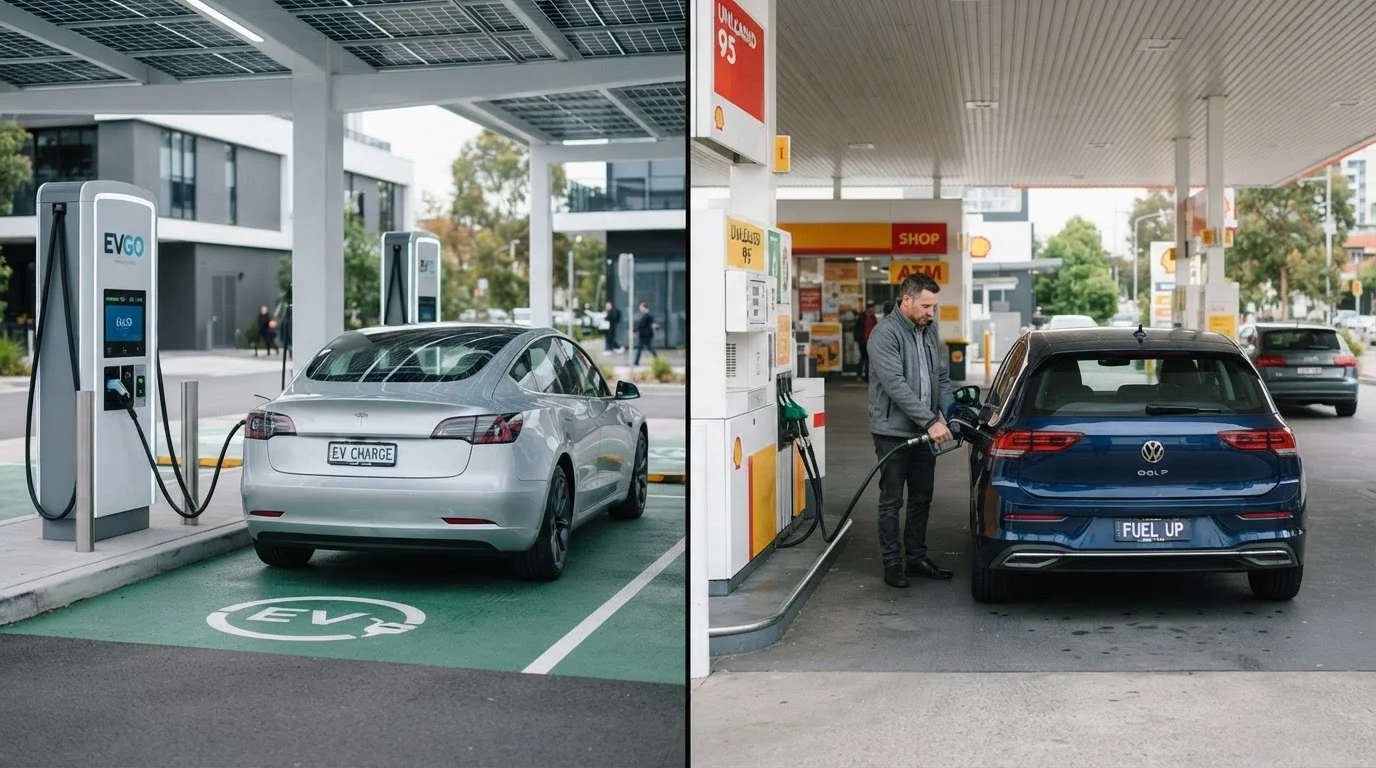
Photo credit: TopInfoTabs.com | Easy Insights For Inspiration
In this article
Range, charging infrastructure, running costs, and resale all look different for EVs and petrol cars. Here's how to think through the choice.
Key Takeaways
- Your daily mileage and access to home charging are the most critical factors in the EV decision.
- EVs typically carry higher purchase prices but meaningfully lower per-mile energy and maintenance costs.
- Petrol cars offer fast, nationwide refueling and a mature used-car market with more predictable resale patterns.
- EV range figures are EPA-rated estimates; real-world range varies with temperature, speed, and driving style.
- Maintenance requirements differ substantially - EVs eliminate many petrol-car service items entirely.
- Neither option is universally superior; the right choice depends on your specific driving habits and living situation.
Range and Refueling: The Day-to-Day Reality
For most everyday drivers, the practical question is simple: can this vehicle handle my typical week without becoming a logistical headache? For petrol cars, the answer is almost always yes by default - a five-minute fill-up restores 300-400 miles of range, and fuel stations are ubiquitous. EVs require a different kind of planning.
EPA-rated EV range figures - commonly between 200 and 350 miles for newer models - represent controlled test conditions. Real-world range is affected by highway speeds, cold weather, cabin heating, and cargo load. In practice, many drivers find their usable range is noticeably lower than the rated figure in winter months. That said, for the majority of US commuters - whose average one-way commute is well under 30 miles - a fully charged EV handles the working week without a single public charging stop, provided home charging is available.
Public DC fast-charging has improved substantially in coverage, but charging speed and station reliability remain genuine variables. A 20-to-80 percent fast charge typically takes 20-45 minutes depending on the vehicle and charger output. That's manageable on a planned road trip; it's disruptive if you're simply trying to run errands.
| Criterion | Electric Vehicle | Petrol Car |
|---|---|---|
| Typical range | 200-350 miles (EPA-rated) | 300-450 miles per tank |
| Refueling / recharging time | 20-45 min (fast charge, 20-80%) | Under 5 minutes |
| Average per-mile energy cost | Generally lower (varies by rate) | Generally higher |
| Routine maintenance complexity | Low - fewer moving parts | Higher - oil, filters, exhaust |
| Purchase price (comparable segment) | Typically higher upfront | Typically lower upfront |
| Charging / fueling infrastructure | Growing, but gaps remain | Extensive and nationwide |
| Cold-weather performance | Range noticeably reduced | Minor efficiency reduction |
| Resale market maturity | Still developing | Well-established |
Running Costs and Maintenance: Where the Numbers Diverge
Purchase price is only one part of the financial picture. EVs generally carry a higher upfront cost than comparable petrol vehicles, though federal and state incentive programs - which vary and change over time - can narrow that gap for eligible buyers. Consulting a tax professional or the IRS website directly is advisable before factoring any credit into your budget.
On a per-mile basis, electricity is typically cheaper than petrol, though the actual savings depend on your local electricity rate and how you charge. Home charging during off-peak hours tends to deliver the lowest cost per mile. Public fast charging, by contrast, can approach or occasionally exceed petrol costs per mile.
Maintenance is where EVs hold a structural advantage. Without a combustion engine, there are no oil changes, no spark plugs, no timing belts, and no exhaust system to service. Regenerative braking also reduces brake wear considerably. For context on what petrol-car maintenance involves, our car maintenance hub covers the routine service schedule in detail, including topics like engine oil and change intervals that EV owners simply don't need to think about.
~3-4¢
Estimated cost per mile for home EV charging
The US Department of Energy estimates home charging costs roughly 3-4 cents per mile, compared to 10-15 cents per mile for a typical petrol vehicle at average fuel prices.
~30%
Fewer scheduled service visits for EV owners
Consumer analysis and manufacturer data suggest EV owners visit service centers significantly less frequently than petrol-car owners due to the absence of oil changes and reduced brake wear.
41 miles
Average American daily driving distance
According to the US Federal Highway Administration, the average American drives approximately 37-41 miles per day - well within the range of most current EVs on a full charge.
Resale Value and Ownership Horizon
Resale value is one area where EVs carry more uncertainty than petrol vehicles. Battery degradation over time - how much capacity the battery retains after several years of use - affects used-EV pricing in ways that are still being established in the market. Rapid technology changes also mean that a three-year-old EV can feel more dated relative to newer models than a three-year-old petrol car would. Most manufacturers provide battery warranty coverage (commonly eight years or 100,000 miles), which offers some protection, but actual battery health at resale depends on usage patterns and charging habits.
Petrol cars have a far more mature used-car market with established valuation models. If you're approaching this decision from a broader purchasing perspective, our guide on approaching the car market for the first time walks through how to frame your budget and priorities before committing. And understanding value versus price is equally relevant here - a lower sticker price doesn't automatically mean a better financial outcome over a five-year ownership period.
Incentives Change - Verify Before You Buy
Federal tax credits for electric vehicles are subject to legislative change, income limits, vehicle price caps, and assembly-location requirements. State-level incentives vary widely and may not stack with federal credits in all cases. Always verify current eligibility directly with the IRS or a qualified tax professional before assuming an incentive will apply to your purchase. Do not treat an anticipated credit as guaranteed savings in your budget.

Author
Cars & Driving Editorial Team
Cars & Driving Editorial Team is the collective byline for our editorial team and contributor network. Articles published under this byline or an editorial pen name are researched, written, and reviewed according to our editorial standards for clarity, consistency, and independence before publication.
View all articles →