
Private Seller vs. Dealership: Weighing Up Where to Buy
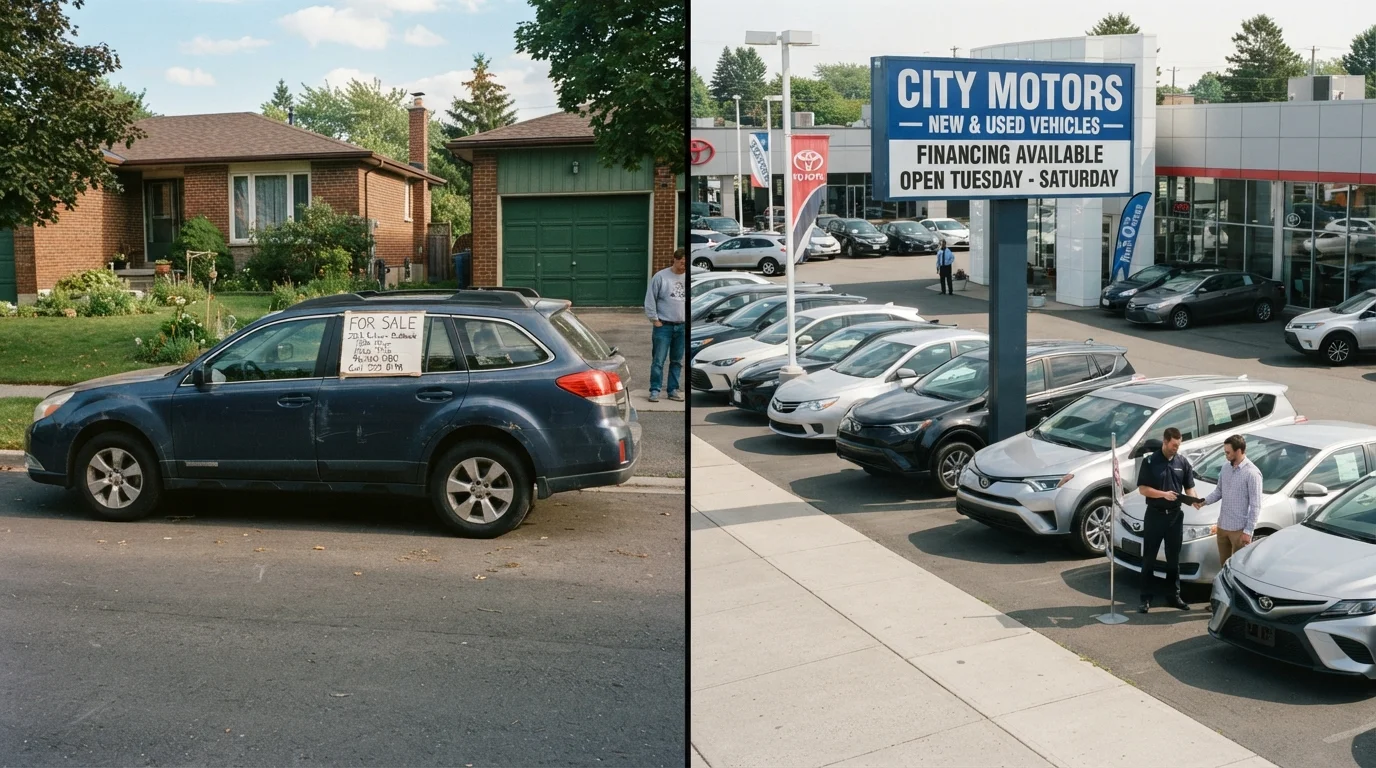
Photo credit: TopInfoTabs.com | Easy Insights For Inspiration
In this article
Both routes have genuine trade-offs. Here's what to weigh when deciding whether to buy from a private seller or a dealership.
Key Takeaways
- Private sellers typically list vehicles at lower prices, but buyers receive fewer legal protections.
- Dealerships offer consumer protections, warranties, and financing, often at a higher purchase price.
- A pre-purchase inspection by an independent mechanic is strongly advisable in both scenarios.
- Title transfer, lien checks, and paperwork risks are more pronounced in private sales.
- Your confidence level inspecting a vehicle should heavily influence which route you choose.
Why the Choice Matters More Than Most Buyers Realize
Choosing where to buy a used car isn't just about price - it shapes your legal standing, your recourse if something goes wrong, and how much due diligence you'll need to do yourself. Both channels can result in a solid purchase or a costly mistake, depending on how prepared you are going in.
Understanding the full car-buying journey helps frame this decision properly. See our comprehensive car-buying walkthrough for context on every stage, from research through to driving away.
| Criterion | Private Seller | Dealership |
|---|---|---|
| Typical Price | Often lower, less overhead | Higher, reflects reconditioning and margin |
| Negotiation | Direct with owner, flexible | Structured, more variables in play |
| Legal Protections | Minimal; largely buyer-beware | FTC rules, state laws, lemon law may apply |
| Warranty | Rarely included | Often available, CPO programs exist |
| Financing | Must arrange independently | In-house options available |
| Vehicle History Verification | Buyer's sole responsibility | Dealer often provides; still verify independently |
| Title & Lien Risk | Higher; buyer must confirm clean title | Lower; dealers handle title transfer |
| Vehicle Selection | Wider variety, including rare/older models | Limited to current inventory |
Price, Negotiation, and True Cost of Ownership
Private sellers generally list vehicles closer to or below market value because they aren't factoring in overhead costs - no showroom, no reconditioning budget, no commission. That said, the listed price is only part of the story. A private sale vehicle may arrive with deferred maintenance, undisclosed mechanical issues, or a lien against the title that the buyer is responsible for uncovering.
Dealerships price vehicles higher partly to cover those costs, but also because they typically recondition vehicles, conduct safety inspections, and offer some form of return or warranty policy. Understanding how pricing and margin actually work at a dealership is worth your time - our article on how car pricing works at a dealership breaks down invoice price, dealer margin, and where negotiating room tends to exist.
~40%
Used car sales through private parties in the US
Industry estimates suggest a significant share of used vehicle transactions occur outside of dealerships, underscoring the relevance of understanding both channels.
1 in 5
Used cars with undisclosed title issues
Vehicle history report providers have noted a substantial portion of used cars carry some form of title problem, lien, or undisclosed damage history.
Neither route automatically saves you money when total cost of ownership is considered. Factor in post-sale repairs, registration fees, and any financing costs before comparing sticker prices directly.
Legal Protections, Paperwork, and Risk Exposure
This is where the two routes diverge most sharply. In a private sale, the transaction is largely buyer-beware. Most states do not extend lemon law protections to private party sales, and the seller has limited legal obligation to disclose mechanical history beyond outright fraud. You are responsible for verifying the title is clean, confirming there's no outstanding lien from a lender, and ensuring the odometer reading is accurate.
Dealerships, by contrast, operate as licensed businesses subject to state and federal regulations. The Federal Trade Commission's Used Car Rule requires dealers to display a Buyers Guide disclosing warranty terms and known defects. Many states extend additional protections, and certified pre-owned (CPO) programs from manufacturers provide a further layer of coverage. If a dispute arises, you have a legal entity to hold accountable.
Check the Title Before Any Money Changes Hands
In a private sale, confirming a clean title is entirely the buyer's responsibility. Contact your state's DMV or use a reputable VIN-based title check to verify there are no outstanding liens, salvage designations, or odometer discrepancies. Never hand over payment before you have verified the seller legally owns the vehicle free and clear. A clean title is non-negotiable.
Before finalizing any private purchase, run the vehicle identification number (VIN) through a history report service and arrange a pre-purchase inspection with an independent mechanic - not one the seller recommends. Our pre-purchase checklist walks through the key questions to ask before any deal is done.
Financing, Convenience, and the Bigger Picture
Financing a private sale requires securing a loan independently through a bank or credit union before the transaction, which adds steps and may limit your flexibility on the day. Dealer financing is more convenient but should be compared carefully against outside offers. For a detailed look at how these two approaches differ, see our guide on financing through a dealership vs. your own lender.
If you're considering an alternative route entirely, vehicle auctions represent a third option with its own risk profile - our article on buying a car at auction is worth reading before assuming auctions are a shortcut to a deal.
Ultimately, your confidence in assessing a vehicle's condition, your need for financing, and how much legal protection matters to you should guide this decision - not price alone. Neither route is inherently superior; both require preparation and clear eyes about what you're taking on.
This article is for general informational purposes only and does not constitute legal, financial, or professional automotive advice. Regulations and consumer protections vary by state; consult a qualified professional for guidance specific to your situation.

Author
Cars & Driving Editorial Team
Cars & Driving Editorial Team is the collective byline for our editorial team and contributor network. Articles published under this byline or an editorial pen name are researched, written, and reviewed according to our editorial standards for clarity, consistency, and independence before publication.
View all articles →