
Buying a Car at Auction: What the Process Involves and Who It Suits
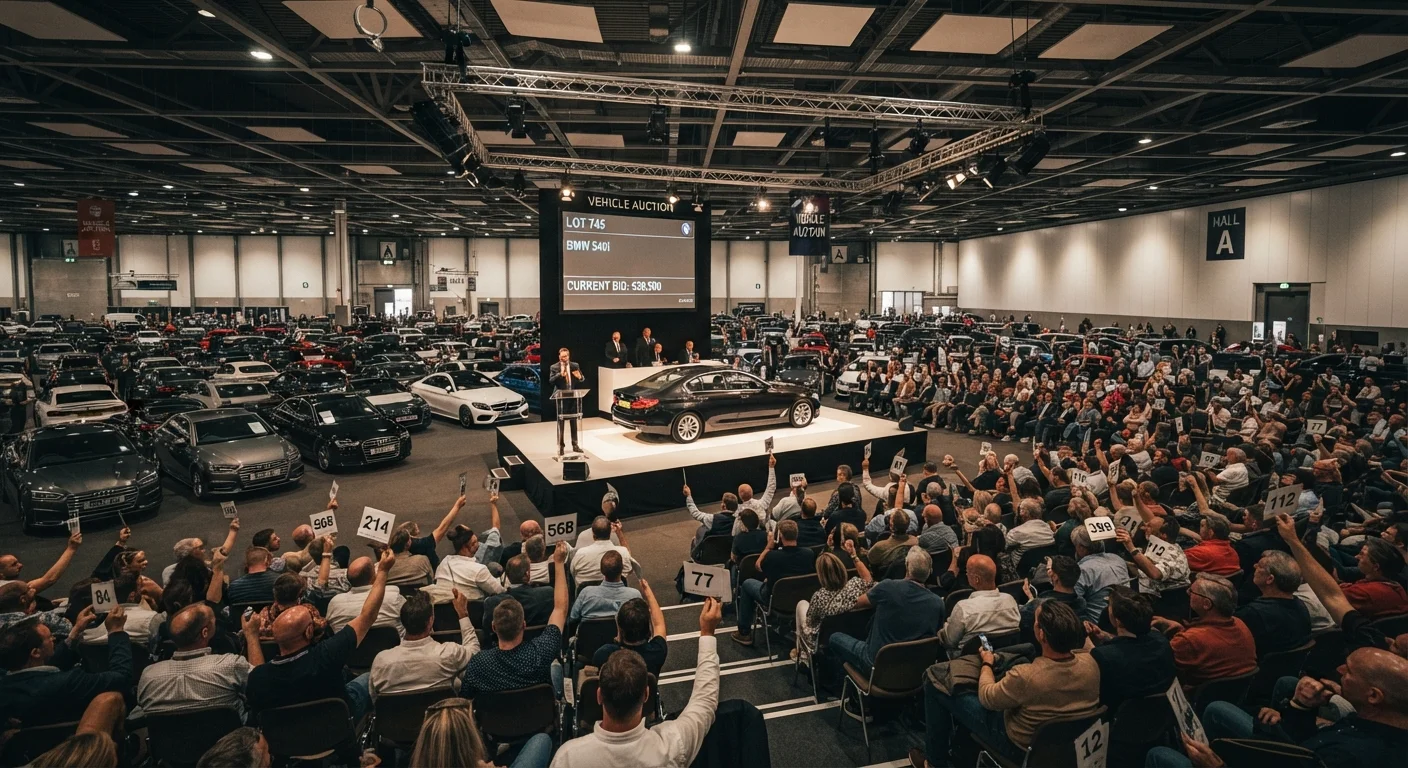
Photo credit: TopInfoTabs.com | Easy Insights For Inspiration
In this article
Vehicle auctions can offer lower prices, but the process, risks, and limitations are very different from a standard purchase. Here's what to know.
Key Takeaways
- Auction vehicles are typically sold as-is, with little or no buyer protection compared to dealership purchases.
- Prices can be lower than retail, but additional fees often close the gap significantly.
- Most auctions allow only a brief visual inspection - mechanical evaluation is limited or impossible.
- Financing is rarely arranged on the day; buyers should secure funds before bidding.
- Auctions suit experienced buyers who can assess a vehicle quickly and accept uncertainty.
Prices can fall below typical retail market value
Auctions bypass dealer overhead and the expectation of a negotiated retail margin, which can result in lower hammer prices - particularly for fleet and government disposals.
Access to a wide variety of vehicles in one place
A single auction event may list dozens or hundreds of vehicles across makes, models, ages, and price points, giving experienced buyers more to choose from than a typical forecourt.
Fleet vehicles often come with documented service histories
Government and corporate fleet disposals frequently include maintenance records, making it easier to assess how the vehicle was kept - a meaningful advantage over many private sales.
Transactions are typically completed quickly
Once a bid is won and payment settled, handover is generally faster than navigating dealer negotiations or waiting on private seller timelines.
Vehicles sold as-is with no return or warranty
Consumer protections that apply to dealer sales - such as implied warranties or return rights - generally do not apply at auction. Any mechanical issue discovered after purchase is the buyer's responsibility.
Inspection access is severely limited
Test drives are almost never permitted, and professional mechanical inspections are rarely possible on the day. Buyers must make high-stakes decisions based on a visual walk-around alone.
Buyer's premiums and fees add to the final cost
Auction houses typically charge a buyer's premium - often 5-10% of the sale price - on top of the hammer price, which can significantly narrow any price advantage over retail.
Title and lien issues may not be immediately apparent
Some auction vehicles carry outstanding finance, salvage titles, or unresolved ownership complications that may not be fully disclosed before bidding closes.
Fast-paced environment can lead to impulsive bidding
The competitive atmosphere of live auctions can push buyers beyond their planned limit. Emotional bidding is a well-documented pitfall that erodes the price benefit auctions can offer.
Financing must be arranged before the auction
Unlike dealership purchases, there is no on-site finance desk. Buyers who haven't pre-arranged funds risk losing a winning bid or scrambling to settle payment in a very short window.
How Car Auctions Actually Work
Vehicle auctions - whether physical or online - operate on a straightforward principle: vehicles are presented one at a time (or listed digitally), bidding opens, and the highest bid at close wins. In practice, the experience is fast-moving and demands preparation.
Physical auctions typically allow registered bidders to walk the lot before bidding begins. You may have anywhere from a few minutes to an hour to look over a vehicle - but you generally cannot take it for a test drive or put it on a lift. Online auctions provide photos, condition reports, and sometimes third-party inspection summaries, but remote evaluation carries its own limitations.
Most auctions fall into a few broad categories: dealer-only auctions (restricted to licensed dealers), public auctions (open to registered individuals), government and fleet auctions (selling retired public-sector vehicles), and salvage auctions (selling insurance write-offs or damaged vehicles). Each carries different risk profiles and vehicle quality ranges.
Payment is typically required quickly - often within 24 to 48 hours of winning a bid. Buyers should arrange financing before arriving, as on-the-spot lending is rarely available. See our overview of financing options before you buy for context on arranging funds in advance.
The Advantages of Buying at Auction
Auctions have a genuine appeal, and for the right buyer, they can represent a practical way to acquire a vehicle below typical retail pricing.
Prices can fall below typical retail market value
Auctions bypass dealer overhead and the expectation of a negotiated retail margin, which can result in lower hammer prices - particularly for fleet and government disposals.
Access to a wide variety of vehicles in one place
A single auction event may list dozens or hundreds of vehicles across makes, models, ages, and price points, giving experienced buyers more to choose from than a typical forecourt.
Fleet vehicles often come with documented service histories
Government and corporate fleet disposals frequently include maintenance records, making it easier to assess how the vehicle was kept - a meaningful advantage over many private sales.
Transactions are typically completed quickly
Once a bid is won and payment settled, handover is generally faster than navigating dealer negotiations or waiting on private seller timelines.
5-10%
Typical auction buyer's premium above hammer price
Most auction houses charge a buyer's premium as a percentage of the sale price, which should be factored into any budget calculation before bidding begins.
24-48 hrs
Typical payment window after winning bid
Payment deadlines at vehicle auctions are short; buyers who have not pre-arranged financing frequently face difficulty completing their purchase in time.
Fleet and government auctions in particular often offer well-maintained vehicles with documented service histories - the conditions under which the vehicle was operated may be more predictable than a private sale. For buyers with mechanical knowledge or access to a trusted mechanic who can advise remotely, this environment can yield real value.
The Risks and Disadvantages to Weigh Carefully
The same conditions that create opportunity also create risk. Auction vehicles are almost always sold as-is - meaning once the hammer falls, the vehicle is yours, including any undisclosed mechanical problems, title issues, or hidden damage.
Vehicles sold as-is with no return or warranty
Consumer protections that apply to dealer sales - such as implied warranties or return rights - generally do not apply at auction. Any mechanical issue discovered after purchase is the buyer's responsibility.
Inspection access is severely limited
Test drives are almost never permitted, and professional mechanical inspections are rarely possible on the day. Buyers must make high-stakes decisions based on a visual walk-around alone.
Buyer's premiums and fees add to the final cost
Auction houses typically charge a buyer's premium - often 5-10% of the sale price - on top of the hammer price, which can significantly narrow any price advantage over retail.
Title and lien issues may not be immediately apparent
Some auction vehicles carry outstanding finance, salvage titles, or unresolved ownership complications that may not be fully disclosed before bidding closes.
Fast-paced environment can lead to impulsive bidding
The competitive atmosphere of live auctions can push buyers beyond their planned limit. Emotional bidding is a well-documented pitfall that erodes the price benefit auctions can offer.
Financing must be arranged before the auction
Unlike dealership purchases, there is no on-site finance desk. Buyers who haven't pre-arranged funds risk losing a winning bid or scrambling to settle payment in a very short window.
Buyers caught up in bidding momentum can also overpay. It's worth establishing a firm ceiling price before the auction begins and committing to it - emotional bidding is one of the most common and costly mistakes at auction.
For a broader look at how this compares to other purchasing routes, our article on buying from a private seller or dealership lays out the trade-offs across all three channels.
Salvage Auctions Carry Additional Complexity
Vehicles sold through salvage or insurance-write-off auctions have typically been declared a total loss by an insurer. Acquiring and retitling a salvage vehicle involves state-specific requirements, and some states impose restrictions on road use or resale. If you're considering a salvage auction vehicle, consult your state's DMV guidelines and factor in full reconditioning costs before bidding - the purchase price rarely reflects the total investment required.
What to Do Before You Bid
Preparation is what separates a calculated purchase from an expensive gamble. If you're considering an auction, run through the following before bidding day:
- Research the vehicle's history. Use the VIN to check for prior accidents, title problems, odometer discrepancies, and open recalls through publicly available databases.
- Know the total cost. Auction houses charge buyer's premiums - typically a percentage of the sale price - plus potential transportation, registration, and reconditioning costs. The winning bid is rarely the final number.
- Set a hard limit. Calculate the maximum you're willing to pay inclusive of all fees, and don't exceed it.
- Understand what documents you should receive. A clean title is essential. Our guide to documents you should receive when buying a car outlines what to check at handover.
- Arrive early for physical auctions. Use the preview period fully - check for visible rust, mismatched paint, fluid leaks, and interior condition.
If you're new to buying a car in general, it's worth reading a foundational guide to the car market before considering auction as your entry point.

Author
Cars & Driving Editorial Team
Cars & Driving Editorial Team is the collective byline for our editorial team and contributor network. Articles published under this byline or an editorial pen name are researched, written, and reviewed according to our editorial standards for clarity, consistency, and independence before publication.
View all articles →