
How Speed Limits Are Set and What They Actually Represent
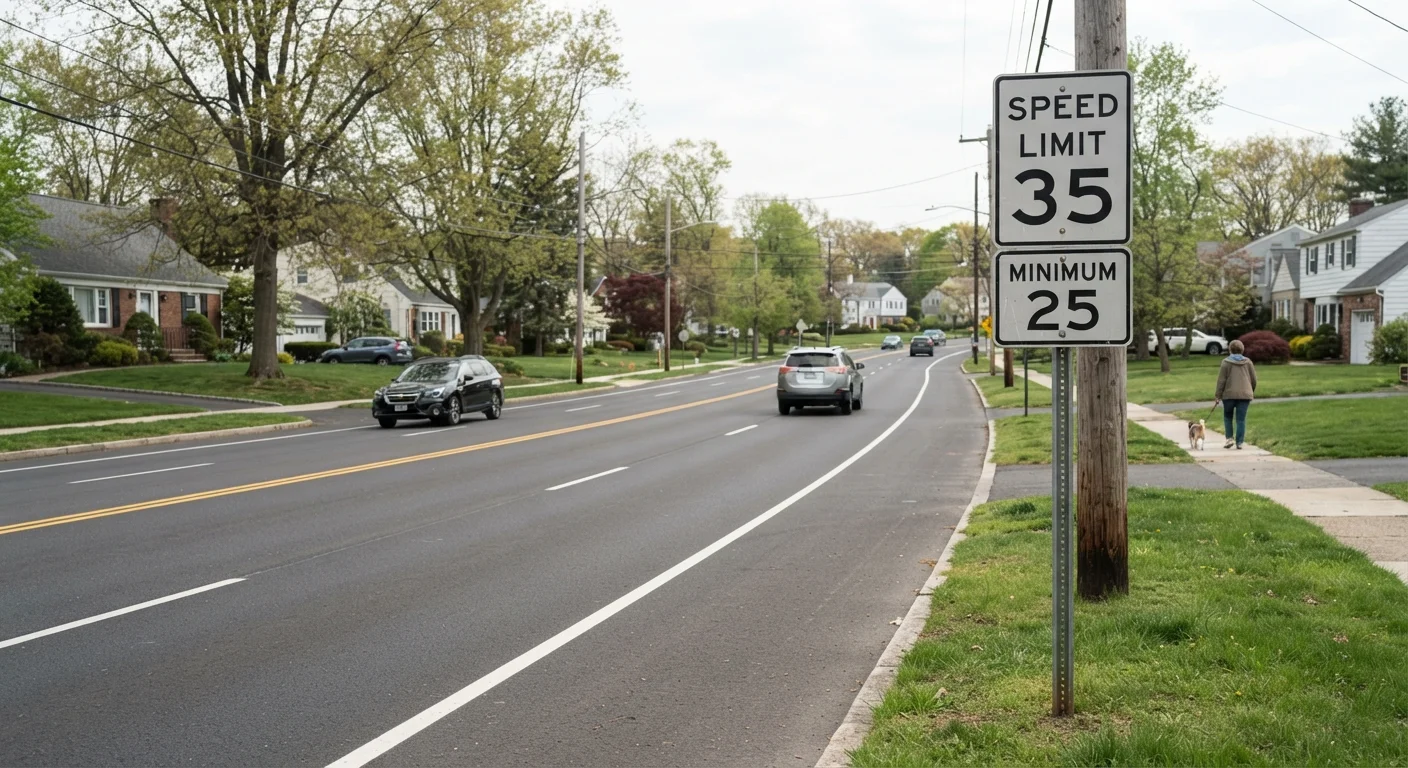
Photo credit: TopInfoTabs.com | Easy Insights For Inspiration
In this article
Speed limits aren't arbitrary. This explainer covers the engineering, safety research, and road classification logic that determines posted limits.
Key Takeaways
- Speed limits are determined by engineering studies, road classification, and safety research - not guesswork.
- The 85th-percentile speed principle is a common engineering tool, but safety and land-use context also matter.
- Urban and residential roads are typically posted lower because pedestrian and cyclist exposure is much higher.
- Higher speeds dramatically increase crash severity - the physics of kinetic energy are central to limit-setting.
- Drivers can travel legally at the posted limit, but conditions often call for speeds well below it.
The Engineering Behind the Number
When traffic engineers evaluate a road for a speed limit, they don't pick a round number and post it. The process typically involves a formal traffic and engineering study that examines several factors: the physical design of the road (lane width, curvature, sight distance), the surrounding land use, crash history, and the speeds drivers are already choosing to travel.
One widely used tool is the 85th-percentile speed - the speed at or below which 85% of free-flowing vehicles are observed traveling. The reasoning is that this reflects the speed most drivers intuitively adopt given the road's design. Setting limits dramatically lower than this threshold can actually reduce compliance and create speed variation between vehicles, which itself is a crash risk factor.
That said, the 85th-percentile principle is a starting point, not a final answer. Engineers weigh it alongside pedestrian volumes, access points, crash records, and adjacent land use before recommending a limit.
Check Local Regulations Before Assuming
Default speed limits vary by state even on similar road types. Some states have adopted lower default urban limits in recent years. When you're unsure, treat the lowest posted sign as authoritative and look up your state's default limit statutes - they're publicly available from each state's department of transportation.
Road Classification and How It Shapes Limits
Not all roads are designed for the same purpose, and speed limits reflect that. The federal functional classification system sorts roads into categories - interstate highways, arterials, collectors, and local streets - each built to different geometric standards and serving different traffic volumes.
- Interstates and freeways: Designed for high-speed, uninterrupted travel. Wide lanes, gradual curves, full access control, and grade separations support limits that often range from 65 to 80 mph in rural areas.
- Urban arterials: Higher traffic volumes, intersections, and mixed-use surroundings bring limits down, typically 35-50 mph.
- Residential and local streets: Designed for low volumes and high pedestrian activity. Limits of 25-30 mph are common, and some municipalities have moved to 20 mph on specific corridors.
The road's design speed - an engineering parameter that describes the maximum speed at which a road's geometric features are safe to navigate - is a ceiling, not a target. Posted limits are often set below design speed to account for real-world variability in drivers and conditions.
The Safety Physics That Justify Lower Limits
Speed limits aren't just about traffic flow - they encode serious physics. Kinetic energy increases with the square of velocity, meaning a vehicle traveling at 40 mph carries roughly four times the kinetic energy of one traveling at 20 mph. That energy must be absorbed in a crash, either by vehicle structures, safety systems, or - in pedestrian and cyclist collisions - the human body.
Research from multiple transportation safety bodies consistently shows that pedestrian fatality risk rises sharply with impact speed. A collision at 20 mph carries significantly lower fatality risk than one at 40 mph. This physics is why urban and school zone limits have trended lower over time, independent of driver behavior patterns.
Understanding how speed relates to stopping distance is equally important. The faster a vehicle travels, the more distance is needed for both the driver to react and the brakes to bring the car to a stop. For a deeper look at how those two phases interact, see our explainer on stopping distances.
4×
Kinetic energy increase from doubling speed
Because kinetic energy scales with the square of velocity, doubling vehicle speed quadruples the energy involved in a crash - a core principle behind urban speed limit policy.
85th
Percentile speed used in engineering studies
Traffic engineers commonly measure the speed at or below which 85% of free-flowing vehicles travel as one reference point when evaluating or setting a speed limit.
~4-5 sec
Typical perception-reaction time range
Human reaction time, combined with vehicle braking distance, determines total stopping distance - both factors that grow significantly as speed increases.
What Speed Limits Don't Tell You
A posted speed limit communicates the maximum legal speed under normal, favorable conditions. It does not tell you the safe speed for the current moment. Rain reduces tire grip. Snow can cut braking effectiveness dramatically. Darkness limits sight distance. Heavy traffic compresses the space available to react.
Experienced drivers treat the posted limit as a ceiling, not a target, adjusting downward whenever conditions warrant. Traffic laws in most U.S. states support this framing - statutes typically require drivers to travel at a speed that is reasonable and prudent for existing conditions, regardless of what the sign says.
Speed limits also don't account for individual vehicle differences. A fully loaded pickup truck, a compact sedan, and a motorcycle have different handling and braking profiles at identical speeds. The posted limit applies equally to all of them, but safe operating speed may differ.
Limits Apply to Favorable Conditions
U.S. traffic law generally requires drivers to operate at a speed that is reasonable and prudent given current road and weather conditions. Driving at the posted limit during heavy rain, snow, or dense fog may still be considered unsafe - and legally actionable - if conditions clearly called for a lower speed. Always adjust to actual conditions, not just the sign.
Frequently Asked Questions

Author
Cars & Driving Editorial Team
Cars & Driving Editorial Team is the collective byline for our editorial team and contributor network. Articles published under this byline or an editorial pen name are researched, written, and reviewed according to our editorial standards for clarity, consistency, and independence before publication.
View all articles →