
The Science Behind Stopping Distances
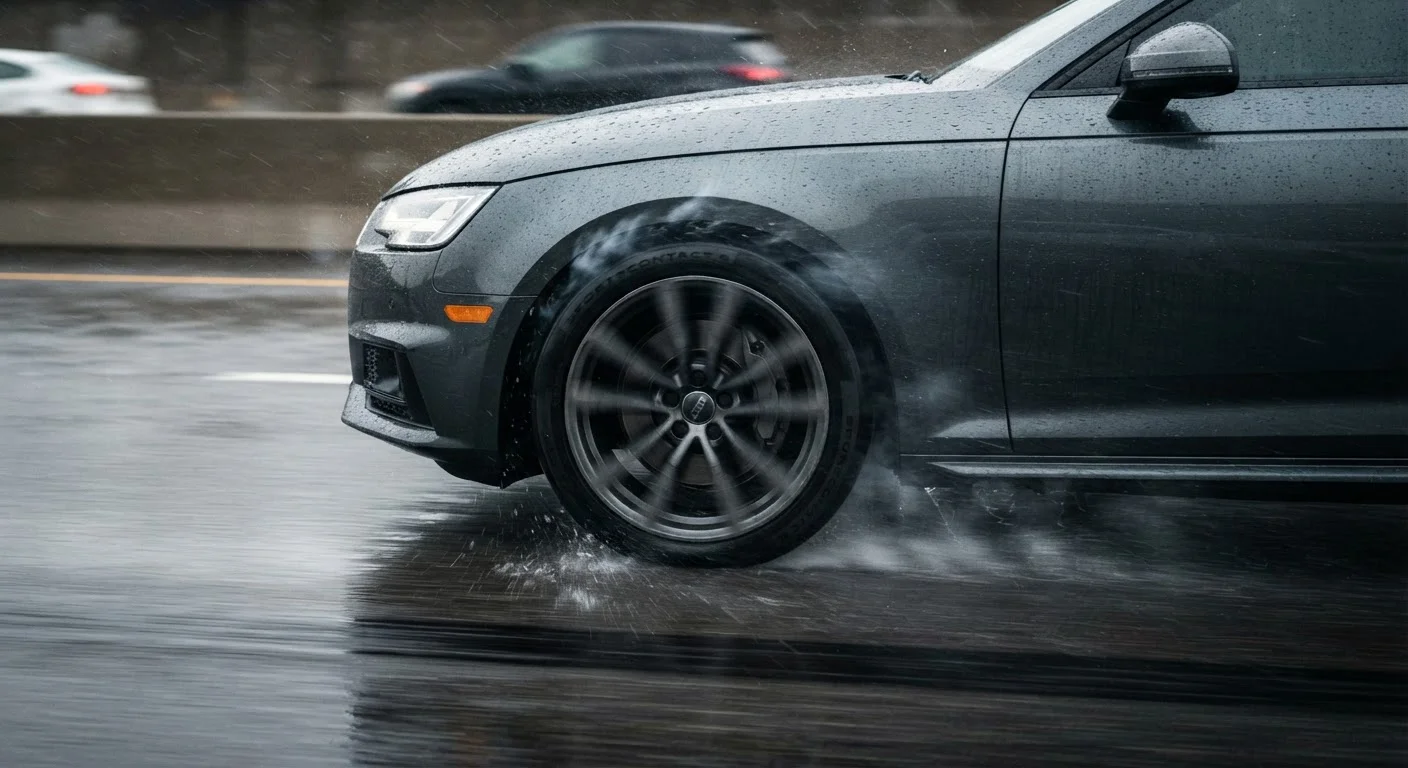
Photo credit: TopInfoTabs.com | Easy Insights For Inspiration
In this article
Understand how speed, reaction time, and road conditions combine to determine how far your car travels before stopping.
Key Takeaways
- Stopping distance has two parts: thinking distance and braking distance.
- Braking distance increases exponentially, not linearly, with speed.
- Wet or icy roads can more than double the distance needed to stop.
- Reaction time averages around 1.5 seconds but worsens with fatigue or distraction.
- Tailgating eliminates the buffer needed to stop safely before a collision.
The Two Components Every Driver Should Know
When you spot a hazard and bring your car to a stop, two distinct phases are already underway. The first is thinking distance - the distance your vehicle covers between the moment your eyes register danger and the moment your foot depresses the brake pedal. The second is braking distance - the distance traveled from the moment braking begins until the vehicle is fully stopped.
At 30 mph on a dry road, thinking distance is roughly 30 feet and braking distance is approximately 45 feet, producing a total stopping distance of about 75 feet. By 60 mph, those figures don't just double - total stopping distance reaches around 240 feet, more than three times as long. This is because braking distance grows with the square of speed, not in a straight line.
240 ft
Total stopping distance at 60 mph on dry road
Based on general road safety education figures widely cited by traffic safety organizations for an alert driver on dry asphalt.
1.5 sec
Average driver reaction time
Commonly referenced figure in traffic engineering and road safety literature for an alert, unimpaired driver.
4×
Increase in braking distance when speed doubles
Derived from the kinetic energy relationship (KE = ½mv²), a fundamental principle of physics applied to vehicle dynamics.
Understanding this distinction is the foundation of defensive driving - anticipating hazards early enough that both components of stopping distance remain within your available space.
Why Reaction Time Is More Variable Than You Think
Many drivers assume their reactions are sharp and consistent. The reality is more nuanced. The average alert driver has a reaction time of around 1.5 seconds. At 60 mph, that single 1.5 seconds translates to about 132 feet of travel - before the brakes even start working.
Several factors push reaction time well beyond that baseline:
- Fatigue: Even mild sleep deprivation measurably slows cognitive and physical response.
- Distraction: A glance at a phone, an in-car conversation, or adjusting the radio can add critical fractions of a second.
- Impairment: Alcohol and certain medications significantly delay perception and muscle response.
- Expectation: Drivers are slower to react to unexpected hazards than to anticipated ones.
Build a Reaction Time Buffer Into Your Drive
Assume your reaction time will be slower than ideal, especially on long trips or late-night drives. Increasing your following distance by an extra second costs you almost nothing in travel time but provides a meaningful safety margin. If you feel fatigued, pull over - no schedule is worth the compromised reaction time that fatigue produces.
It's also worth knowing that your perception of speed is distorted at higher velocities, making it harder to judge how quickly a hazard is approaching.
How Road Conditions Reshape the Equation
Dry asphalt offers the best friction between tires and road. As conditions change, that friction coefficient drops - and braking distance climbs steeply in response.
Consider these approximate multipliers compared to dry roads:
| Surface Condition | Approximate Stopping Distance Multiplier |
|---|---|
| Dry asphalt | 1× |
| Wet asphalt | 1.5-2× |
| Packed snow | 3-4× |
| Glare ice | 8-10× |
Tire condition plays a role too. Worn tread dramatically reduces grip on wet surfaces, and underinflated tires affect how load is distributed during braking. For a detailed look at how to adjust your behavior in adverse conditions, see our guide on driving in rain, fog, and snow.
Tire Condition Matters More Than Most Drivers Realize
Legal tread depth minimums are not the same as optimal tread depth for wet-weather braking. Research in tire performance consistently shows that stopping distances on wet roads begin increasing noticeably as tread depth falls below 4/32". Have your tires inspected regularly and replace them before they reach the legal minimum if wet-weather driving is a concern.
Following Distance: Translating Physics Into Practice
The practical takeaway from stopping distance physics is straightforward: you need space ahead of you. The 3-second rule is a widely taught guideline - pick a fixed point on the road, and make sure at least three seconds elapse between the car ahead passing it and your own vehicle reaching it.
In adverse weather, that buffer should expand to six seconds or more. On highways and interstates, where higher speeds mean exponentially longer stopping distances, maintaining generous gaps is especially critical. As road type changes, so should your approach to following distance.
Tailgating - following too closely - eliminates the buffer that stopping distance physics requires. If the vehicle ahead stops suddenly, no amount of driver skill can overcome the physical constraints of an insufficient gap.
This article is for general educational purposes only. Always observe posted speed limits and consult official road safety guidelines for your state or jurisdiction.
Frequently Asked Questions

Author
Cars & Driving Editorial Team
Cars & Driving Editorial Team is the collective byline for our editorial team and contributor network. Articles published under this byline or an editorial pen name are researched, written, and reviewed according to our editorial standards for clarity, consistency, and independence before publication.
View all articles →