
Safe Driving Across Different Road Types: Urban, Rural, and Dual Carriageway
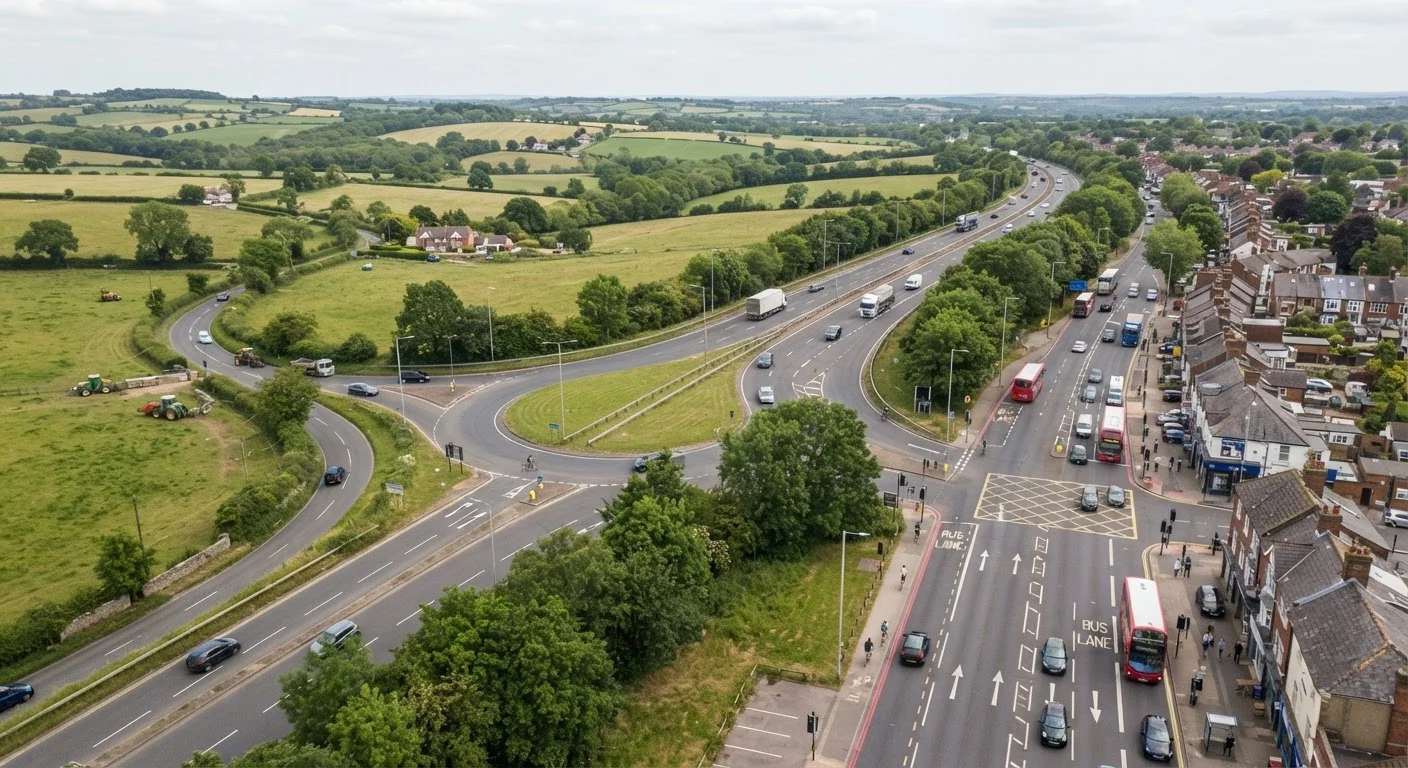
Photo credit: TopInfoTabs.com | Easy Insights For Inspiration
In this article
Each road environment carries its own hazards and demands. Here's how to adjust your approach as conditions and speed limits change.
Key Takeaways
- Rural roads account for a disproportionately high share of serious collisions despite lighter traffic.
- Urban driving demands constant attention to pedestrians, cyclists, and unpredictable junctions.
- Dual carriageways require confident lane discipline and smooth, well-signalled merging.
- Speed limits are a maximum, not a target - conditions often call for less.
- Transitioning between road types is a high-risk moment that demands a deliberate mental reset.
Why Road Type Changes Everything
Most drivers develop habits suited to the roads they use most. That familiarity is useful - but it can become a liability the moment the environment changes. Urban streets, rural lanes, and dual carriageways each present a distinct set of hazards, speed dynamics, and decision-making demands. A strategy that keeps you safe on a 30 mph high street can actively increase your risk on an open A-road where a blind bend arrives in under two seconds at 60 mph.
Road type affects stopping distances, the types of hazards you're likely to encounter, the level of driver error that's forgivable, and how much time you have to respond. Understanding each environment on its own terms - rather than applying one-size-fits-all caution - is a core skill of experienced driving.
~60%
Fatal crashes occurring on rural roads
UK government road casualty statistics consistently show rural roads account for a disproportionate share of fatal collisions relative to traffic volume.
96 m
Minimum stopping distance at 70 mph
UK Highway Code figures for dry conditions; wet roads increase this significantly and require greater following distances.
Urban Roads: Managing Complexity at Lower Speeds
Urban driving is defined by density. Junctions, parked vehicles, pedestrian crossings, cyclists, delivery vehicles, and bus stops all compete for road space within short distances. Lower speed limits give drivers more reaction time, but the sheer volume of potential hazards means attention must be continuous and wide-ranging.
Key hazards in urban environments
- Pedestrians stepping out from between parked cars or at informal crossing points
- Cyclists filtering through traffic or moving up the inside at junctions
- Doors opening from parked vehicles - maintain at least a door's width of clearance
- Obscured sight lines at T-junctions and roundabouts due to parked cars or signage
- School zones and bus stops where children move unpredictably
Scanning further ahead than feels necessary is one of the most effective urban habits. Identifying a potential hazard 100 metres away gives you time to adjust speed without hard braking. For more on protecting vulnerable road users in these environments, see sharing the road safely with cyclists and pedestrians.
Use the MSPSL Routine at Every Junction
Mirror-Signal-Position-Speed-Look (MSPSL) is the standard approach sequence taught in UK driver training. Applying it consistently at urban junctions - even familiar ones - reduces the risk of being caught out by a hazard that appeared while your attention was elsewhere. Routine builds the margin that saves you in edge cases.
Rural Roads: Space Is Not the Same as Safety
Rural roads are statistically among the most dangerous in the UK road network. The combination of higher speeds, narrow lanes, limited lighting, unexpected wildlife, and agricultural vehicles creates a risk profile that many drivers underestimate precisely because the roads feel uncrowded and open.
What makes rural roads particularly unforgiving
- Blind bends and crests - a vehicle travelling at 60 mph covers 27 metres per second. If you cannot stop within the distance you can see to be clear, you are overdriving your vision.
- Inconsistent road surfaces - mud, gravel, and standing water after rain significantly reduce tyre grip.
- Slow-moving vehicles - tractors and HGVs appear around bends with little warning. Overtaking on rural roads requires a long, clear, unambiguous stretch and a firm understanding of your vehicle's acceleration capability.
- Unmarked junctions and farm entrances - vehicles pulling out slowly or without warning are a consistent cause of collisions.
On rural roads, position your car to maximise your sight line through bends - move left on right-hand bends, slightly right on left-hand bends - without crossing lane markings. This adds seconds of visible road ahead.
Sight distance directly determines whether you can stop in time for an unseen hazard. Even a modest positional adjustment can meaningfully extend the visible road ahead on tight rural bends.
When following a slow vehicle on a rural road, resist the temptation to close up to pressure them into pulling over. Hang back to maintain a view of the road ahead and spot overtaking opportunities earlier.
Drivers who follow closely on rural roads lose both stopping distance and forward visibility simultaneously - the two factors most needed for a safe overtake decision.
Weather compounds every rural hazard. Driving in rain, fog, and snow details how surface conditions shift the margin for error on exactly the kind of narrow, exposed roads where rural driving takes place.
Dual Carriageways: Speed, Lane Discipline, and Merging
Dual carriageways - roads with a central reservation separating two opposing carriageways - typically carry a 70 mph national speed limit. They are faster and more structured than single-lane rural roads, but that speed environment introduces its own risks, particularly for drivers less experienced with high-speed merging and sustained motorway-adjacent driving.
Lane discipline
The left lane is the default driving lane. The right lane is for overtaking. Remaining in the right lane when not actively overtaking - sometimes called lane hogging - reduces available space for other drivers to make safe manoeuvres and is a recognised cause of dangerous situations. Once you have completed an overtake and the road ahead is clear, return to the left lane smoothly.
Joining and leaving
Acceleration lanes on dual carriageways are often shorter than those on motorways. Match traffic speed before merging, use mirrors and blind-spot checks systematically, and signal clearly. Abrupt merges at mismatched speeds are a common collision cause. For a thorough breakdown of how high-speed road joining works under pressure, what motorway driving actually demands of new drivers applies directly to dual carriageway technique as well.
Tailgating at High Speed Leaves No Recovery Time
At 70 mph, closing distance between vehicles can collapse in under a second. Many dual carriageway rear-end collisions involve following distances that would have been acceptable in urban traffic but are dangerously short at speed. If you find yourself having to brake because the car ahead braked, your gap was already too small.
Following distances on dual carriageways should be substantially larger than urban equivalents. At 70 mph, the recommended minimum stopping distance in dry conditions is around 96 metres - roughly the length of six car lengths per 10 mph, or the two-second rule extended to a minimum of three seconds in good conditions.
Transitioning Between Road Types
The moment of transition - leaving a dual carriageway to join a rural B-road, or moving from a motorway into a built-up area - is when speed perception can fail. After sustained high-speed travel, 40 mph can feel deceptively slow. This perceptual lag means drivers often enter lower-speed environments carrying more speed than they realise.
A deliberate habit check at transition points makes a measurable difference: glance at the speedometer, not just the road. Identify the new speed limit sign. Give yourself a moment to recalibrate your sense of the environment before matching the pace of local traffic.
Tailgating and undertaking also spike at transition points, where speed differentials between vehicles are greatest. Keeping extra space during these moments is a straightforward buffer against the unexpected.
Road type awareness is not a passive skill - it is an active, ongoing process of reading your environment and adjusting accordingly. Whether you are navigating a busy city junction or cresting a blind rural hill, the fundamentals are consistent: match your speed to what you can see, anticipate the hazards specific to that environment, and give yourself enough space and time to respond to the unexpected.
This article provides general road safety information for educational purposes. Always follow current traffic laws and consult official guidance relevant to your jurisdiction.

Author
Cars & Driving Editorial Team
Cars & Driving Editorial Team is the collective byline for our editorial team and contributor network. Articles published under this byline or an editorial pen name are researched, written, and reviewed according to our editorial standards for clarity, consistency, and independence before publication.
View all articles →