
Tailgating, Undertaking, and Other Habits That Raise Crash Risk
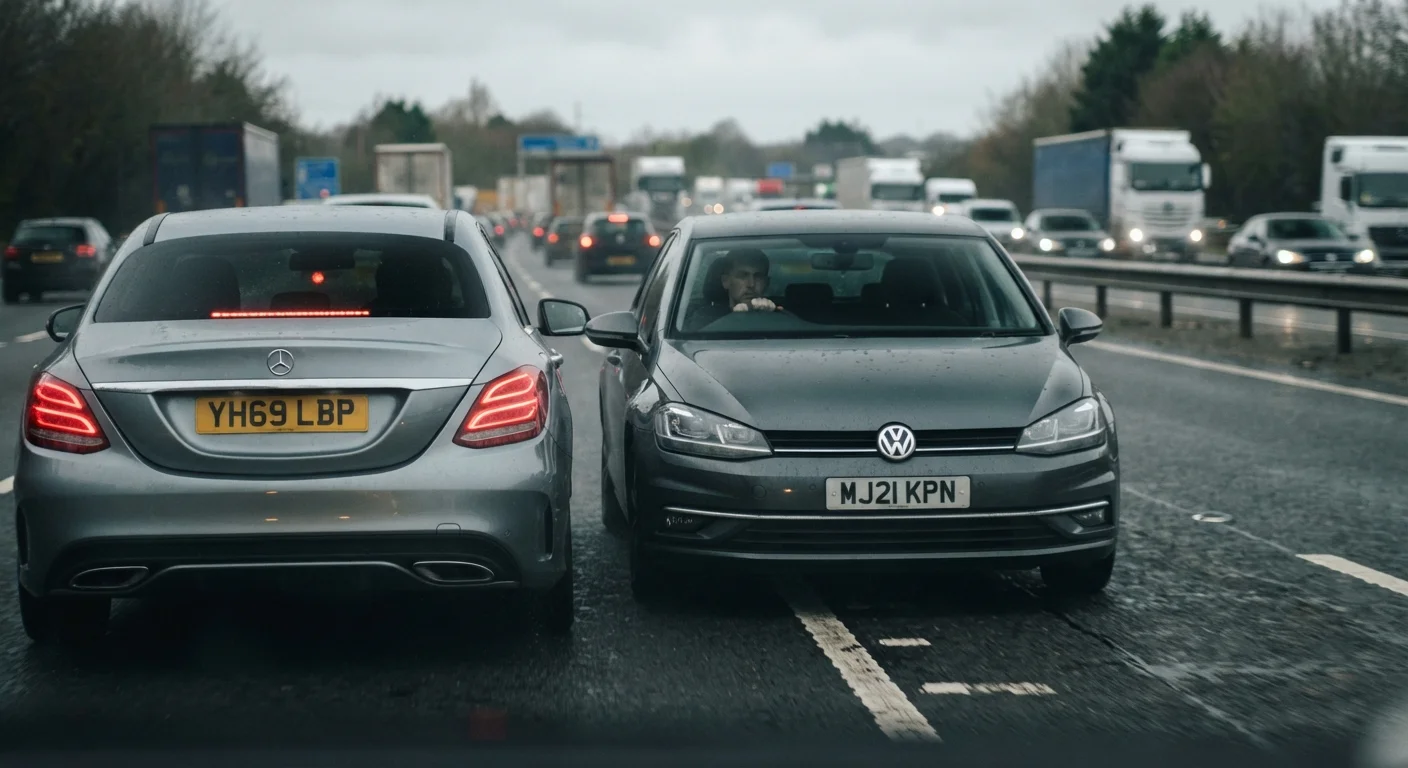
Photo credit: TopInfoTabs.com | Easy Insights For Inspiration
In this article
Some common driving habits feel normal but significantly increase collision risk. This article breaks down what they are and why they matter.
Key Takeaways
- Tailgating eliminates the stopping distance needed to avoid a rear-end collision.
- Undertaking on the right side of a vehicle is illegal in many states and consistently dangerous.
- Phone use behind the wheel impairs reaction time comparably to alcohol at the legal limit.
- Lane drifting and poor mirror use are often symptoms of inattention rather than inexperience.
- Most high-risk driving habits develop gradually and feel normal to the driver performing them.
Why Familiar Habits Are the Hardest Risks to See
The most dangerous driving behaviors aren't typically dramatic. They're the ones that feel unremarkable - the slight tailgate on a congested highway, the quick glance at a phone at a red light, the lane drift on a road you've driven a hundred times. Familiarity breeds complacency, and complacency is where crash risk quietly accumulates.
Understanding which habits actually elevate your collision risk - and why they're so easy to rationalize - is essential to safer driving. This isn't about perfection; it's about recognizing patterns that your brain has learned to ignore. For a broader view of how behavioral choices affect your vehicle overall, see our habits that quietly shorten your car's lifespan.
Normalization Makes These Habits Harder to Spot
Many dangerous habits persist because drivers around you engage in them constantly. Seeing tailgating or lane weaving every day can make it feel acceptable, even standard. That normalization is precisely what makes these behaviors so persistent - and so hazardous. Driving safely sometimes means holding yourself to a higher standard than the traffic around you.
The Most Common High-Risk Habits - and How to Break Them
The following mistakes are among the most frequently observed behaviors that increase crash probability on U.S. roads. Each one has a clear mechanism and a practical correction.
Following too closely - commonly called tailgating - leaves no meaningful stopping distance between your vehicle and the one ahead.
Why it happens: Drivers often tailgate to pressure a slower driver to move over, or simply because traffic flow has compressed and they haven't consciously adjusted their gap. At highway speeds, the behavior feels less dramatic than it actually is.
Undertaking - passing another vehicle on the right by moving into a slower-moving lane - creates blind-spot conflicts and is prohibited or heavily restricted in many U.S. states.
Why it happens: When a driver in the left lane is moving slowly, the temptation to pass on the right feels justified, especially during heavy freeway traffic. Some drivers are unaware that the maneuver is legally restricted.
Using a phone - whether for calls, texting, or navigation - while actively driving diverts visual, cognitive, and manual attention simultaneously.
Why it happens: Drivers consistently underestimate how much a brief glance at a screen degrades their awareness. The habit is reinforced by the fact that nothing bad happened last time.
Drifting between lanes without signaling - or at all - reduces the predictability that other road users depend on to make safe decisions.
Why it happens: This typically results from distraction, fatigue, or overconfidence on familiar routes. Drivers may be unaware they've drifted until another driver reacts.
Failing to check mirrors and blind spots before changing lanes or merging is one of the most direct paths to a side-impact collision.
Why it happens: Checking mirrors feels redundant when a driver is confident the lane is empty. Mirror-checking habits also deteriorate over time as driving becomes more automatic.
Driving significantly below the posted speed limit on high-speed roads, particularly freeways, can be just as disruptive to traffic flow as speeding.
Why it happens: Anxious or inexperienced drivers may slow down in high-speed environments without realizing how sharply they deviate from surrounding traffic, creating speed differentials that increase collision risk.
87%
Crashes attributed to driver behavior
NHTSA research has consistently found that human error or choice is the critical contributing factor in the overwhelming majority of U.S. traffic crashes.
3 sec
Minimum safe following distance
Traffic safety organizations widely recommend the three-second rule as a baseline for maintaining stopping distance under normal driving conditions.
23x
Crash risk increase when texting
According to NHTSA and Virginia Tech Transportation Institute research, texting while driving raises crash risk dramatically compared to undistracted driving.
Driving across different road types introduces additional variables - what's safe behavior on a rural two-lane isn't always equivalent on a multi-lane freeway. Adjusting your approach to the environment is part of addressing these habits effectively.
Building Safer Habits Over Time
Correcting ingrained driving behavior requires more than awareness - it takes deliberate repetition. The habits described above didn't form overnight, and they won't disappear after one mindful drive. What works is building small, consistent routines: a mirror check sequence before every lane change, a conscious gap assessment every few minutes on the highway, a phone placed out of reach before the engine starts.
These Habits Are Crash Causes, Not Minor Faults
The behaviors described in this article are directly linked to serious collisions, not just minor traffic violations. Research from the National Highway Traffic Safety Administration (NHTSA) consistently identifies driver behavior - not road conditions or mechanical failure - as the primary factor in the vast majority of crashes. Recognizing your own habits honestly is the first step toward safer driving.
Consider the principles of defensive driving, which offers a framework for anticipating risk rather than reacting to it. Drivers who share roads with cyclists and pedestrians regularly should also review how vulnerable road users navigate traffic - understanding their perspective sharpens your anticipation significantly. Night driving and adverse weather each amplify the risks associated with every habit on this list; see our guidance on night driving challenges and driving in rain, fog, and snow for environment-specific adjustments.
This article is for general informational and educational purposes. Traffic laws vary by state - always follow the regulations applicable in your jurisdiction.

Author
Cars & Driving Editorial Team
Cars & Driving Editorial Team is the collective byline for our editorial team and contributor network. Articles published under this byline or an editorial pen name are researched, written, and reviewed according to our editorial standards for clarity, consistency, and independence before publication.
View all articles →