
Sharing the Road Safely with Cyclists and Pedestrians
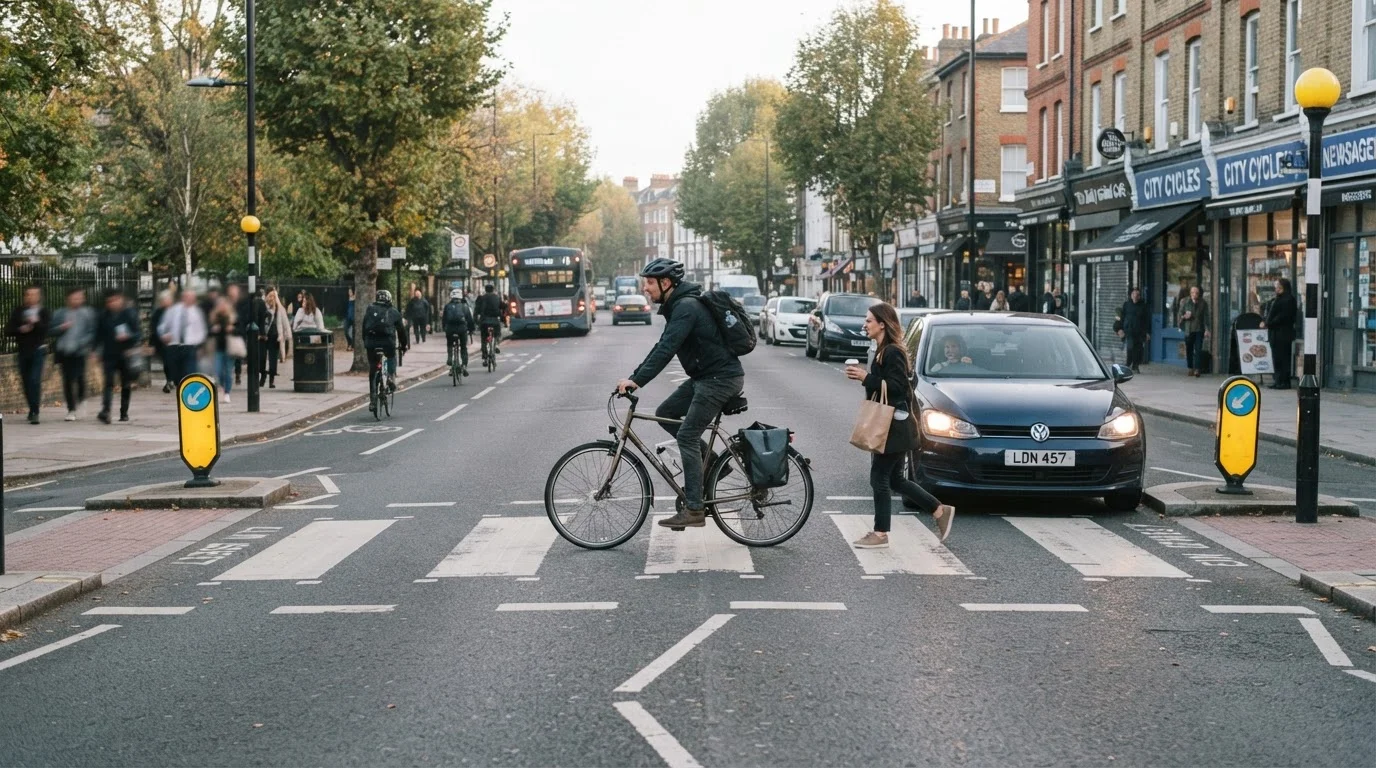
Photo credit: TopInfoTabs.com | Easy Insights For Inspiration
In this article
Understanding how vulnerable road users move and think helps drivers anticipate risk and reduce harm at junctions, crossings, and narrow roads.
Key Takeaways
- Cyclists and pedestrians are significantly more vulnerable than drivers in any collision scenario.
- Anticipating the unpredictable movement of vulnerable road users is more effective than reacting to it.
- Door zones, blind spots, and narrow roads are the highest-risk areas for cyclists and pedestrians.
- Giving extra space and time at junctions, crossings, and parked vehicle zones reduces collision risk.
- Speed has a dramatic effect on survival odds - slower speeds matter most in urban and residential areas.
Why Vulnerable Road Users Deserve Extra Attention
Cyclists and pedestrians account for a disproportionate share of serious road injuries and fatalities. Unlike vehicle occupants, they have no protective shell around them - no crumple zones, airbags, or seat belts. A collision that causes minor damage to a car can be catastrophic for a person on a bicycle or on foot.
Understanding this asymmetry of risk is the starting point for safer driving. It isn't about blame - it's about recognizing that drivers carry more protective capacity and, therefore, more responsibility to manage risk at the points where these road users meet. Roads in the US are primarily designed around motor vehicles, which makes anticipation and awareness even more critical for drivers sharing that space.
For related context on how your environment shapes your driving decisions, see our guide on safe driving across different road types.
Pass cyclists with at least three feet of lateral clearance - more where speed or road conditions demand it.
Many US states have enacted minimum passing distance laws for cyclists. Even where not legally mandated, the three-foot rule gives cyclists room to react to road surface hazards like potholes or gravel without entering your path.
Use the 'Dutch reach' technique when exiting your parked vehicle.
The Dutch reach involves opening your car door with your far hand, which naturally turns your body toward the side mirror and any approaching cyclists. This simple habit can prevent dooring incidents - a leading cause of cyclist injuries in urban areas.
Always yield to pedestrians at marked and unmarked crosswalks, not just when signaled.
US traffic law in most states requires drivers to yield to pedestrians in crosswalks - even those that are unmarked at intersections. Many drivers only yield at signalized crossings, leaving pedestrians at risk at mid-block and unmarked junctions.
Check your mirrors and blind spots specifically for cyclists before turning right.
Right-turn collisions with cyclists - sometimes called 'right hooks' - occur when a driver overtakes a cyclist and then turns right, cutting across their path. Cyclists may be traveling faster than they appear, especially on a descent.
Reduce speed proactively in areas with high pedestrian or cyclist activity, not just in response to posted limits.
Posted speed limits reflect maximum legal speeds, not necessarily the safest speed for the conditions. School zones during drop-off, busy retail areas, and residential streets with parked cars all warrant speeds well below the limit.
High-Risk Zones You Need to Know
Most serious incidents involving cyclists and pedestrians occur at predictable locations. Recognizing these zones lets you approach them with the right level of caution.
- Junctions and intersections: Drivers turning across traffic frequently fail to spot cyclists traveling straight through. Always check your mirrors and blind spots before turning, even if you've already checked once.
- The door zone: When passing parked cars, cyclists often ride 3-4 feet from the vehicle to avoid a suddenly opened door. If you're driving close to parked cars, you may be cutting into the space a cyclist legitimately needs.
- Pedestrian crossings: Marked crossings create a legal obligation to yield, but also a behavioral expectation. Pedestrians - particularly children and older adults - may not check whether traffic has fully stopped before stepping out.
- Narrow roads and pinch points: When a road narrows, cyclists can't simply move over. Give them time and space rather than squeezing past.
Our article on road markings and lane rules covers how crossing lines and shared-use markings affect driver obligations.
76%
Of pedestrian fatalities occurring in darkness
According to NHTSA data, approximately three-quarters of pedestrian traffic fatalities in the US occur in low-light or dark conditions.
3 ft
Minimum passing distance for cyclists
Over 35 US states have enacted laws requiring drivers to give cyclists at least three feet of clearance when overtaking.
Practical Habits That Make a Real Difference
Safe interactions with vulnerable road users don't require dramatic changes - they require consistent, deliberate habits applied every time you drive.
Speed is arguably the single most controllable factor. Research consistently shows that the likelihood of a pedestrian surviving a collision drops sharply as vehicle speed increases. Slowing down in residential areas, school zones, and anywhere pedestrian or cyclist traffic is plausible is one of the most effective things a driver can do.
Distraction is also a compounding factor. A driver glancing at a screen for even two seconds at 30 mph travels over 88 feet - enough to miss a cyclist entering an intersection or a child stepping off a curb. Keeping your attention fully on the road in urban and suburban environments is non-negotiable.
See also our article on habits that raise crash risk for a broader look at behaviors that increase collision likelihood.
“Speed is the single biggest determinant of injury severity in pedestrian crashes. Reducing urban speed limits is one of the most effective road safety interventions available.”
— National Highway Traffic Safety Administration, U.S. Federal Road Safety Agency
Adverse Conditions and Extra Precautions
Rain, fog, and darkness reduce visibility for everyone - but cyclists and pedestrians are affected more acutely. Wet roads extend your stopping distance; reduced visibility means you may spot a pedestrian later than expected. In these conditions, slowing down and increasing your following distance is essential.
Cyclists riding at night may have lights, but reflectivity and light quality vary widely. Don't assume a cyclist is clearly visible simply because they're legally required to have a light. Treat low-light conditions as requiring a higher level of active scanning.
Our in-depth guide on driving in rain, fog, and snow explains how weather affects handling and visibility across different conditions.
Make Eye Contact at Crossings
Before proceeding through any crossing, try to make brief eye contact with any pedestrian nearby. This simple cue confirms mutual awareness - the pedestrian knows you've seen them, and you know whether they intend to cross. It takes less than a second and can prevent a serious incident.

Author
Cars & Driving Editorial Team
Cars & Driving Editorial Team is the collective byline for our editorial team and contributor network. Articles published under this byline or an editorial pen name are researched, written, and reviewed according to our editorial standards for clarity, consistency, and independence before publication.
View all articles →