
Road Markings, Signs, and Lane Rules Most Drivers Misread
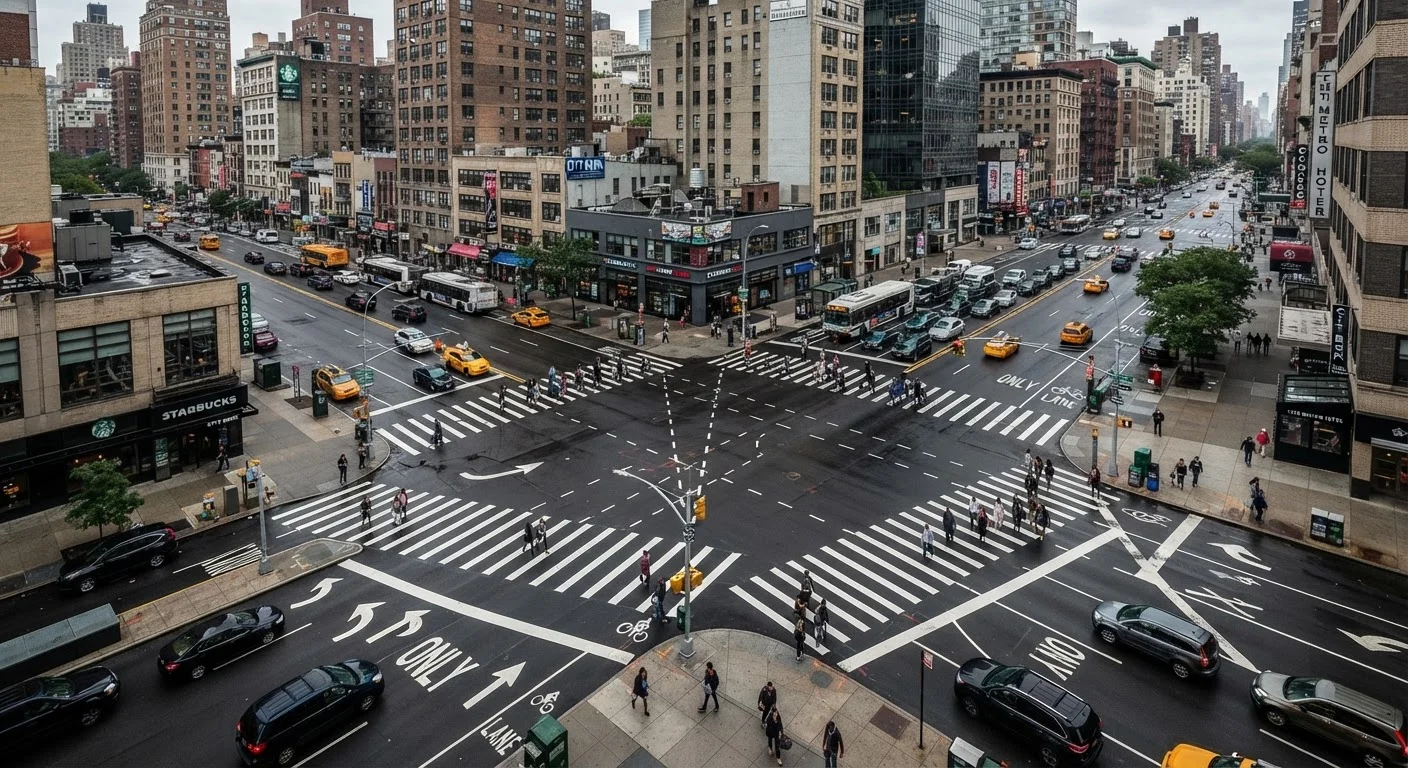
Photo credit: TopInfoTabs.com | Easy Insights For Inspiration
In this article
A clear reference guide to commonly misunderstood road markings, signs, and lane discipline rules across different road types.
Why Road Markings Get Misread
Road markings, signs, and lane rules form the backbone of organized traffic flow - yet surveys and collision data consistently show that even experienced drivers misinterpret them. The problem isn't usually carelessness. It's a combination of unfamiliar marking types, inconsistent signage across states, and habits formed during early driving years that were never corrected.
This reference guide addresses the most commonly misunderstood markings and rules, explains what they actually mean, and clarifies lane discipline across different road types. For context on how road type changes your responsibilities, see our guide on driving safely across urban, rural, and dual carriageway roads.
| Double solid yellow line rule | No passing in either direction (MUTCD (Manual on Uniform Traffic Control Devices), FHWA) |
| Right turn on red | Permitted in most US states after a full stop, unless signed otherwise (State traffic codes vary; local ordinances may differ) |
| Left-lane laws | Over 30 states have laws restricting left-lane use to passing only (Governors Highway Safety Association) |
| Yield sign requirement | Slow and give way; stop only if traffic requires it (MUTCD, FHWA) |
| Solid white line meaning | Lane change discouraged or prohibited (MUTCD, FHWA) |
Line Markings: Solid, Broken, and Double
Center line markings are among the most misread on the road. Here's what each configuration means:
- Single broken yellow center line: Passing is permitted for traffic on either side when safe to do so.
- Single solid yellow line: Passing is discouraged on your side - but the adjacent lane may still pass if their side is broken.
- Double solid yellow lines: No passing in either direction. Crossing them is illegal except when turning into a driveway or property.
- White broken lines: Lane boundaries within the same direction of travel - changing lanes is permitted with care.
- White solid lines: Lane changes are discouraged and often prohibited near intersections, school zones, or merge points.
A common error is treating a solid line on your side of a double-yellow system as an absolute prohibition on the other driver, too. Each line governs the lane beside it, not the road as a whole.
MUTCD
The Manual on Uniform Traffic Control Devices - the federal standard governing road signs, signals, and markings in the United States. It sets the baseline for what markings mean, though states may adopt variations.
Sharrow
A shared-lane marking painted on roadways to indicate a lane used by both cyclists and motor vehicles. It reminds drivers to expect cyclists and signals to cyclists the recommended path.
Lane control signal
Overhead signals displaying arrows or X symbols that indicate whether a specific lane is open, closed, or requires caution. Commonly used on reversible lanes and managed motorways.
Passing lane
The leftmost lane on a multi-lane road, intended for overtaking slower traffic. Drivers are expected to return to a travel lane once they have passed.
Signs That Routinely Confuse Drivers
Several regulatory signs carry nuances that drivers routinely miss:
- "No Turn on Red" signs: Only apply at the specific intersection where posted. Without a sign, right turns on red (after a full stop) are generally permitted in most US states - but local ordinances can override this, particularly in urban cores.
- Speed limit ahead signs: The new limit takes effect at the sign itself, not at the next intersection.
- Yield vs. Stop: A yield requires you to slow and give way if traffic is present - a full stop is not always mandatory. However, if a gap doesn't exist, you must stop. Many drivers roll through yields or, conversely, stop unnecessarily, disrupting flow.
- Lane control signals (overhead arrows): A flashing yellow X means use with caution; a red X means the lane is closed. Many drivers confuse the flashing yellow for a clear signal.
In adverse weather, sign visibility drops sharply. Our guide on driving in rain, fog, and snow covers how to compensate when environmental conditions obscure markings and signs.
State and Local Rules Can Override Defaults
While federal guidelines (MUTCD) establish baseline meanings for signs and markings, individual states and municipalities can set their own rules. For example, some cities prohibit right turns on red at all signalized intersections regardless of whether a specific sign is posted. When driving in an unfamiliar area, check local traffic laws rather than assuming national defaults apply.
Lane Discipline: Keep Right, Pass Left
The foundational lane rule on multi-lane roads in the US is straightforward: travel in the right lane, use the left lane to pass, then return. In practice, this is widely ignored.
Left-lane camping - remaining in the left lane without overtaking - is illegal in a growing number of states and contributes to road rage incidents and rear-end collisions. The left lane is not a fast lane; it's a passing lane. Once you've overtaken, move right.
On highways with three or more lanes, middle lanes are travel lanes. The rightmost lane is typically entered and exited by merging traffic, which means it requires more awareness of speed matching and gap selection. Understanding how high-speed lane discipline works in practice is especially important for drivers new to motorway-style roads - see our article on what motorway driving actually demands of new drivers.
At intersections and roundabouts, lane selection errors are among the most frequent causes of low-speed collisions. Choosing the correct lane before entering - and signaling your exit - is covered in detail in our guide to roundabout priority rules and where drivers go wrong.
Shared road environments add another dimension: painted bike lanes, shared-lane markings (sharrows), and pedestrian crossings each carry specific obligations for drivers. Familiarizing yourself with these is part of responsible lane discipline. Our guide on sharing the road safely with cyclists and pedestrians provides practical guidance.

Author
Cars & Driving Editorial Team
Cars & Driving Editorial Team is the collective byline for our editorial team and contributor network. Articles published under this byline or an editorial pen name are researched, written, and reviewed according to our editorial standards for clarity, consistency, and independence before publication.
View all articles →