
Roundabouts, Priority Rules, and Where Drivers Go Wrong
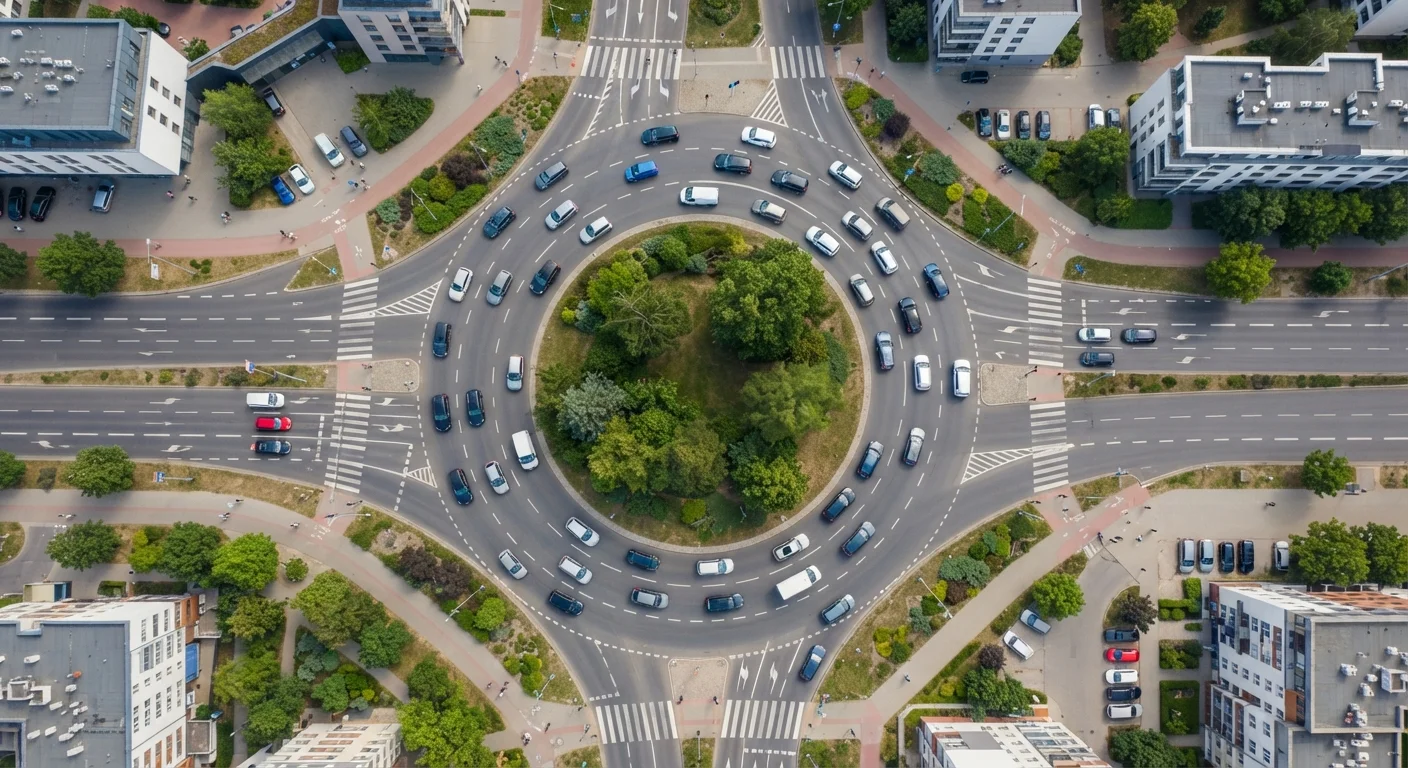
Photo credit: TopInfoTabs.com | Easy Insights For Inspiration
In this article
Roundabout errors are among the most common causes of low-speed collisions. This guide clarifies lane discipline, priority, and exit signals.
Key Takeaways
- Traffic already on the roundabout always has priority over vehicles entering from approach roads.
- Lane selection before entering determines which exit you can safely take - choose early.
- Signaling your exit intention helps other drivers and cyclists anticipate your movement.
- Creeping into a roundabout without yielding is one of the leading causes of low-speed collisions.
Why Roundabouts Catch Drivers Off Guard
Roundabouts are designed to keep traffic flowing and reduce the severity of collisions compared with traditional stop-signal intersections. Studies by the Insurance Institute for Highway Safety have found that converting conventional intersections to roundabouts can significantly cut injury crashes. Despite this, they remain a consistent source of confusion - and minor collisions - for everyday drivers.
The root problem is that many drivers learned roundabout behavior informally, by following the car in front rather than understanding the underlying priority rules and lane logic. That gap shows up most clearly at multi-lane roundabouts, where a wrong decision made at speed has very little margin for correction.
Adjusting your approach for different road environments is a core skill - and roundabouts are one of the environments most drivers underestimate.
Failing to yield to circulating traffic on entry.
Why it happens: Drivers accustomed to traffic lights expect a clear signal before stopping. At roundabouts, the yield obligation is continuous and visual - there is no light to enforce it.
Choosing the wrong lane before entering and then cutting across mid-roundabout.
Why it happens: Drivers often read their exit destination too late, arriving at the approach in the wrong lane and attempting to correct inside the roundabout.
Forgetting to signal when exiting the roundabout.
Why it happens: Drivers focus on the mechanics of steering and speed through the curve, and signaling becomes an afterthought.
Stopping or hesitating inside the roundabout.
Why it happens: Uncertainty about which lane to use or which exit is correct causes drivers to slow abruptly inside the circulatory road, creating rear-end collision risk.
Driving in the outer lane past exits that require the inner lane.
Why it happens: Some drivers stay in the outer lane throughout to avoid merging, not realizing this blocks the path of drivers correctly exiting from the inner lane.
Lane Discipline, Signals, and Vulnerable Road Users
At multi-lane roundabouts, the general rule is: use the left lane for exits up to and including the first left turn or a straight-ahead exit (depending on road markings), and the right lane for exits beyond straight ahead. Always defer to the specific lane markings painted on the approach - they override general guidance when they differ.
~75%
Reduction in injury crashes at converted intersections
The Insurance Institute for Highway Safety (IIHS) has reported that replacing conventional intersections with roundabouts can reduce injury crashes by roughly 75 percent.
~90%
Reduction in fatal and incapacitating crashes
IIHS research indicates fatal and incapacitating crash reductions of up to 90 percent at roundabout conversions, reflecting the lower-speed, same-direction collision angles involved.
Signaling is another area where habits vary. You are not required to signal on entry in all jurisdictions, but you should signal left as you pass the exit before the one you intend to take. This gives cyclists, motorcyclists, and pedestrians - who may be crossing exits - the clearest possible warning of your intention. For more on anticipating vulnerable road users at junctions, see how cyclists and pedestrians move through roundabouts.
Large Vehicles Need Extra Space
Trucks, buses, and vehicles towing trailers may need to straddle lane markings or use the truck apron (the raised inner ring present at some roundabouts) to complete a turn. If you see a large vehicle entering or circulating, give it significantly more clearance than you would a passenger car. Do not pull alongside a large vehicle inside a roundabout - its swept path is wider and less predictable than it appears.
Speed on approach matters too. Entering a roundabout too fast compresses your reaction time and makes smooth lane-keeping much harder. Slow, observe, yield - then commit. Hesitating once you have entered is often more dangerous than a firm, correctly signaled exit.
Misreading road markings is a common thread in roundabout errors. Understanding what road markings actually mean can prevent the lane-position mistakes that lead to conflict with other vehicles. Similarly, the aggressive following distances and lane changes described in habits that raise crash risk are especially dangerous inside a roundabout's confined circulatory space.
This article provides general road safety information for educational purposes. Always follow the specific rules, signs, and markings applicable in your state or jurisdiction.

Author
Cars & Driving Editorial Team
Cars & Driving Editorial Team is the collective byline for our editorial team and contributor network. Articles published under this byline or an editorial pen name are researched, written, and reviewed according to our editorial standards for clarity, consistency, and independence before publication.
View all articles →