
What Motorway Driving Actually Demands of New Drivers
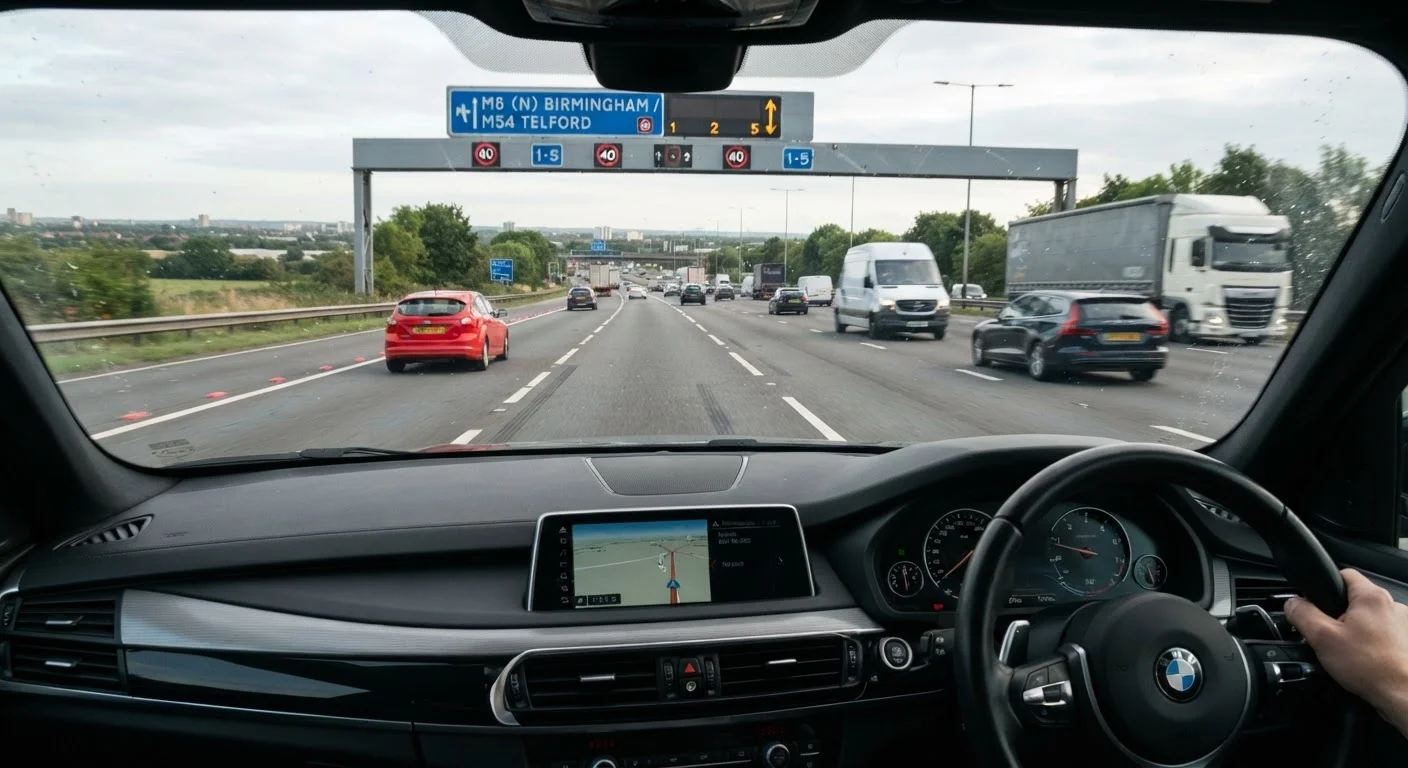
Photo credit: TopInfoTabs.com | Easy Insights For Inspiration
In this article
Motorway driving is faster and less forgiving. Here's what new drivers need to understand before joining high-speed roads.
Key Takeaways
- Speed compresses reaction time - the gap you keep must grow as your speed increases.
- Merging onto a motorway using the slip road correctly is one of the highest-risk manoeuvres new drivers face.
- Keep left unless overtaking - prolonged middle- or right-lane driving is illegal and dangerous.
- Smart motorways have different rules; always check overhead gantry signs before changing lanes.
- If your vehicle breaks down, getting to safety quickly is the absolute priority.
Why Motorways Feel Different
Most new drivers have practiced in urban streets and quieter rural roads where speeds rarely exceed 50 mph. Motorways and interstates operate in an entirely different register. Traffic moves faster, lanes are wider, and the margin for error shrinks considerably. The fundamental challenge isn't just speed - it's that everything happens sooner. Hazards appear and pass more quickly, decisions need to be made earlier, and small errors carry larger consequences.
The psychological shift matters too. Many new drivers report feeling overwhelmed by the volume of information - mirrors, surrounding vehicles, gantry signs, lane markings - arriving simultaneously. This is normal, and it eases with experience. The key is preparation, not avoidance.
For a broader view of how different road environments compare, see our guide on safe driving across urban, rural, and dual carriageway roads.
Slip road / on-ramp
A short acceleration lane that connects a regular road to a motorway or highway, giving drivers space to build speed before merging with faster-moving traffic.
Hard shoulder
The paved strip running alongside the outermost lane of a motorway, reserved for emergencies and breakdowns - not for regular driving unless signs indicate otherwise.
Smart motorway
A motorway that uses electronic overhead signs and sensors to manage traffic flow, sometimes activating the hard shoulder as a running lane and enforcing variable speed limits.
Variable speed limit
A speed limit displayed on overhead electronic gantry signs that can change based on traffic conditions; these limits are legally enforceable, not merely advisory.
Following distance
The gap maintained between your vehicle and the one ahead, measured in seconds or distance; this gap must increase as speed rises to allow adequate braking time.
Emergency Refuge Area (ERA)
A specially designated bay on the side of a smart motorway where drivers can stop safely if their vehicle breaks down, marked with a blue SOS sign.
Joining and Leaving the Motorway
The slip road - or on-ramp - is where many new-driver incidents begin. Its purpose is to let you match the speed of motorway traffic before merging, not to wait until the last moment and force a gap. Accelerate firmly along the full length of the slip road, check your mirrors and blind spot, signal early, and slot into a natural gap in the left lane. Do not stop at the end of the slip road unless traffic makes it unavoidable.
Exiting follows the same principle in reverse: signal in advance, move to the left lane early, and decelerate on the slip road rather than on the motorway itself. Missing your exit is frustrating but manageable - continue to the next one. Never reverse.
Use the full length of the slip road
Many new drivers instinctively slow down or hesitate partway along the on-ramp. The slip road exists precisely to give you space to reach motorway speed. Commit to accelerating smoothly and confidently - hesitation makes merging harder and more dangerous for drivers already on the motorway.
Lane Discipline and Following Distance
In the US, keep right except to pass is the guiding principle on multi-lane highways, though enforcement varies by state. On UK motorways, the equivalent rule is keep left unless overtaking. Either way, occupying a middle or outer lane unnecessarily blocks faster traffic and is illegal in many jurisdictions.
Following distance is where new drivers most consistently underestimate risk. At 70 mph, a vehicle travels about 103 feet per second. Factor in reaction time - typically 1.5 seconds even for alert drivers - and you need substantial space before braking even begins. In wet conditions, stopping distances roughly double. A practical benchmark: pick a fixed point ahead, and ensure at least two full seconds pass between the car in front reaching it and you reaching it. Extend that to four seconds in rain.
Tailgating is one of the most common motorway hazards. If someone is following too closely behind you, resist the urge to brake-check them. Instead, gradually increase your own following distance from the vehicle ahead, giving yourself room to slow gradually rather than sharply.
Smart Motorways and Variable Speed Limits
Many modern motorways use technology - overhead electronic signs called gantries - to manage traffic flow dynamically. A smart motorway (a UK term, though similar managed-lane systems exist across the US) may use the hard shoulder as a running lane during peak hours. Variable speed limits displayed on gantries are legally enforceable, not advisory.
New drivers should treat every overhead sign as mandatory information, not background noise. A red X above a lane means that lane is closed - do not enter it. A displayed speed lower than the national limit applies immediately. Ignoring these signals is both dangerous and, in most regions, a traffic offense.
A Red X Means Lane Closed - No Exceptions
Driving under a red X on a smart motorway gantry is illegal and one of the leading causes of secondary collisions when lanes are closed for breakdowns or incidents ahead. Do not assume the lane is clear just because you cannot see an obstruction yet. Move out of that lane as soon as it is safe to do so.
On roads without a hard shoulder available as a refuge, Emergency Refuge Areas (ERAs) are placed at intervals. Knowing what they look like - an orange-surfaced bay marked with a blue SOS sign - could matter in a breakdown situation.
Breakdowns and Emergencies at Speed
If your vehicle develops a problem on a motorway, your priority is to get off the carriageway safely. If possible, exit at the next junction. If not, use the hard shoulder or an Emergency Refuge Area. Turn on your hazard lights, exit the vehicle via the passenger-side door (away from traffic), get behind the barrier, and call for assistance from there. Never attempt roadside repairs in live traffic.
Tyre blowouts at speed feel alarming but are survivable if handled correctly. Avoid stamping on the brakes - grip the wheel firmly, ease off the accelerator gradually, and steer steadily toward the shoulder. Braking hard during a blowout can cause a spin.
Keeping your vehicle in reliable condition reduces breakdown risk significantly. Our article on routine car maintenance for new drivers covers the checks every driver should make regularly.
Motorway driving demands a different level of attention than urban roads - and a different level of self-awareness. For a related challenge that also catches new drivers off guard, see our piece on night driving and how darkness changes road conditions.
This article provides general educational information about motorway and highway driving. It does not constitute legal or professional driving instruction. Traffic laws, road rules, and licensing requirements vary by state and country - always follow the regulations applicable to your jurisdiction.
Frequently Asked Questions

Author
Cars & Driving Editorial Team
Cars & Driving Editorial Team is the collective byline for our editorial team and contributor network. Articles published under this byline or an editorial pen name are researched, written, and reviewed according to our editorial standards for clarity, consistency, and independence before publication.
View all articles →