
Night Driving: How Darkness Changes the Road
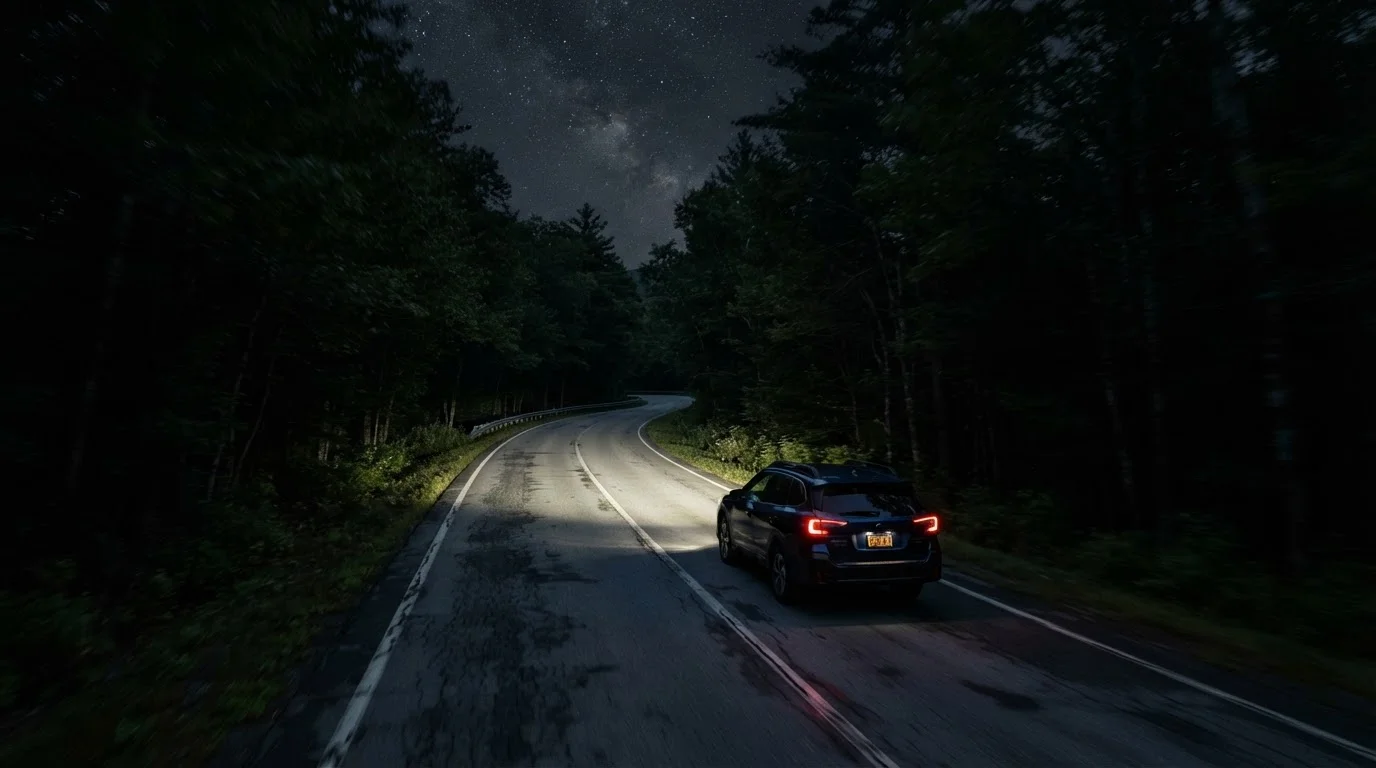
Photo credit: TopInfoTabs.com | Easy Insights For Inspiration
In this article
Reduced visibility, glare, and fatigue make night driving distinctly different. Here's a practical breakdown of the challenges and how to manage them.
Key Takeaways
- Human vision degrades significantly in low light, reducing both range and peripheral awareness.
- Headlight aim, cleanliness, and bulb condition directly affect how much road you can actually see.
- Fatigue and glare compound each other after dark, making both harder to manage simultaneously.
- Adjusting speed to match your actual sight distance is a core night-driving principle.
- Simple pre-drive checks can substantially reduce the risks associated with driving after dark.
Why Night Driving Is a Different Challenge
Driving after dark isn't simply daytime driving with the lights on. Darkness fundamentally changes what you can see, how quickly you can react, and how accurately you judge speed and distance. According to the National Safety Council, traffic fatality rates are roughly three times higher at night than during daylight hours - despite lower overall traffic volumes.
The core issue is biology. Human eyes are not optimized for low-light environments. The pupils dilate to let in more light, but this also increases susceptibility to glare. Peripheral vision - which is critical for detecting hazards at the edge of your path - narrows considerably. Depth perception becomes less reliable, and your ability to distinguish contrast between objects and their backgrounds diminishes sharply.
Compounding this, most drivers' headlights illuminate roughly 160-250 feet ahead depending on whether low or high beams are used. At 60 mph, a vehicle covers approximately 88 feet per second, leaving a narrower margin for safe reaction than many drivers realize. This gap between what you can see and what you need to stop is sometimes called the "sight distance problem," and it's one of the most underappreciated risks in everyday driving.
Understanding these physical realities is the starting point. Speed also distorts perception in ways that interact with darkness - faster speeds further narrow your effective field of view, stacking risks on top of each other.
What You Can Do Before You Drive
Preparation before getting behind the wheel makes a measurable difference to night-driving safety. A few targeted checks address the most common vulnerabilities.
What you will need
Headlight bulbs (correct spec for your vehicle)
Replacing dim or aged bulbs restores the full light output your headlights were designed to produce.
Headlight lens restoration kit
Yellowed or hazy plastic lenses scatter light and reduce beam effectiveness significantly.
Microfiber cloth and glass cleaner
Cleaning the inside of the windshield removes the oily film that causes glare halos around oncoming lights.
Anti-reflective glasses or clip-on lenses
For drivers who wear corrective lenses, anti-reflective coatings reduce glare and improve contrast at night.
Run through a structured pre-drive checklist before any extended night journey - it covers lights, mirrors, and fatigue readiness in one pass.
Check and clean all exterior lights
Walk around your vehicle and verify that headlights, taillights, brake lights, and turn signals are all operational. Pay particular attention to headlight lens clarity - oxidized or yellowed plastic housings can reduce usable light output by a substantial margin. Clean the lenses and the inside of your headlight covers if accessible. Replace any bulbs that appear dimmer than the paired unit on the opposite side.
Clean the inside of your windshield
An often-overlooked step: the interior surface of a windshield accumulates an oily film from off-gassing plastics and HVAC systems. This film is largely invisible in daylight but scatters oncoming headlights into a blinding haze at night. Use a microfiber cloth with a dedicated glass cleaner and work in circular motions to fully remove the residue. Repeat until no smearing remains.
Adjust your mirrors for night use
Most interior rearview mirrors include a night setting - a small tab or lever on the underside that flips the mirror to a dimmer reflective angle. This significantly reduces the glare from headlights behind you without eliminating your view. For exterior mirrors, adjust the angle slightly downward so following headlights reflect away from your direct line of sight.
Reduce your speed to match your sight distance
On low beams, most vehicles illuminate 160-200 feet ahead. Adjust your speed so that you can come to a complete stop within that distance. On open roads with no oncoming traffic, switch to high beams to extend your sight distance to 350-400 feet - and dip back to low beams promptly when approaching other vehicles or when following closely behind another car.
Increase following distance
Standard daytime following distances are insufficient after dark. Reaction times increase when visibility is limited, and hazards appear later in your sight line. Apply at least a four-second following distance at night rather than the two-second minimum used in daylight. On wet or poorly lit roads, extend this further. Tailgating raises crash risk in any conditions, but the consequences after dark are compounded by reduced reaction time.
Monitor yourself for fatigue and plan rest stops
Before a night journey of more than an hour, establish rest stop intervals regardless of how alert you feel at departure. A practical approach is to stop every 90 minutes to two hours, get out of the vehicle, and move around for several minutes. If you notice yawning frequency increasing, lane-keeping becoming effortful, or any lapse in continuous awareness, treat these as hard signals to stop - not warnings to push through.
Managing Glare and Fatigue on the Road
Even well-prepared drivers face two persistent in-journey challenges after dark: glare from oncoming headlights and the creeping onset of fatigue.
Glare is intensified at night because the surrounding darkness forces your pupils wide open. When a bright light source suddenly enters your field of view, your eyes need several seconds to readjust. Avoid looking directly at oncoming headlights - instead, shift your gaze to the right edge of your lane as a reference point. If another driver has their high beams on and doesn't dip them, a brief flash of your own high beams is a standard signal, but avoid prolonged retaliation that impairs both drivers.
Fatigue is a separate but related hazard. Driving at night aligns with the body's natural circadian low points - particularly between midnight and 6 a.m. and in the early afternoon. Drowsiness slows reaction times, narrows attention, and impairs judgment in ways drivers frequently underestimate. Driver fatigue carries risks that closely mirror alcohol impairment, yet it's far less stigmatized. If you notice persistent yawning, difficulty maintaining lane position, or microsleep episodes (brief moments where you lose awareness), pull off the road safely and rest. Caffeine can provide short-term alertness but is not a substitute for sleep.
Use Road Markings as a Visual Guide
When oncoming glare temporarily reduces your forward visibility, use the road edge markings and lane lines as an anchor rather than staring into the light source. Cats' eyes and reflective lane markers are specifically designed to remain visible when headlight beams are compromised. Keeping your eyes moving rather than fixating on one point also helps your vision recover from glare faster.
Night driving also intersects with adverse weather. Rain or fog after dark reduces visibility far below what headlights alone can compensate for. See our guide on adapting to rain, fog, and snow for specific techniques when conditions combine.
Pedestrians and Cyclists Are Much Harder to See
Dark clothing, low-mounted bicycle lights, and the absence of street lighting in rural areas make pedestrians and cyclists genuinely difficult to detect at night. Scan beyond the direct beam of your headlights using peripheral vision, especially near roadsides, crossings, and unlit paths. Reducing speed in areas where pedestrian activity is possible gives you more time to react if someone enters your path unexpectedly.

Author
Cars & Driving Editorial Team
Cars & Driving Editorial Team is the collective byline for our editorial team and contributor network. Articles published under this byline or an editorial pen name are researched, written, and reviewed according to our editorial standards for clarity, consistency, and independence before publication.
View all articles →