
Breathwork vs. Meditation: Choosing the Right Calm-Down Practice for You
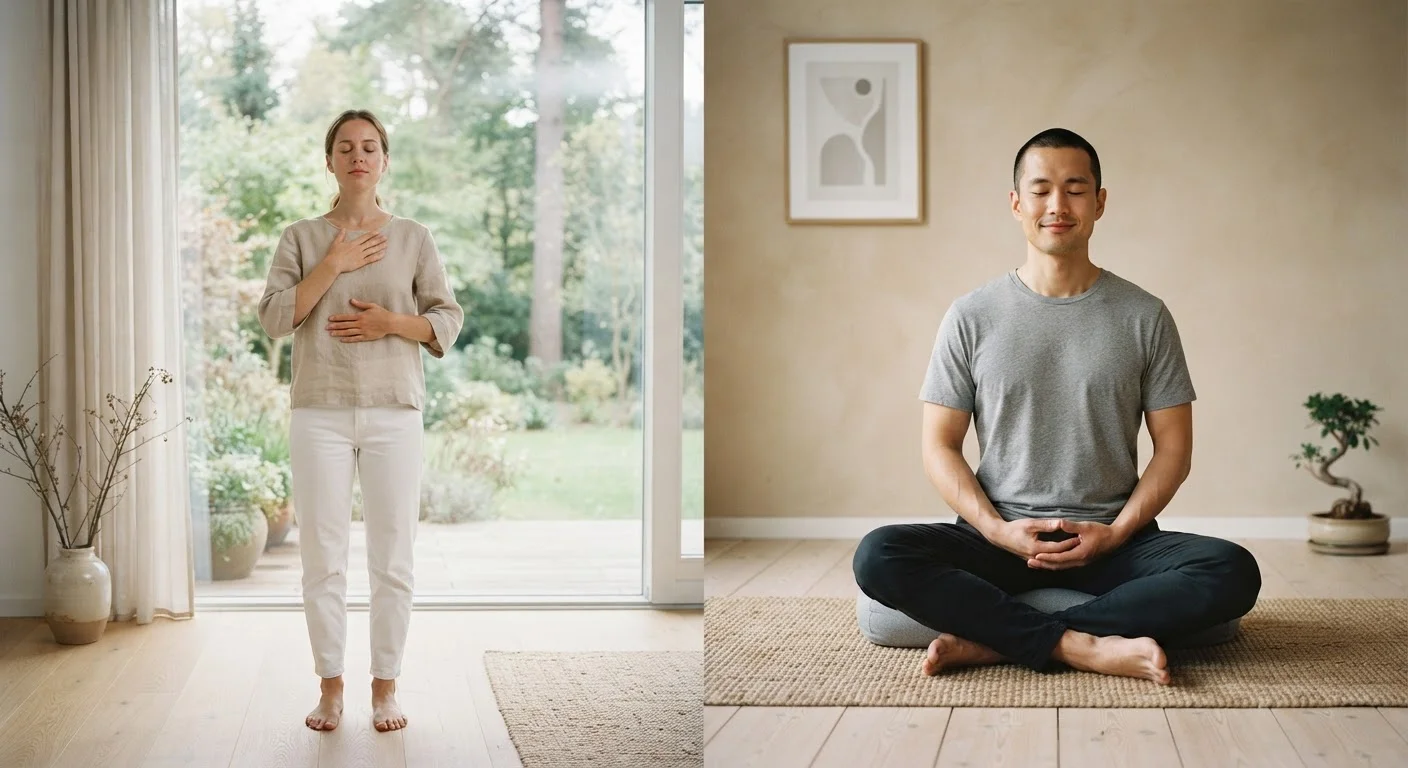
Photo credit: TopInfoTabs.com | Easy Insights For Inspiration
In this article
Both breathwork and meditation can ease stress, but they work differently. See how each approach compares so you can pick the one that fits your life.
Key Takeaways
- Breathwork uses intentional breathing patterns to shift your physiology rapidly, often producing quicker short-term calm.
- Meditation builds awareness and emotional regulation gradually through consistent, sustained practice.
- Both practices engage the parasympathetic nervous system but through different entry points - body versus mind.
- You can combine both approaches; they are complementary, not competing.
- Neither is a substitute for professional mental health support when symptoms are significant.
How Each Practice Actually Works
Despite often being grouped together under the wellness umbrella, breathwork and meditation operate through meaningfully different mechanisms. Understanding those differences helps you choose with intention rather than guesswork.
Breathwork refers to intentional manipulation of breathing patterns - controlling the rate, depth, and rhythm of your inhales and exhales. Techniques like diaphragmatic breathing, box breathing (equal counts for inhale, hold, exhale, hold), and slow-paced breathing directly stimulate the vagus nerve, activating the parasympathetic nervous system - what researchers sometimes call the "rest and digest" state. The physiological effect can begin within a few breath cycles, making breathwork one of the fastest accessible tools for acute stress or anxiety spikes.
Meditation, by contrast, is primarily a cognitive and attentional practice. Most forms - including focused attention meditation and open monitoring meditation - train you to observe the contents of your mind without automatically reacting to them. This builds what psychologists call metacognitive awareness: the ability to notice a thought or feeling without being hijacked by it. The calming effect tends to develop more gradually, accruing over repeated sessions rather than arriving immediately.
| Criterion | Breathwork | Meditation |
|---|---|---|
| Primary mechanism | Physiological (nervous system via breath) | Cognitive (attention and awareness training) |
| Speed of effect | Minutes (acute relief possible) | Weeks to months (cumulative benefit) |
| Ease for beginners | Generally accessible; concrete focus | Can feel frustrating without guidance |
| Best setting | Almost anywhere, discreet | Quiet, undisturbed environment ideal |
| Session length needed | Even 2-5 minutes is meaningful | 10-20 minutes per session common |
| Long-term emotional benefit | Moderate with regular practice | Stronger evidence base over time |
Neither practice requires expensive equipment or a formal setting. Both are learnable by most adults and can be adapted for limited time or ability.
What the Research Generally Shows
Research into both practices has grown substantially, though the field still has methodological limitations - many studies rely on self-reported outcomes, small samples, or short timeframes. With that context in mind, here is what the evidence broadly suggests.
8 weeks
Minimum program length in most mindfulness research
Most well-studied mindfulness programs, including Mindfulness-Based Stress Reduction (MBSR), run for eight weeks before outcome measures are assessed.
~5 min
Time for slow breathing to reduce acute stress response
Several small studies suggest that just a few minutes of slow, controlled breathing can measurably shift heart rate and self-reported anxiety levels.
2-3×
Frequency associated with meaningful stress reduction
Research consistently suggests that practicing two to three times per week - for either breathwork or meditation - produces more benefit than single or irregular sessions.
Studies on controlled breathing have found associations with reduced cortisol levels, lower heart rate, and improved heart rate variability - a marker of nervous system flexibility. Research published in peer-reviewed psychology and neuroscience journals suggests slow-paced breathing may reduce subjective anxiety more rapidly than passive rest in some populations.
Meditation research, particularly around mindfulness-based programs, has accumulated a larger and longer-running evidence base. Meta-analyses suggest that structured mindfulness programs can meaningfully reduce symptoms of anxiety, depression, and stress over eight or more weeks. Neuroimaging studies have observed changes in areas of the brain associated with emotional regulation and attention in long-term meditators - though the clinical significance of these changes for general populations is still being established.
What both bodies of research agree on: consistency matters more than duration per session. Short, regular practice tends to outperform infrequent, lengthy sessions. For a broader framework on building these habits into daily life, see our practical evidence-informed wellbeing framework.
A Note on Individual Variation
Responses to both breathwork and meditation vary considerably between individuals. Some people find certain breathing techniques - particularly those involving breath retention - uncomfortable or anxiety-provoking rather than calming. If any practice consistently feels distressing, stop and consult a healthcare professional. People with respiratory conditions, cardiovascular concerns, or trauma histories should seek professional guidance before starting intensive breathwork programs.
Choosing the Practice That Fits Your Life
The most effective stress-reduction practice is the one you will actually use. That means honest self-assessment matters more than chasing the most researched option.
Ask yourself a few practical questions: Do you struggle with racing thoughts when you try to sit quietly? Breathwork gives your mind a specific job - count the breath, feel the breath - which can ease that restlessness. Do you find yourself forgetting to pause during stressful days until the pressure has built too high? A brief breathwork technique may be your most realistic intervention.
On the other hand, if you're drawn to understanding your own thought patterns more deeply - why certain triggers consistently derail you - meditation's focus on observation without reaction offers genuine long-term value. If you've tried meditation before and found it frustrating, it may be worth revisiting with better guidance; our beginner's guide to mindfulness when it feels hard addresses the most common stumbling blocks honestly.
Many people ultimately find both practices useful in different contexts: breathwork as a rapid reset during a stressful workday, meditation as a slower-burning investment in emotional clarity. Starting with whichever feels more accessible is a sound strategy - you are far more likely to build a habit around something that doesn't feel like a chore from the outset.
This article is for general informational and educational purposes only. It is not a substitute for professional medical or mental health advice, diagnosis, or treatment. If you are experiencing significant anxiety, depression, or other mental health concerns, please consult a qualified healthcare professional.

Author
Health & Wellness Editorial Team
Health & Wellness Editorial Team is the collective byline for our editorial team and contributor network. Articles published under this byline or an editorial pen name are researched, written, and reviewed according to our editorial standards for clarity, consistency, and independence before publication.
View all articles →