
Weekly vs. Monthly Budgeting Cycles: Which Suits Your Pay Schedule?
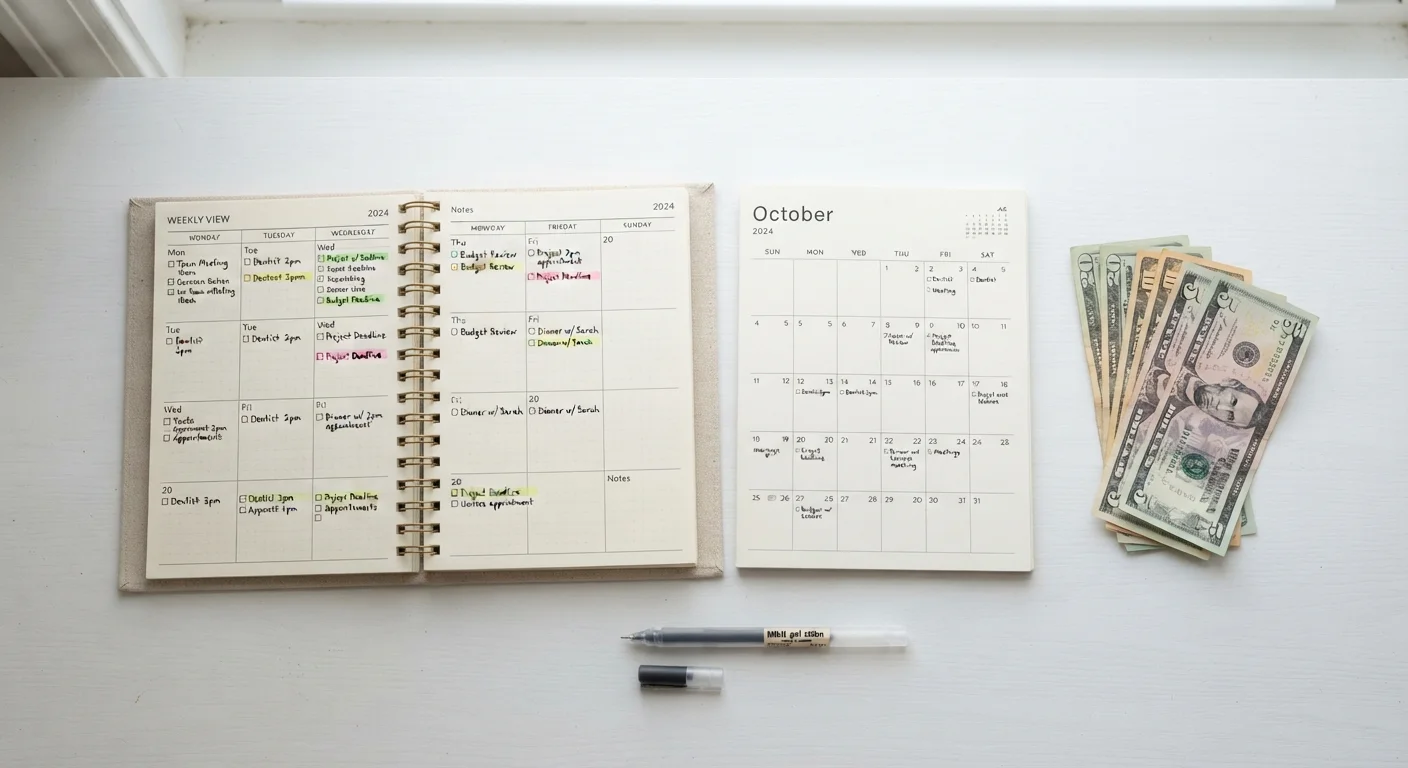
Photo credit: TopInfoTabs.com | Easy Insights For Inspiration
In this article
Does the length of your budgeting cycle matter? A look at how weekly and monthly approaches each handle cash flow differently.
Key Takeaways
- Weekly budgeting gives you frequent checkpoints that can prevent mid-month overspending before it compounds.
- Monthly budgeting aligns naturally with most fixed expenses like rent, utilities, and loan payments.
- Your pay frequency is the single most practical starting point when choosing a budget cycle.
- Neither approach is universally superior - the right cycle is the one you'll consistently maintain.
- Sinking funds and end-of-month reviews can complement either cycle for irregular or annual expenses.
Why the Budgeting Cycle Matters More Than the Method
Most budgeting conversations focus on which system to use - the 50/30/20 rule, zero-based budgeting, envelope method - but overlook a more fundamental question: how long should each budget period be? The answer has a real impact on how well you manage cash flow between paychecks, catch overspending early, and handle irregular expenses without derailing your plan.
The two most common cycles are weekly and monthly. Each works well under specific conditions, and understanding those conditions is the first step toward a budget that actually holds up past the first few weeks. For a deeper look at why even well-designed budgets often collapse early, see why budgets fail in month two.
How Weekly and Monthly Cycles Compare
Before diving into scenarios, it helps to see the structural differences side by side. Each cycle involves trade-offs between granularity, effort, and alignment with real-world billing schedules.
| Criterion | Weekly Budgeting | Monthly Budgeting | |
|---|---|---|---|
| Best pay frequency match | Weekly or bi-weekly pay | Semi-monthly or monthly pay | |
| Expense alignment | Requires splitting monthly bills | Naturally matches most recurring bills | |
| Error detection speed | Fast - caught within days | Slower - may surface at month-end | |
| Setup complexity | Higher - more periods to plan | Lower - one plan per month | |
| Habit-building frequency | High - weekly review touchpoints | Lower - one review per month | |
| Flexibility for irregular income | Less flexible - fixed weekly windows | More flexible - broader planning window |
As the table shows, neither cycle dominates across every dimension. The right choice depends on which trade-offs you're best positioned to manage.
The Case for Weekly Budgeting
Weekly budgeting divides your spending plan into four or five shorter windows per month. This works especially well if you're paid weekly or bi-weekly, since your budget resets close to when new money actually arrives.
The primary advantage is early error detection. If you overspend on groceries in week one, you know immediately and can adjust - rather than discovering the shortfall when rent is due. Weekly cycles also tend to create a stronger habit loop: a quick Sunday check-in becomes routine in a way that a once-a-month review rarely does.
Getting Started with Weekly Budgeting
Begin by dividing your monthly take-home pay by 4.33 (the average number of weeks in a month) to find your weekly spending baseline. Assign fixed monthly bills a proportional weekly 'reserve' amount rather than paying them weekly. Review your actuals every Sunday evening - a 10-minute habit that makes the whole system click.
The main challenge is math complexity. Most bills - rent, subscriptions, loan payments - are monthly, so you'll need to divide them across weeks or set aside a fixed weekly portion toward them. This isn't difficult, but it does require a consistent setup. Weekly cycles also generate more data to track, which suits detail-oriented budgeters but can feel burdensome to others.
The Case for Monthly Budgeting
Monthly budgeting is the dominant framework for a reason: it mirrors how most recurring expenses are structured. Rent, mortgage, utilities, insurance, and loan payments all arrive on a monthly cadence, making it natural to plan income and outgo within the same 30-day window.
For salaried workers paid once a month, this alignment is especially practical - your income lands, your bills go out, and your discretionary spending fills the remainder. A structured monthly approach, such as the one outlined in building a monthly budget that you'll actually stick to, can give this structure a concrete shape.
The risk of monthly budgeting is front-loading: spending freely early in the month and running short near the end. Without interim checkpoints, small overages accumulate unnoticed. Pairing a monthly budget with an end-of-month review checklist helps close this gap.
~78%
Americans living paycheck to paycheck
Multiple surveys over recent years have consistently found that a significant majority of U.S. adults have little financial buffer between paychecks, underscoring why budgeting cycle timing matters.
2x
More review touchpoints with weekly budgeting
A weekly cycle creates roughly four to five review opportunities per month versus one for monthly budgeters, increasing the chance of catching overspending early.
Handling Irregular and Annual Expenses in Either Cycle
One area where both cycles can struggle equally is irregular expenses - car registration, annual insurance renewals, holiday gifts, or medical costs that don't follow a predictable monthly or weekly pattern. These are the line items most likely to blow up an otherwise solid budget.
The solution works regardless of your chosen cycle: sinking funds. A sinking fund sets aside a small fixed amount each period toward a known future cost. If your car registration costs $240 annually, you set aside $20 per month (or $5 per week) starting well in advance. The expense stops being a surprise. For a practical breakdown of how this works, see sinking funds: budgeting for costs that aren't monthly.
If your income itself is irregular - freelance, seasonal, or contract work - neither a rigid weekly nor monthly cycle may fit without some modification. Budgeting frameworks designed for variable income address this specific challenge more directly.
This article is for general informational and educational purposes only and does not constitute personalized financial advice. Consult a qualified financial professional for guidance tailored to your individual circumstances.

Author
Money & Finance Editorial Team
Money & Finance Editorial Team is the collective byline for our editorial team and contributor network. Articles published under this byline or an editorial pen name are researched, written, and reviewed according to our editorial standards for clarity, consistency, and independence before publication.
View all articles →