
Debt Snowball vs. Debt Avalanche: Two Repayment Strategies Compared
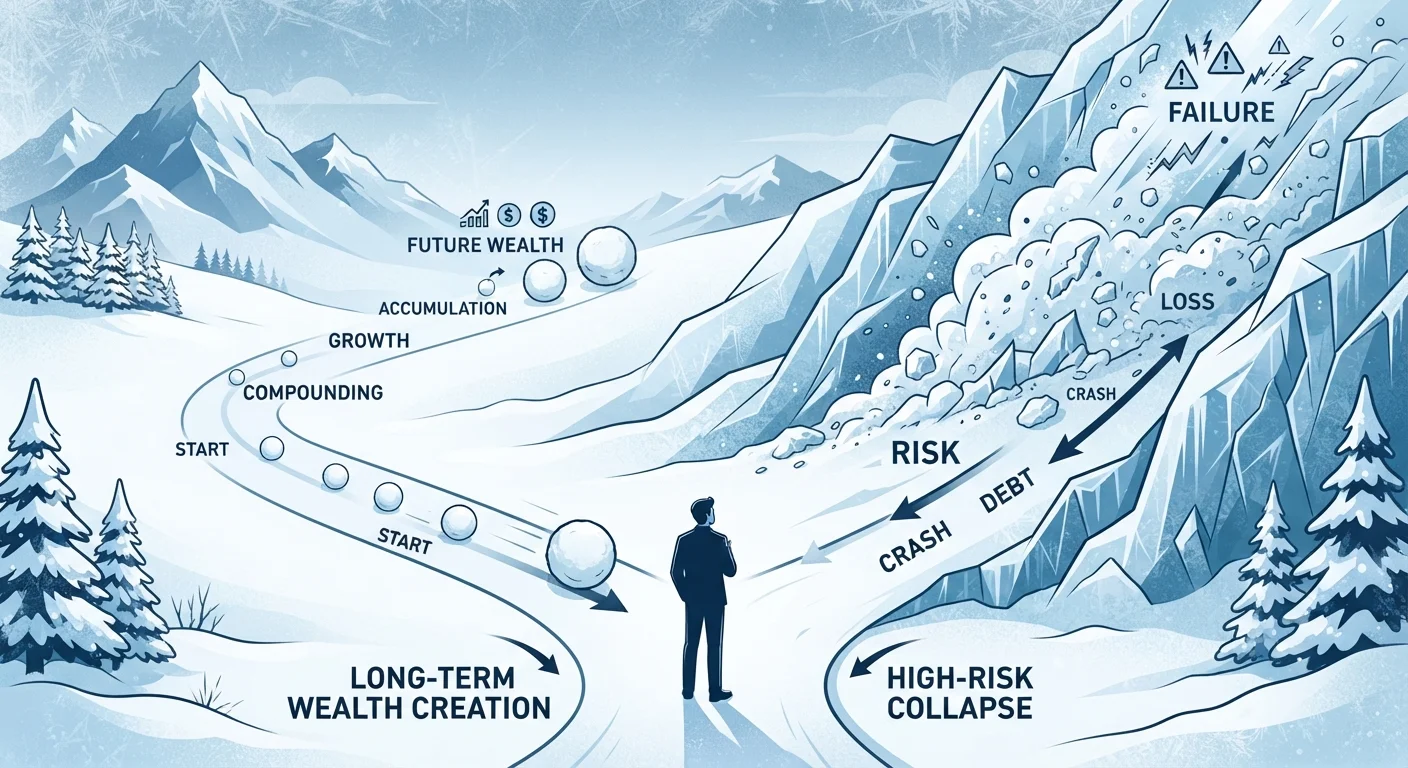
Photo credit: TopInfoTabs.com | Easy Insights For Inspiration
In this article
See how the snowball and avalanche methods differ in approach, cost, and motivation — so you can weigh which fits your situation.
Key Takeaways
- The snowball method targets smallest balances first to build momentum through quick wins.
- The avalanche method targets highest-interest debt first, typically reducing total interest paid.
- Neither method requires extra income - both work by redirecting freed-up payments to the next debt.
- Behavioral factors like motivation and consistency can matter as much as mathematical efficiency.
- Both strategies work best when combined with a firm commitment to stop accumulating new debt.
How Each Strategy Works
Both the debt snowball and the debt avalanche follow the same core mechanic: list your debts, make minimum payments on all of them, then direct any extra money each month toward one specific target account. When that account is paid off, its payment amount rolls over to the next target - that roll-over effect is where both methods get their power.
The debt snowball, popularized by personal-finance educators over the past two decades, prioritizes your smallest balance first, regardless of interest rate. Once it is cleared, the payment freed up rolls to the next smallest. The idea is that wiping out an account - however small - delivers a concrete sense of accomplishment that reinforces the habit of paying extra.
The debt avalanche reorders the same list by interest rate, targeting the highest APR first. Because interest compounds continuously, paying down the most expensive debt sooner reduces the total amount that accrues across all accounts. Mathematically, the avalanche will almost always produce lower total interest paid - though the margin varies depending on balances and rates.
For context on how different debt types interact with these strategies, see our guide on secured vs. unsecured debt - the type of debt you carry can influence which approach fits your situation best.
| Criterion | Debt Snowball | Debt Avalanche |
|---|---|---|
| Repayment order | Smallest balance first | Highest interest rate first |
| Total interest paid | Typically higher | Typically lower |
| Time to first payoff | Usually faster (smaller targets) | Can take longer initially |
| Motivational structure | Frequent quick wins | Delayed gratification |
| Complexity | Simple to track and follow | Requires rate comparison |
| Best psychological fit | Needs visible momentum | Comfortable with long-term focus |
| Mathematical efficiency | Lower | Higher |
The Real Cost Difference - and Why Psychology Fills the Gap
The mathematical advantage of the avalanche is real but not always dramatic. On a set of debts with similar interest rates, the savings over the snowball may amount to tens or hundreds of dollars. On a portfolio that includes a high-rate credit card alongside low-rate installment loans, the gap can run into the thousands. What matters is the specific mix of balances and rates in your situation.
22%+
Average credit card APR in recent years
Federal Reserve data has shown average credit card interest rates exceeding 20% for cardholders assessed interest, underscoring how costly high-rate debt can become over time.
~40%
US adults carrying credit card debt month-to-month
Surveys by the American Bankers Association and similar bodies have consistently found that a substantial share of US cardholders carry revolving balances rather than paying in full each month.
Varies
Interest savings: avalanche vs. snowball
The dollar difference between methods depends entirely on individual balances and rates - modeling your own accounts before choosing is essential.
However, the best repayment strategy is one you actually complete. Research in behavioral economics consistently finds that people are more likely to persist with a task when they receive intermediate rewards - a dynamic that the snowball directly exploits. Paying off a $400 medical bill in month two feels meaningful even if a $9,000 credit card at 22% APR is costing you far more each day.
This is not a trivial consideration. Abandoning a repayment plan partway through - or sliding back into new debt - eliminates any mathematical advantage the avalanche might have offered. If past experience suggests that motivation is your limiting factor, the snowball's psychological architecture may produce a better real-world outcome than the avalanche's theoretical efficiency.
If you're concerned that debt may already be outpacing your ability to manage it, our article on signs your debt load is becoming unmanageable can help you assess where you stand before committing to any repayment path.
Choosing a Method - and Making It Work
Start by listing every debt you carry: balance, minimum payment, and interest rate. If the high-rate accounts are also your smallest balances, the two methods may overlap considerably. If your high-rate accounts are large, the avalanche offers a more meaningful edge. Use a simple spreadsheet or a free amortization calculator to model both sequences - seeing the numbers side by side often clarifies the decision.
A few practical principles apply regardless of which method you choose:
- Automate minimums. Set minimum payments on all accounts to autopay so you never inadvertently trigger late fees while focusing extra funds on your target account.
- Pause new borrowing. Adding new balances during repayment resets your timeline and erodes progress. Both strategies assume a closed system.
- Reassess when circumstances change. A job change, windfall, or new expense may warrant adjusting your target account or monthly extra payment amount.
Debt consolidation is sometimes considered alongside these methods - it can simplify repayment by combining multiple accounts, but it doesn't eliminate the debt and can carry its own trade-offs. Our article on what debt consolidation actually does to your finances walks through those dynamics in detail.
For the broader financial habits that support long-term debt control - including budgeting practices and spending guardrails - see our guide on managing debt responsibly over time.
This article is for general informational and educational purposes only and does not constitute personalized financial, tax, or legal advice. Consult a qualified financial professional for guidance specific to your circumstances.

Author
Money & Finance Editorial Team
Money & Finance Editorial Team is the collective byline for our editorial team and contributor network. Articles published under this byline or an editorial pen name are researched, written, and reviewed according to our editorial standards for clarity, consistency, and independence before publication.
View all articles →