
Impulse Buying: The Hidden Costs Beyond the Price Tag
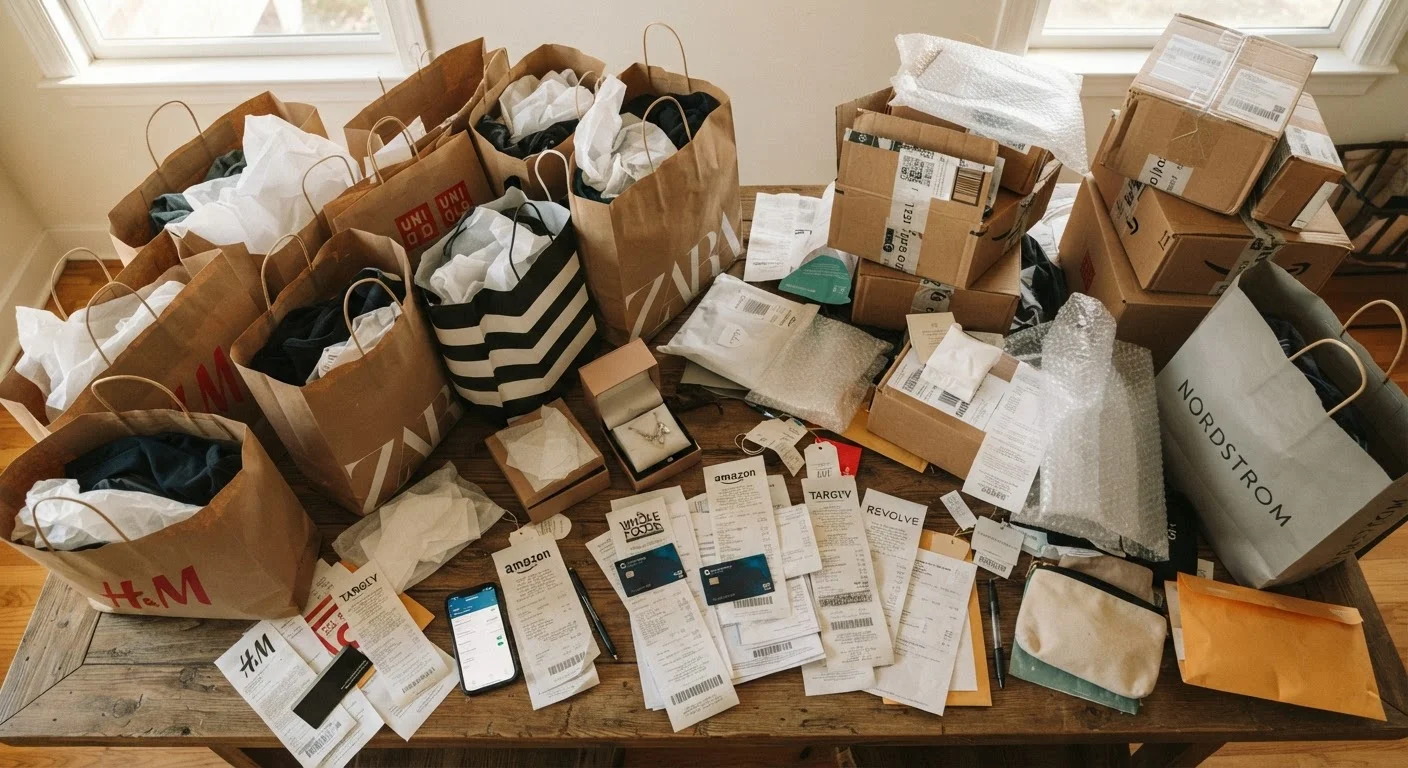
Photo credit: TopInfoTabs.com | Easy Insights For Inspiration
In this article
Unplanned purchases carry costs in clutter, returns, and financial strain. An honest look at what drives impulse spending and its real impact.
Key Takeaways
- Impulse purchases carry costs beyond the sticker price, including storage, returns, and budget disruption.
- Emotional triggers - not rational need - drive most unplanned buying decisions.
- Occasional spontaneous purchases aren't inherently harmful when budgets are healthy.
- Awareness of psychological retail tactics is a practical first line of defense.
- A short waiting period before completing a purchase reduces regret significantly.
Can deliver genuine enjoyment in the moment
Not all unplanned purchases are regretted. When a spontaneous buy aligns with real preferences and fits comfortably within a budget, it can provide authentic pleasure without lasting harm.
Occasionally surfaces items you'd have sought anyway
Impulse exposure sometimes introduces products that genuinely fill a need the shopper hadn't articulated. The problem is this outcome is far less common than the emotional excitement of discovery suggests.
Low-stakes small purchases carry minimal financial risk
A $5 spontaneous purchase has a very limited downside. For consumers with healthy budgets, occasional minor impulse spending is unlikely to cause measurable harm.
Disrupts budget planning and savings goals
Repeated unplanned spending is one of the most common explanations for monthly budget shortfalls. Even modest impulse purchases - $15 to $40 - can collectively represent hundreds of dollars annually redirected away from deliberate goals.
Generates clutter and unused inventory at home
Studies on consumer behavior consistently show that impulse-purchased items are used far less frequently than planned purchases. The result is accumulated clutter that creates its own stress and requires eventual effort to manage.
Return costs can exceed any perceived savings
Restocking fees, return shipping charges, and tight return windows mean that many impulse purchases cannot be cleanly reversed. Consumers often absorb a net loss even when they act quickly.
Driven by emotion, not genuine need
Boredom, stress, excitement, and social comparison are well-documented triggers of impulse buying. Purchases made from these states frequently fail to deliver lasting satisfaction and are associated with higher rates of buyer's remorse.
Retail environments are engineered to exploit impulse
Countdown timers, low-stock warnings, and one-click checkout are explicitly designed to compress decision time before rational evaluation can occur. Consumers are rarely operating on a level playing field.
What Impulse Buying Actually Is
An impulse purchase is any unplanned buy made in the moment - triggered by a display, a notification, a flash sale, or simply proximity to a product. It's distinct from spontaneous but considered spending (grabbing lunch because you're hungry) and sits at the intersection of emotion, environment, and marketing design.
Retailers invest heavily in impulse architecture: checkout lane placements, countdown timers, "frequently bought together" prompts, and limited-stock warnings. These aren't accidental - they're built to compress the decision window before deliberate thinking kicks in. Recognizing the psychological traps woven into retail environments is the foundation of any effective defense.
Not every unplanned purchase is a mistake. But understanding the full cost picture - beyond what the receipt shows - is essential for any consumer trying to spend intentionally.
The Real Costs Impulse Buying Carries
The sticker price is only the beginning. Impulse purchases stack up costs that rarely appear in the checkout total:
- Clutter and storage: Items bought on impulse are disproportionately likely to go unused, creating physical and cognitive clutter that has a real quality-of-life cost.
- Return friction: Many categories carry restocking fees, non-refundable shipping, or tight return windows. Fees that quietly erase perceived savings are especially common after discount-driven impulse buys.
- Budget displacement: An unplanned $60 spend doesn't disappear - it reduces capacity for a planned need later. Repeated impulse spending is one of the most common reasons monthly budgets don't balance despite reasonable incomes.
- Opportunity cost: Money spent impulsively is money unavailable for savings goals, debt repayment, or purchases that would deliver lasting value.
~$314
Average monthly impulse spending per US consumer
Slickdeals' consumer research surveys have repeatedly found monthly unplanned spending in this range among US adults, though figures vary by methodology and year.
49%
Shoppers who regret at least one recent impulse buy
Multiple consumer sentiment surveys indicate roughly half of US shoppers report regretting at least one recent unplanned purchase when surveyed shortly after.
The psychological toll is real too. Buyer's remorse - the discomfort following a purchase that doesn't hold up to reflection - is closely linked to impulsive decision-making. Understanding why regret follows certain purchases helps break the cycle before it starts.
Pros and Cons: A Balanced View
Impulse buying isn't uniformly destructive. Below is an honest accounting of when it works and when it doesn't.
Can deliver genuine enjoyment in the moment
Not all unplanned purchases are regretted. When a spontaneous buy aligns with real preferences and fits comfortably within a budget, it can provide authentic pleasure without lasting harm.
Occasionally surfaces items you'd have sought anyway
Impulse exposure sometimes introduces products that genuinely fill a need the shopper hadn't articulated. The problem is this outcome is far less common than the emotional excitement of discovery suggests.
Low-stakes small purchases carry minimal financial risk
A $5 spontaneous purchase has a very limited downside. For consumers with healthy budgets, occasional minor impulse spending is unlikely to cause measurable harm.
Disrupts budget planning and savings goals
Repeated unplanned spending is one of the most common explanations for monthly budget shortfalls. Even modest impulse purchases - $15 to $40 - can collectively represent hundreds of dollars annually redirected away from deliberate goals.
Generates clutter and unused inventory at home
Studies on consumer behavior consistently show that impulse-purchased items are used far less frequently than planned purchases. The result is accumulated clutter that creates its own stress and requires eventual effort to manage.
Return costs can exceed any perceived savings
Restocking fees, return shipping charges, and tight return windows mean that many impulse purchases cannot be cleanly reversed. Consumers often absorb a net loss even when they act quickly.
Driven by emotion, not genuine need
Boredom, stress, excitement, and social comparison are well-documented triggers of impulse buying. Purchases made from these states frequently fail to deliver lasting satisfaction and are associated with higher rates of buyer's remorse.
Retail environments are engineered to exploit impulse
Countdown timers, low-stock warnings, and one-click checkout are explicitly designed to compress decision time before rational evaluation can occur. Consumers are rarely operating on a level playing field.
The balance tips negative when impulse purchases are frequent, are driven by emotional distress rather than genuine desire, or compete with essential financial obligations. For consumers managing tight margins, even small unplanned purchases compound meaningfully over time - a dynamic worth tracking in any personal budgeting system.
Practical Friction: Slowing Down the Decision
The most consistently effective check on impulse spending is introducing deliberate delay. A 24-to-48-hour waiting period before completing non-essential purchases gives the initial emotional charge time to dissipate. If the desire holds, the purchase is likely more considered than impulsive.
The 48-Hour Rule in Practice
Adding a purchase to a wishlist or cart - but not completing checkout - is a simple implementation of deliberate delay. Many retailers will send a reminder, which itself becomes useful data: if you've forgotten about the item entirely by the time the reminder arrives, the impulse has passed. If the desire is still present, you can proceed with more confidence that it reflects genuine preference rather than a moment of marketing-induced excitement.
Other friction-based strategies that research and consumer advocates commonly recommend:
- Remove saved payment details from retail apps and browsers. Re-entering card information adds enough friction to interrupt automatic buying behavior.
- Use a dedicated discretionary account with a fixed monthly transfer. When it's empty, unplanned buying stops - no guilt required.
- Run a pre-purchase check. A structured pre-purchase checklist asks the questions that impulse bypass: Do I need this? Do I own something that already does this? Where will it live?
None of these eliminate spontaneous spending entirely - nor should they. The goal is making sure the purchase survives basic scrutiny, not eliminating the pleasure of an occasional find. Distinguishing genuine value from a low price is a skill that pays dividends across every category of spending.

Author
Smart Shopping Editorial Team
Smart Shopping Editorial Team is the collective byline for our editorial team and contributor network. Articles published under this byline or an editorial pen name are researched, written, and reviewed according to our editorial standards for clarity, consistency, and independence before publication.
View all articles →