Actual Cash Value vs. Replacement Cost Coverage Explained
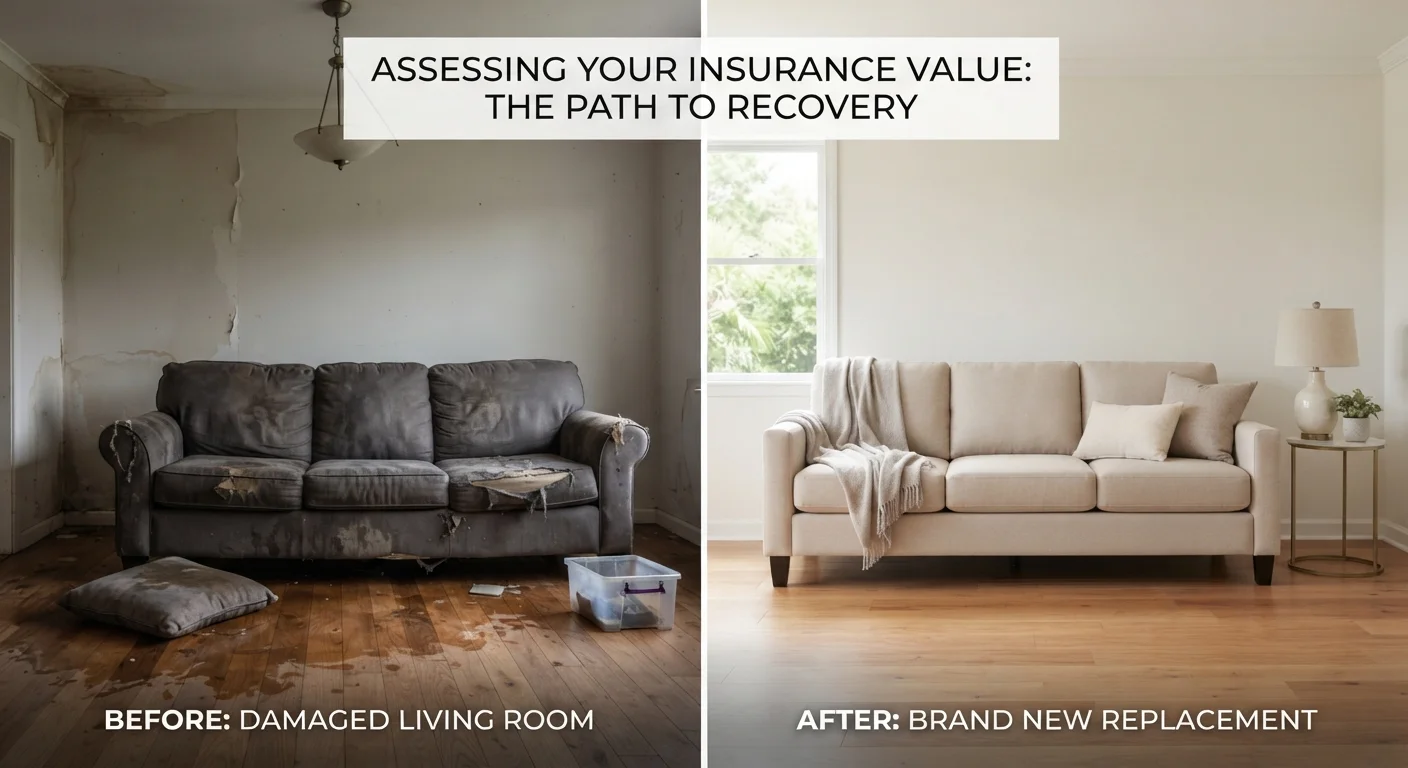
Photo credit: TopInfoTabs.com | Easy Insights For Inspiration
In this article
These two valuation methods can mean thousands of dollars difference in a claim. Here's exactly how each one works in practice.
Key Takeaways
- ACV pays what your property is worth today after depreciation; RCV pays what it costs to replace it new.
- The difference between ACV and RCV payouts on older belongings can easily run into thousands of dollars.
- RCV policies carry higher premiums but reduce your out-of-pocket exposure after a significant loss.
- Depreciation calculations vary by insurer and item type - always ask how yours are determined.
- Neither valuation method eliminates your deductible obligation before the payout kicks in.
- Reviewing your valuation method annually helps ensure your coverage keeps pace with inflation and new purchases.
What Each Valuation Method Actually Means
When you file a property insurance claim, your insurer doesn't simply hand you a check for whatever you feel the loss is worth. Instead, it applies a pre-agreed valuation method written into your policy. The two most common methods are Actual Cash Value (ACV) and Replacement Cost Value (RCV) - and they can produce dramatically different payouts for the exact same loss.
Actual Cash Value is calculated by taking the cost to replace an item and then subtracting accumulated depreciation. Depreciation reflects wear, age, and obsolescence. A five-year-old laptop that originally cost $1,200 might have an ACV of $400 by the time it's stolen, because the insurer estimates it has lost roughly two-thirds of its value.
Replacement Cost Value, by contrast, pays what it actually costs to buy a comparable new item at current prices - without any depreciation deduction. The same stolen laptop would be covered at whatever a similar new model costs today, subject to your policy limits and deductible.
Understanding this distinction is foundational to sizing your coverage correctly. See our guide to assessing how much coverage you need for a broader framework.
| Criterion | Actual Cash Value (ACV) | Replacement Cost Value (RCV) |
|---|---|---|
| Payout basis | Depreciated market value | Cost of equivalent new item |
| Depreciation deducted | Yes - reduces payout | No - paid at new cost |
| Typical premium cost | Lower | Higher |
| Out-of-pocket gap after loss | Potentially significant | Minimal (up to deductible) |
| Best suited for | Budget-conscious, older property | Newer assets, risk-averse owners |
| Payout timing | Single settlement | Sometimes two-stage payment |
How Depreciation Creates the Payout Gap
Depreciation is the engine that drives the difference between ACV and RCV. Insurers calculate it using formulas that account for an item's expected useful lifespan and its current age. A roof with a 20-year lifespan that is 10 years old may be considered 50% depreciated - cutting your ACV payout nearly in half compared to a full replacement cost settlement.
~50%
Typical depreciation on a 10-year-old roof
Insurers commonly calculate roof depreciation based on expected lifespan, often leaving homeowners with half the replacement cost under ACV policies.
$20K+
Potential ACV vs. RCV gap on a major home loss
Industry claims data indicates that for significant losses involving multiple aged items, the depreciation shortfall can exceed tens of thousands of dollars.
The practical consequence: after a significant loss - a house fire, a burst pipe flooding multiple rooms, a theft of electronics - ACV policyholders frequently discover their payout covers only a fraction of what it will actually cost to restore their situation. That gap must be funded out of pocket.
It's also worth noting that depreciation calculations aren't always transparent. Methodology varies by insurer, and some apply aggressive schedules. Always ask your insurer how depreciation is calculated for specific categories of property before a loss occurs, not after. For context on how stated values often diverge from real-world worth, see our explainer on retail price vs. real value.
Premium Trade-Offs and Policy Structure
RCV coverage costs more - that's a straightforward trade-off. The premium difference varies by policy type, property age, and insurer, but homeowners policies with RCV dwelling coverage can carry meaningfully higher annual premiums than equivalent ACV policies. Whether that cost is justified depends on your financial cushion and the value of what you're insuring.
One nuance worth understanding: some RCV policies pay out in two stages. The insurer first releases an ACV payment, then releases the remaining depreciation amount (called the "recoverable depreciation") after you demonstrate you've actually completed repairs or made the replacement purchase. If you don't complete the replacement, you may only collect the ACV portion even under an RCV policy.
RCV Payouts Often Require Proof of Replacement
Many RCV policies withhold the depreciation portion of the settlement until you submit receipts showing you've actually repaired or replaced the damaged property. If you simply pocket the initial ACV payment and don't complete the work, you may forfeit the recoverable depreciation amount. Confirm the specific requirements with your insurer before filing a claim.
Your deductible applies regardless of which valuation method your policy uses - it comes off the top of any settlement. For a clear explanation of how deductibles interact with payouts across policy types, see what an insurance deductible actually means for your wallet.
Reviewing your valuation method should be part of your annual coverage check. Use this personal coverage checklist to make sure your policy still matches your current assets and situation.
This article is for general informational purposes only and does not constitute personalized insurance, financial, or legal advice. Coverage terms, depreciation methods, and policy options vary by insurer and state. Consult a licensed insurance agent or adviser to evaluate options specific to your circumstances.

Author
Smart Shopping Editorial Team
Smart Shopping Editorial Team is the collective byline for our editorial team and contributor network. Articles published under this byline or an editorial pen name are researched, written, and reviewed according to our editorial standards for clarity, consistency, and independence before publication.
View all articles →