
Retail Price vs. Real Value: Understanding the Gap
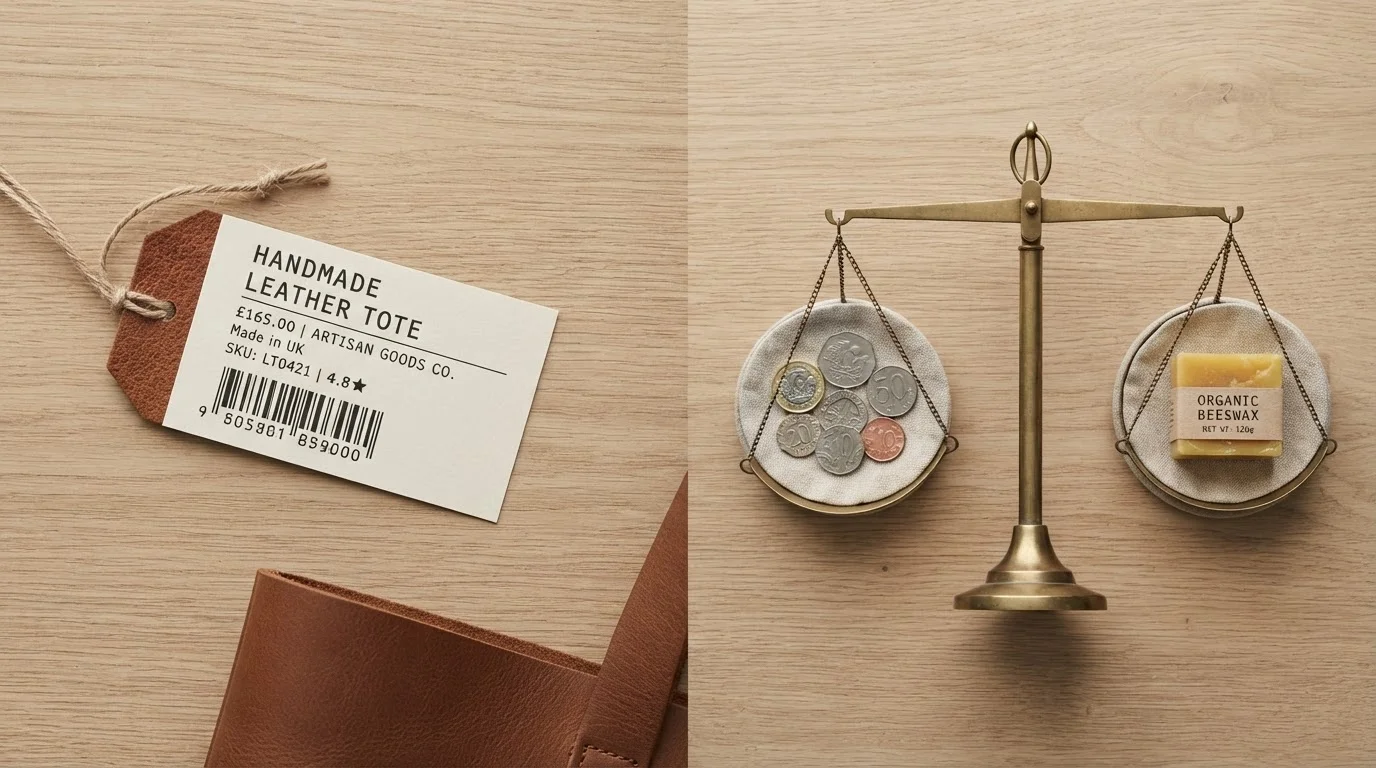
Photo credit: TopInfoTabs.com | Easy Insights For Inspiration
In this article
Why the sticker price rarely reflects what something is worth — and the factors that shape genuine value in everyday consumer goods.
Key Takeaways
- Retail price is set by the seller; real value is determined by your actual use case and the product's performance.
- Markup, branding, and psychological pricing tactics regularly push sticker prices well above production cost.
- Cost-per-use, durability, and opportunity cost are more reliable value indicators than the tag price alone.
- A higher price does not guarantee higher quality - and a lower price does not always mean a better deal.
- Understanding both concepts together gives consumers a meaningful edge when making spending decisions.
What Retail Price Actually Measures
Retail price is the amount a seller has decided to charge at the point of sale. It reflects a mix of production cost, distribution overhead, desired profit margin, and competitive positioning - but it is not a neutral measurement of what a product is worth. Retailers and manufacturers layer in psychological pricing strategies, brand premiums, and anchor effects that can push sticker prices far above what cost economics alone would suggest.
Understanding how retailers build their pricing strategy helps explain why two near-identical products can carry prices that differ by 40% or more, and why a "sale" price doesn't automatically represent genuine savings. The sticker is a starting point for a transaction - not a verdict on quality or worth.
| Criterion | Retail Price | Real Value |
|---|---|---|
| Set by | The seller | Your use case and the product's performance |
| Influenced by | Margin, branding, and psychology | Durability, utility, and alternatives |
| Visibility | Immediately visible on the tag | Requires research and reflection |
| Changes over time | Yes - with sales, markdowns, or inflation | Yes - with your evolving needs and use habits |
| Useful for | Budgeting and price comparison | Deciding whether a purchase is worthwhile |
| Risk if ignored | Missing a genuine deal or overpaying | Buying cheap items that cost more long-term |
What Real Value Actually Measures
Real value is what a product is genuinely worth to you - factoring in how often you'll use it, how long it will last, what alternatives exist, and how well it solves your specific problem. It is inherently personal and situational. A $400 tool used daily in a professional setting may represent strong value; the same tool sitting unused in a garage for years does not.
Key metrics for estimating real value include:
- Cost-per-use: Divide the price by the number of times you realistically expect to use the item. A $30 item used twice costs $15 per use; a $90 item used 60 times costs $1.50 per use.
- Durability: How long before it needs replacing? A cheaper product that fails in 18 months often costs more over five years than a pricier, longer-lasting alternative.
- Opportunity cost: Spending $200 on something you barely need is $200 unavailable for something that genuinely improves your life.
A lower price tag doesn't automatically mean a better deal - this is one of the most repeated mistakes in everyday consumer behavior.
~30-50%
Typical retail markup over wholesale cost
Industry analyses across general merchandise categories commonly show retail prices set 30-50% above wholesale, with branded goods often carrying even wider margins.
2-5×
Cost difference: cheap vs. durable equivalent over 5 years
Consumer durability studies consistently find that lower-cost items requiring repeated replacement can cost two to five times more than a single, higher-quality purchase over the same period.
Where the Gap Between the Two Is Largest
The disconnect between retail price and real value tends to be widest in three categories:
- Brand-premium goods: Licensing, marketing spend, and brand recognition can account for a significant share of a product's retail price - none of which affects its functional performance. In many categories, generics perform identically to name brands at a fraction of the price.
- High-depreciation items: Cars are the clearest example. The sticker price is just the opening number. Insurance, depreciation, fuel, and servicing all affect what a car really costs - sometimes doubling the apparent purchase price over a five-year ownership window.
- Heavily marketed "sale" items: A product artificially inflated in price before being discounted can produce a large-looking markdown that still leaves the item overpriced relative to its genuine market worth. Learning to tell a real discount from a marketing illusion is a foundational shopping skill.
How to Narrow the Gap in Your Own Decisions
Bridging the retail-price-to-real-value gap requires a small shift in how you approach purchasing decisions. Before checkout, ask three questions: How often will I actually use this? How does its lifespan compare to alternatives at different price points? Is the price reflective of production quality, or primarily of branding and marketing?
Price history data is one of the most underused tools available to consumers. Price tracking tools reveal whether a deal is genuinely rare or a return to normal, giving you a baseline for what the market has actually charged over time - not just what a retailer wants you to think is a deal today.
For major purchases, the same logic applies to insurance coverage. The difference between actual cash value and replacement cost coverage can mean thousands of dollars in a claim - a reminder that the financial gap between nominal price and real-world value extends well beyond the initial sale.
This article provides general consumer education and is not financial or purchasing advice. Individual circumstances vary; consider your specific needs and consult relevant professionals for significant financial decisions.

Author
Smart Shopping Editorial Team
Smart Shopping Editorial Team is the collective byline for our editorial team and contributor network. Articles published under this byline or an editorial pen name are researched, written, and reviewed according to our editorial standards for clarity, consistency, and independence before publication.
View all articles →