
Sale Price vs. True Discount: What the Numbers Actually Mean
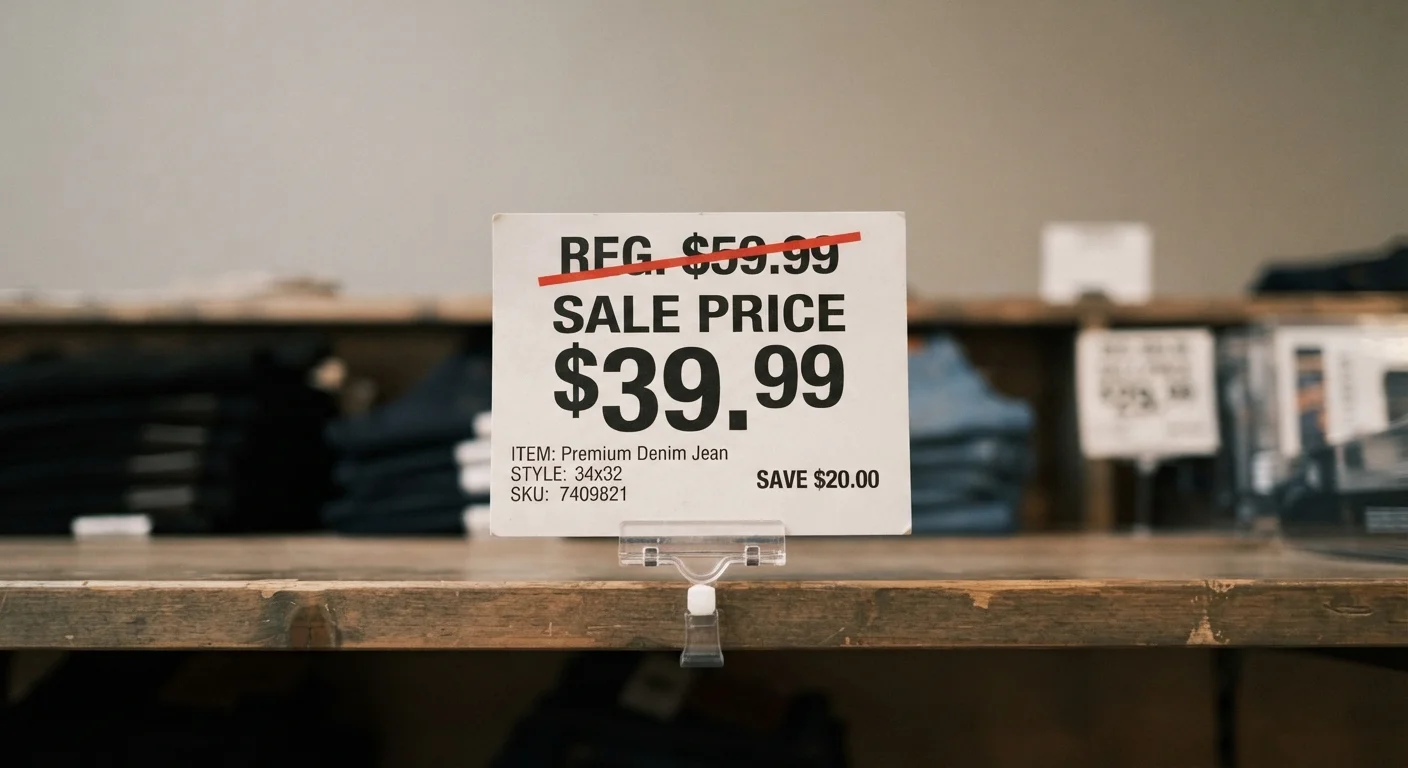
Photo credit: TopInfoTabs.com | Easy Insights For Inspiration
In this article
Not every sale is a genuine saving. Learn how to decode pricing tactics and tell a real discount from a marketing illusion.
Key Takeaways
- A sale price is only meaningful when compared against the item's genuine, sustained selling price.
- Retailers legally set their own 'original' prices, and some inflate them specifically to make discounts look larger.
- Percentage-off figures can be misleading if the reference price is artificial or was rarely charged.
- Price history tools let you verify whether a markdown is real before you commit to buying.
- Hidden costs like shipping, handling, and return fees can erode headline savings significantly.
- Genuine discounts require both a lower number and a fair reference price - not just one or the other.
Why the 'Original Price' Is the Number That Needs Scrutiny
When a tag reads "Was $120, Now $72", your brain registers a 40% saving almost automatically. That's by design. But the question you should ask first isn't about the sale price - it's about the $120. Was that ever the real price? Did anyone actually pay it, and for how long?
In U.S. retail, a seller has wide latitude to set a "reference" or "original" price. The FTC's Guides Against Deceptive Pricing prohibit fabricated comparisons, but proving a violation requires showing the former price was not a genuine offering. That's a difficult bar, and routine enforcement is rare. The practical result: many "original" prices on sale displays are set high specifically to make the markdown look dramatic.
This doesn't mean every sale is a manipulation - genuine markdowns happen constantly. But the original price is the variable you can't take at face value. The sale price, by contrast, is easy to verify; it's what you'll actually pay at checkout.
FTC Guidance on Reference Prices
The Federal Trade Commission's Guides Against Deceptive Pricing state that a 'former price' used in an advertisement must represent a price at which the item was actually and genuinely offered to the public for a reasonably substantial period of time. These are guidelines, not regulations with automatic penalties, and enforcement typically follows complaints or investigations rather than routine monitoring. Readers who believe they've encountered deceptive pricing can file a report at ftc.gov.
How Percentage-Off Figures Can Mislead
Percentage discounts feel precise and mathematical, which makes them persuasive. A "50% off" claim reads like an objective fact. In practice, it is only as accurate as the denominator - the reference price it's calculated from.
Consider an item listed at "$200 original, $100 sale." If the item was widely available for $110 at comparable retailers all along, the "50% off" framing is technically accurate relative to the posted original, but it overstates the real-world saving. You're saving $10, not $100.
87%
Shoppers who trust posted 'original' prices
Consumer research has consistently found the large majority of shoppers accept reference prices as accurate without independent verification, according to academic studies on reference price effects in retail.
~30%
Price inflation before major sale events
Analyses of tracked retail prices around large sale events such as Black Friday have documented average pre-sale price increases of roughly 30% above prior selling prices in certain product categories.
This is why cross-referencing matters. A percentage figure tells you the ratio of the reduction to the stated original price. It tells you nothing about whether that original price was fair, common, or ever widely charged. For a deeper look at why the posted price and real value often diverge, see why the sticker price rarely reflects real worth.
Tactics That Create the Illusion of a Deal
Several pricing strategies are widely used across retail categories. Knowing them by name makes them easier to spot:
- Reference price inflation: Setting an artificially high original price to anchor perception before a discount.
- Temporary price spikes: Briefly raising a price in the days or weeks before a sale event - enough to qualify the original under some interpretations of advertising rules - then dropping it back to the real selling price and calling it a sale.
- Bundle repackaging: Slightly changing a product bundle or SKU so that a meaningful price comparison to a prior period is difficult or impossible.
- Manufactured urgency: Pairing a sale price with countdown timers or low-stock warnings to prevent the comparison-shopping that would reveal the discount is unremarkable.
These tactics are well-documented in consumer research and have been the subject of regulatory actions at both the FTC and state level. They are not marginal - they appear across major retail categories from electronics to apparel. The myths that cost deal-hunters money article covers related patterns worth knowing.
Pause Before a Countdown Clock
Countdown timers and 'only X left' notices are designed to override your comparison-shopping instinct. When you see them, treat it as a cue to do a quick price check elsewhere rather than a signal to act immediately. Genuine scarcity doesn't require a clock - it speaks for itself in actual inventory.
What a Real Discount Actually Looks Like
A genuine discount has two characteristics: the sale price is lower than comparable market prices elsewhere, and the reference price was a real, sustained selling price - not a brief or artificial one. Both conditions need to hold.
The most reliable way to confirm this is a price history check. Browser extensions and price-tracking services log historical prices for products at major retailers, making it straightforward to see whether the "original" price was stable for weeks or months, or appeared only in the 48 hours before a sale event. Reading a price history before you buy walks through exactly how to use these tools.
Beyond history, a simple cross-check against two or three comparable sellers gives you a real-world market price. If the sale price lands below or near what others charge, the discount is likely genuine. If it lands at or above what competing sellers charge routinely, the markdown is more marketing than math.
It's also worth noting that price alone doesn't determine value. A discounted item you don't need, won't use, or that costs more to maintain isn't a saving regardless of the percentage. The value vs. price distinction is the final filter any deal should pass.
Frequently Asked Questions

Author
Smart Shopping Editorial Team
Smart Shopping Editorial Team is the collective byline for our editorial team and contributor network. Articles published under this byline or an editorial pen name are researched, written, and reviewed according to our editorial standards for clarity, consistency, and independence before publication.
View all articles →