
Deal-Hunting Myths That Cost People Money
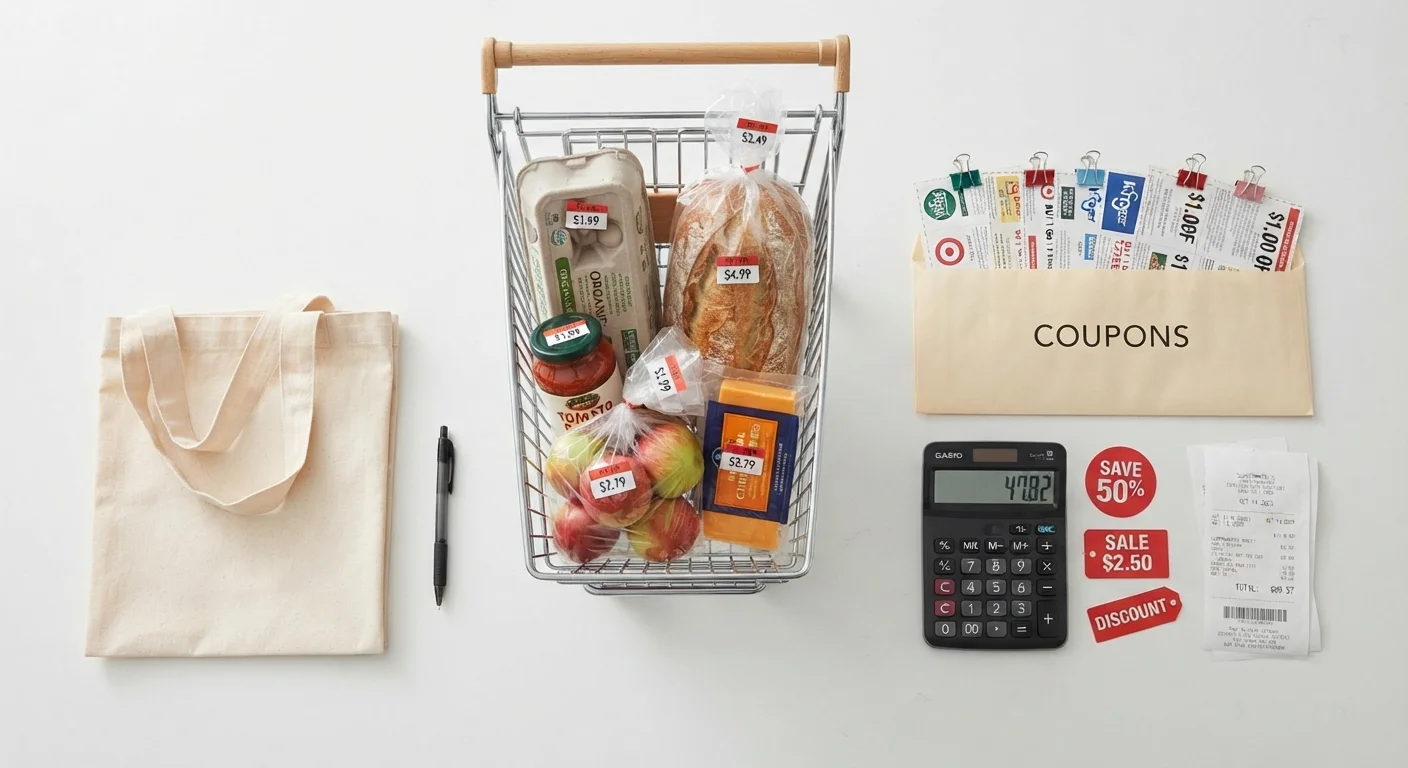
Photo credit: TopInfoTabs.com | Easy Insights For Inspiration
From 'bulk always saves' to 'clearance items are always discounted', common savings beliefs often don't hold up under scrutiny.
Key Takeaways
- Bulk buying only saves money if you actually use everything you purchase before it expires or goes stale.
- Clearance price tags do not guarantee a markdown from the item's original retail price.
- A higher percentage off means nothing if the reference price was artificially inflated beforehand.
- Loyalty programs and memberships add real costs that can cancel out the savings they advertise.
- Urgency messaging like 'limited time' is a common retail tactic, not a reliable signal of genuine scarcity.
Why Conventional Deal Wisdom Often Fails
Most shoppers have a mental playbook for scoring deals: buy in bulk, chase clearance racks, pile on promo codes, and jump at anything labeled a percentage off. These instincts feel logical - and retailers know it. Many pricing and merchandising tactics are engineered specifically to exploit those instincts, turning confident deal-hunters into customers who spend more than they planned.
The myths below are widespread precisely because they contain a grain of truth. Bulk can save money. Clearance items sometimes are deeply discounted. But each belief comes with conditions and exceptions that dramatically change the math. Understanding those conditions is the difference between a genuine saving and a rationalized purchase.
For a deeper look at how pricing displays can mislead, see how sale prices and true discounts differ.
Myth
Buying in bulk always saves money.
Fact
Bulk buying saves money only when you consume the full quantity before it spoils, expires, or goes unused.
Unit price comparisons favor larger packages in many categories, but the savings evaporate if half the product goes to waste. Perishable food, cleaning products with short shelf lives, and trend-driven items all carry spoilage and obsolescence risk. Storage costs - physical space, or a rented unit - add to the real cost. Before buying in bulk, calculate whether your actual consumption rate justifies the quantity, not just the per-unit price.
Myth
Clearance tags mean the price has been significantly marked down.
Fact
Clearance simply means a retailer wants to clear inventory; it does not specify how much, if anything, the price has dropped from a genuine selling price.
A clearance label signals an end-of-cycle pricing decision, not a defined discount depth. Some clearance items carry meaningful reductions; others are priced only slightly below where they sat for months without selling. Without a reliable reference price - and ideally a price history - the clearance label itself tells you very little about actual value. Tools that track historical pricing can help establish whether the current clearance price represents a real low. See how to read a price history before buying for a practical approach.
Myth
A bigger percentage off always means a better deal.
Fact
The percentage discount is only meaningful relative to an accurate and honest reference price.
Retailers are permitted to use a Manufacturer's Suggested Retail Price (MSRP) or a previous high price as the reference point, even if the item rarely or never sold at that price. A product advertised as 60% off an inflated anchor price may cost more than a competitor's item shown at 20% off a lower honest price. Compare final transaction prices - not discount percentages - across sources before concluding you have found a genuine bargain.
Myth
Stacking promo codes and coupons always multiplies savings.
Fact
Most retailers restrict coupon stacking, and layering offers can sometimes trigger conditions that reduce or eliminate individual discounts.
Many retailers' systems apply only one promotional code per order, or prohibit combining a sale price with a coupon. Some stacking attempts can unintentionally disqualify a better single discount. Before assuming combined offers compound, read the terms of each promotion carefully. Stacking discounts can backfire in ways worth understanding before checkout.
Myth
Loyalty programs and memberships always pay for themselves.
Fact
Membership costs are a real upfront expense that require a minimum level of actual spending to offset - many members never reach that threshold.
A warehouse club membership or retailer loyalty program can yield net savings for high-volume, frequent shoppers in the right categories. But the membership fee is a fixed cost regardless of how much you use it. If your shopping patterns change, if the products you typically buy aren't stocked, or if competing options offer comparable prices without fees, the membership becomes a net expense. Recalculate the math annually against your actual purchase history, not projected usage.
Myth
'Limited time' and 'while supplies last' signals mean you need to act immediately.
Fact
Urgency and scarcity messaging are standard retail copywriting tactics, and the offer or price often returns - or never actually expires.
Artificial urgency is one of the oldest tools in retail marketing. Countdown timers reset, 'exclusive' sales repeat on predictable cycles, and items sold out in one channel are frequently restocked or available elsewhere. Acting on urgency alone - without having already established the item's price history and your actual need - is how impulse spending is manufactured. Why 'limited time offer' rarely means what you think examines this tactic in detail.
Protecting Your Budget from Deal Psychology
Knowing the myths intellectually isn't always enough, because deal-hunting triggers real psychological responses - the satisfaction of a perceived win, fear of missing out, and the sunk-cost pull of a loyalty program you've already paid into. These pressures push decisions in a direction that benefits the seller, not the buyer.
Reference Prices Are Not Always Reliable
The 'original price' displayed next to a sale price is set by the retailer and is not independently verified. In some cases, items are listed at an inflated price briefly before being marked 'on sale' at what is effectively the normal price. Always cross-reference with price history tools or competing retailers before treating a reference price as an accurate baseline. Dark patterns in online retail - including misleading pricing displays - are more common than many shoppers realize; dark patterns in online shopping covers these tactics in detail.
A practical defense is to build a pre-purchase habit: check the item's price history before buying (free browser tools make this straightforward), calculate the total cost including shipping and membership fees, and ask whether you would buy the item at full price if no deal existed. If the answer is no, the deal is doing the motivating - not genuine need or value.
For more on the emotional mechanics behind discount shopping, psychological traps in discount shopping breaks down the patterns worth recognizing. And if you want to understand what fees and charges can quietly offset a headline saving, hidden costs that erase discounts is a useful companion read.
~$500
Average US household annual warehouse membership spend
Consumer research consistently places household warehouse club membership fees in this range, meaning members must generate equivalent savings just to break even before netting any benefit.
~30%
Grocery bulk purchases reportedly wasted by US households
Studies on household food waste suggest a meaningful share of bulk-purchased perishables are discarded before consumption, offsetting unit-price savings.
This article provides general consumer information and is not personalized financial advice. For guidance on your specific budget or financial situation, consider consulting a qualified financial professional.

Author
Smart Shopping Editorial Team
Smart Shopping Editorial Team is the collective byline for our editorial team and contributor network. Articles published under this byline or an editorial pen name are researched, written, and reviewed according to our editorial standards for clarity, consistency, and independence before publication.
View all articles →