
Understanding Cognitive Distortions: The Thought Patterns That Skew How You See the World
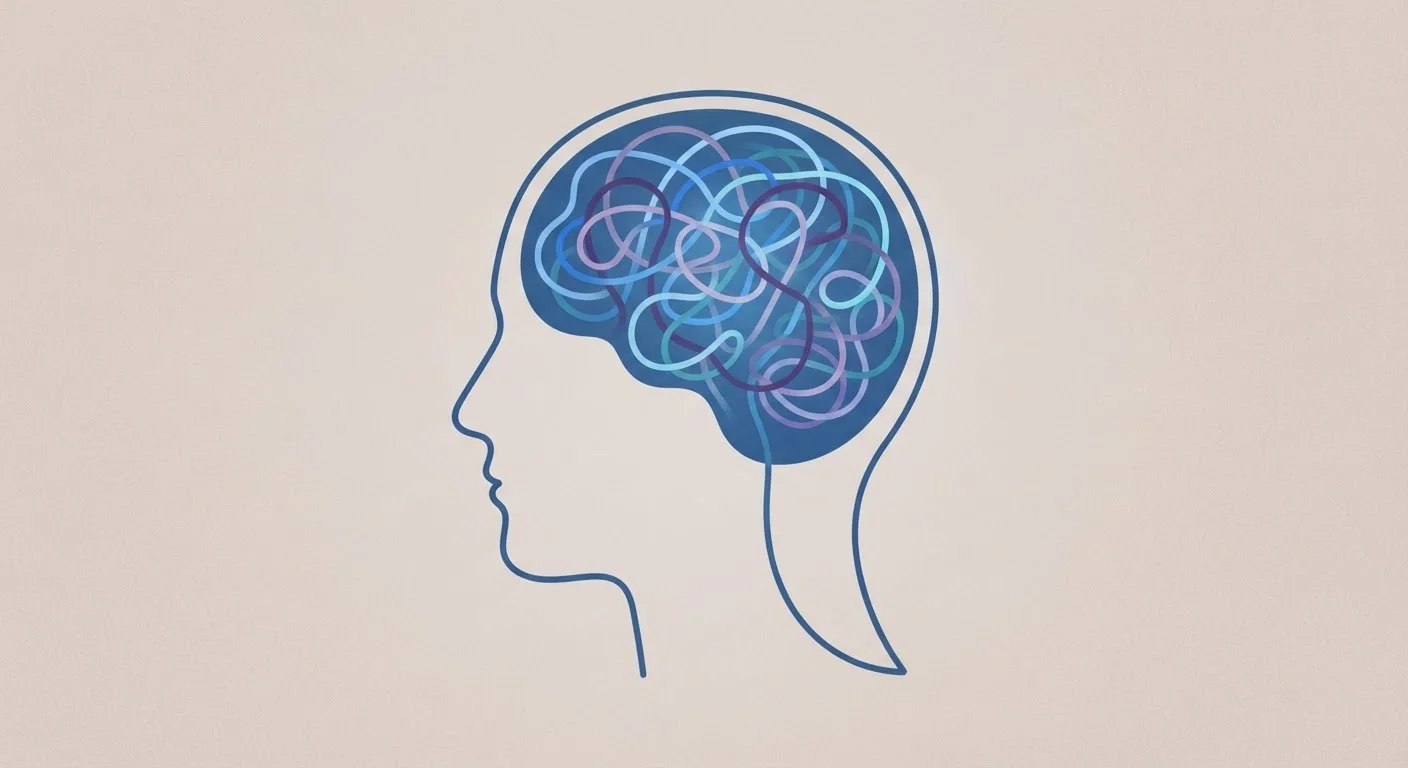
Photo credit: TopInfoTabs.com | Easy Insights For Inspiration
In this article
Cognitive distortions are habitual thinking errors that can worsen anxiety and low mood. Learn to recognise the most common patterns and what they look like in daily life.
What Are Cognitive Distortions?
Cognitive distortions are habitual, automatic ways of thinking that consistently misrepresent reality - often in a negative direction. First systematically described in the context of cognitive behavioral therapy (CBT), these patterns are not character flaws or signs of weakness. They are mental shortcuts that develop over time, frequently reinforced by stress, past experience, or low mood.
The tricky part: distorted thoughts feel true. They arrive quickly, feel logical in the moment, and rarely announce themselves as errors. Over time, they can fuel anxiety, low self-esteem, and persistent sadness - not because the world is as bad as the thoughts suggest, but because the mind keeps framing it that way.
Recognising these patterns doesn't require therapy, though working with a mental health professional can deepen the process. Awareness alone creates a small but meaningful gap between the thought and your reaction to it. For anyone curious about what professional support actually involves, common therapy myths are worth examining before ruling it out.
Cognitive Distortion
A habitual pattern of inaccurate or exaggerated thinking that misrepresents reality. Cognitive distortions are automatic and feel believable, but they consistently skew perception - usually in a negative direction.
Cognitive Behavioral Therapy (CBT)
A structured, evidence-based form of psychotherapy that explores the relationship between thoughts, feelings, and behaviors. CBT teaches skills for identifying and challenging unhelpful thought patterns.
Catastrophising
A cognitive distortion in which a person assumes the worst possible outcome is the most likely result of an ambiguous or mildly negative situation, generating disproportionate anxiety.
Emotional Reasoning
The tendency to treat feelings as objective facts - for example, believing something must be true simply because it feels true. This distortion is common in anxiety and depression.
Overgeneralisation
Drawing sweeping, universal conclusions from a single event or limited experience. Phrases like 'I always fail' or 'this never works out' are common indicators.
Personalisation
Taking excessive personal responsibility for events that are outside one's control or that involve multiple contributing factors.
The Most Common Distortions - and What They Look Like
Below are the patterns most frequently identified in clinical and research settings. Most people will recognise several.
| Origin of the concept | Cognitive distortions were formally described by psychiatrist Aaron T. Beck in the 1960s as part of his development of cognitive therapy. |
| How many distortions are identified? | Researchers and clinicians have catalogued roughly 10-20 distinct distortion types, though many overlap. |
| Who experiences them? | Everyone - cognitive distortions are a normal feature of human cognition, not a marker of mental illness. |
| Primary therapeutic context | Identifying and challenging distortions is a core skill taught in Cognitive Behavioral Therapy (CBT). |
| Common trigger states | Distortions tend to intensify during stress, sleep deprivation, anxiety, and depressive episodes. |
All-or-Nothing Thinking
Also called black-and-white thinking, this pattern frames situations in absolute terms with no middle ground. A single mistake becomes total failure. One awkward conversation means you're socially hopeless. The nuance - that most outcomes sit somewhere on a spectrum - disappears entirely.
Catastrophising
This involves assuming the worst possible outcome is the most likely one. A headache becomes a serious illness; a tense email from a manager signals imminent job loss. The mind leaps from an ambiguous cue to a worst-case conclusion, generating disproportionate anxiety.
Mind Reading
Assuming you know what others are thinking - almost always negatively - without actual evidence. "She didn't reply quickly, so she must be angry with me." This pattern can quietly damage relationships and discourage honest communication.
Overgeneralisation
Taking one instance and treating it as an unbreakable rule. "This always happens to me." "I never get anything right." The words always and never are useful flags for this pattern.
Personalisation
Taking excessive responsibility for events outside your control. If a group project goes badly, personalisation makes it entirely your fault - ignoring every other contributing factor. Interestingly, the same distortion can appear in consumer behaviour; psychological traps in shopping decisions often exploit a similar tendency to take cues personally.
Emotional Reasoning
Treating feelings as facts. "I feel like a failure, therefore I must be one." Emotions are real and valid, but they do not always accurately reflect external reality - especially when anxiety or depression is present.
Building Awareness Without Self-Criticism
Spotting a cognitive distortion in yourself is a skill that improves with practice - and it works best when approached with curiosity rather than judgment. A few practical starting points:
- Label the pattern: When a distressing thought arises, try naming it. "That's catastrophising." Naming creates distance.
- Look for evidence: Ask what factual evidence supports the thought - and what contradicts it. This isn't toxic positivity; it's honest accounting.
- Consider alternative explanations: If a friend described the same situation, what would you tell them? Most people are far more balanced with others than with themselves.
- Track recurring themes: Keeping a brief thought journal can reveal which distortions show up most often for you personally.
These Strategies Are a Starting Point, Not a Diagnosis
Recognising cognitive distortions is a well-established educational concept drawn from CBT research, but reading about them is different from working through them therapeutically. If these patterns feel persistent, deeply ingrained, or tied to significant distress, a licensed therapist or psychologist can provide structured, personalised support. Self-awareness is valuable - professional guidance is more powerful still.
These tools reflect general strategies informed by cognitive behavioral frameworks. They are not a substitute for professional mental health support, particularly for persistent or severe symptoms. If distorted thinking is significantly affecting your daily life, consulting a licensed mental health professional is the appropriate next step.
This article is for general informational and educational purposes only and does not constitute medical or psychological advice. Always consult a qualified healthcare professional for concerns about your mental health.

Author
Health & Wellness Editorial Team
Health & Wellness Editorial Team is the collective byline for our editorial team and contributor network. Articles published under this byline or an editorial pen name are researched, written, and reviewed according to our editorial standards for clarity, consistency, and independence before publication.
View all articles →