
Eating Well on a Tight Budget: What the Evidence Supports
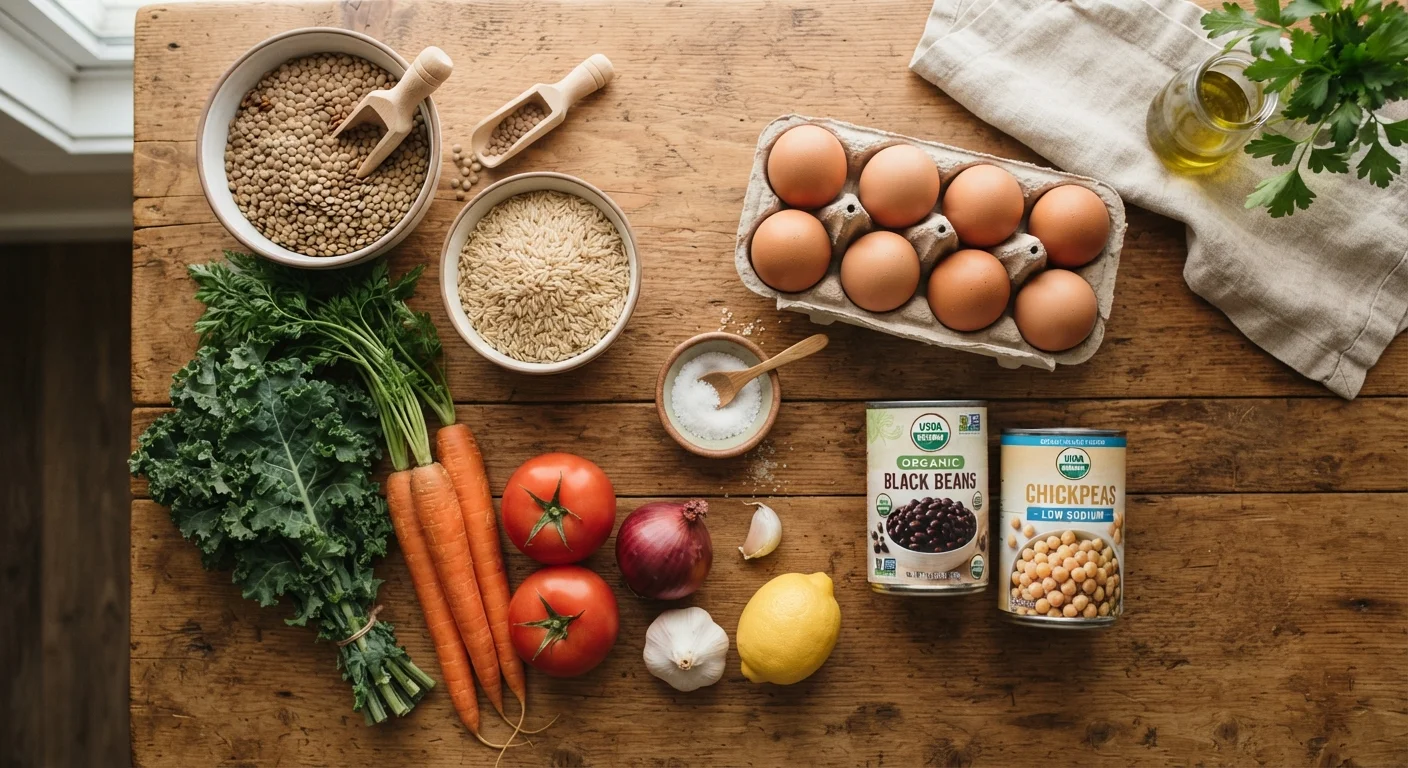
Photo credit: TopInfoTabs.com | Easy Insights For Inspiration
In this article
Nutritious eating doesn't require premium prices. Explore cost-effective staples and practical habits grounded in dietary evidence.
Key Takeaways
- Whole grains, legumes, eggs, and frozen vegetables deliver strong nutrition at low cost.
- Meal planning and batch cooking reduce both food waste and weekly spending significantly.
- Store-brand and frozen options are nutritionally comparable to fresh name-brand equivalents.
- Evidence supports dietary patterns - not superfoods - as the driver of long-term health.
- Simple cooking habits often outperform expensive supplements or specialty products.
Why Budget and Nutrition Are Less at Odds Than You Think
A persistent assumption in food culture is that eating well costs more. The evidence tells a more nuanced story. Many of the foods with the strongest nutritional track records - legumes, whole grains, eggs, frozen vegetables, canned oily fish - sit at the lower end of the grocery price spectrum. The perceived cost gap often reflects marketing around premium positioning rather than meaningful nutritional difference.
What does tend to inflate food costs is reliance on convenience packaging, heavily processed snacks, and a rotating cast of "superfood" products with premium price tags but modest evidence behind them. Shifting attention from individual ingredients to overall dietary patterns - something dietary researchers consistently emphasize - both simplifies decision-making and tends to bring costs down. For more on separating evidence from food-culture noise, see our piece on common nutrition myths.
This Is General Nutrition Information
The guidance in this article is educational and reflects broad dietary evidence. It is not personalised nutrition or medical advice. If you have specific health conditions, dietary restrictions, or concerns about your nutritional intake, consult a registered dietitian or qualified healthcare professional.
The Evidence-Backed Staples Worth Centering Your Meals Around
Dietary research consistently points to a short list of food categories as foundational for health: vegetables and fruit, legumes, whole grains, and lean or plant-based protein sources. Conveniently, these categories are also where budget shoppers find the best value.
~$1.50
Cost per serving of dried legumes
USDA Economic Research Service data consistently shows dried beans and lentils among the most affordable protein and fiber sources available in US grocery stores.
30-40%
Typical household food waste share
According to USDA estimates, American households waste between 30 and 40 percent of the food supply - making meal planning one of the highest-leverage budget strategies.
Equivalent
Nutritional value: frozen vs. fresh vegetables
Research published in the Journal of Food Composition and Analysis found frozen vegetables retain comparable - and in some cases superior - levels of key nutrients compared to fresh produce stored for several days.
Legumes - lentils, chickpeas, black beans, kidney beans - provide protein, fiber, and a range of micronutrients for very little per serving. Dried varieties offer the most value; canned options cost slightly more but remain inexpensive and require no preparation. Whole grains such as oats, brown rice, barley, and whole-wheat pasta provide sustained energy and fiber at low unit cost. Frozen vegetables deserve particular attention: the snap-freezing process used commercially preserves nutrients effectively, making them a reliable year-round option regardless of what's fresh or in season.
Eggs remain one of the most nutritionally complete single foods available at accessible prices - delivering high-quality protein, B vitamins, and choline. Canned oily fish (sardines, mackerel, salmon) provides omega-3 fatty acids often absent from budget diets. Plain, unflavored dairy or fortified plant alternatives round out calcium and vitamin D intake at modest cost.
Protein Doesn't Have to Be Expensive
Eggs, canned fish, dried lentils, and plain Greek yogurt are among the most protein-dense foods available at accessible price points. Rotating these across the week gives you amino acid variety without relying on costlier cuts of meat. Canned fish such as sardines and mackerel also provide omega-3 fatty acids that are otherwise found mainly in pricier fresh seafood.
Practical Habits That Stretch Both Budget and Nutrition
Individual ingredients matter less than how you use them. These practices are grounded in both nutritional evidence and household economics - and they're achievable without any special equipment or expertise.
Building meals around a weekly plan - even a loose one - is the single most consistently supported behavior for reducing food waste and controlling spend. The USDA estimates that between 30 and 40 percent of the food supply is wasted at the household level, much of it from unplanned purchasing. Our weekly grocery planning guide walks through a practical approach to building a nutritionally balanced shop. For broader money-stretching context, this starting-point guide covers the foundational ideas behind spending less without sacrificing quality.
What the Research Actually Supports - and What to Ignore
Nutrition science is full of conflicting headlines, but the areas of genuine consensus are more stable than media coverage suggests. Dietary patterns emphasizing vegetables, whole grains, legumes, and moderate protein - with limited ultra-processed food - are associated with better long-term health outcomes across a wide body of research. These patterns don't require expensive supplements, specialty products, or rigid elimination approaches.
“The greatest gains in population nutrition have come not from expensive interventions but from improving access to basic, varied, minimally processed foods. Cost and quality are far less opposed than marketing would have us believe.”
— Walter Willett, Professor of Epidemiology and Nutrition, Harvard T.H. Chan School of Public Health
Where evidence is weaker: single-ingredient "superfoods", branded protein powders marketed for everyday use, and most commercial detox or cleanse products. These tend to carry premium prices with limited additional benefit over a balanced whole-food approach. The distinction between price and value applies directly here - higher cost does not reliably signal better nutritional quality.
If budget pressure is a real constraint in your household, it's worth knowing that eating well within limits is genuinely achievable - and that honest trade-offs exist on both sides. Our look at what a tight budget can and cannot deliver explores this honestly. For those building broader financial structure around their food spending, the Budgeting Basics hub is a practical starting point.
This article provides general nutrition information for educational purposes only and is not a substitute for personalised advice from a registered dietitian or qualified healthcare professional. Individual nutritional needs vary - consult a professional for guidance specific to your health circumstances.

Author
Health & Wellness Editorial Team
Health & Wellness Editorial Team is the collective byline for our editorial team and contributor network. Articles published under this byline or an editorial pen name are researched, written, and reviewed according to our editorial standards for clarity, consistency, and independence before publication.
View all articles →