
Meal Planning Without the Overwhelm
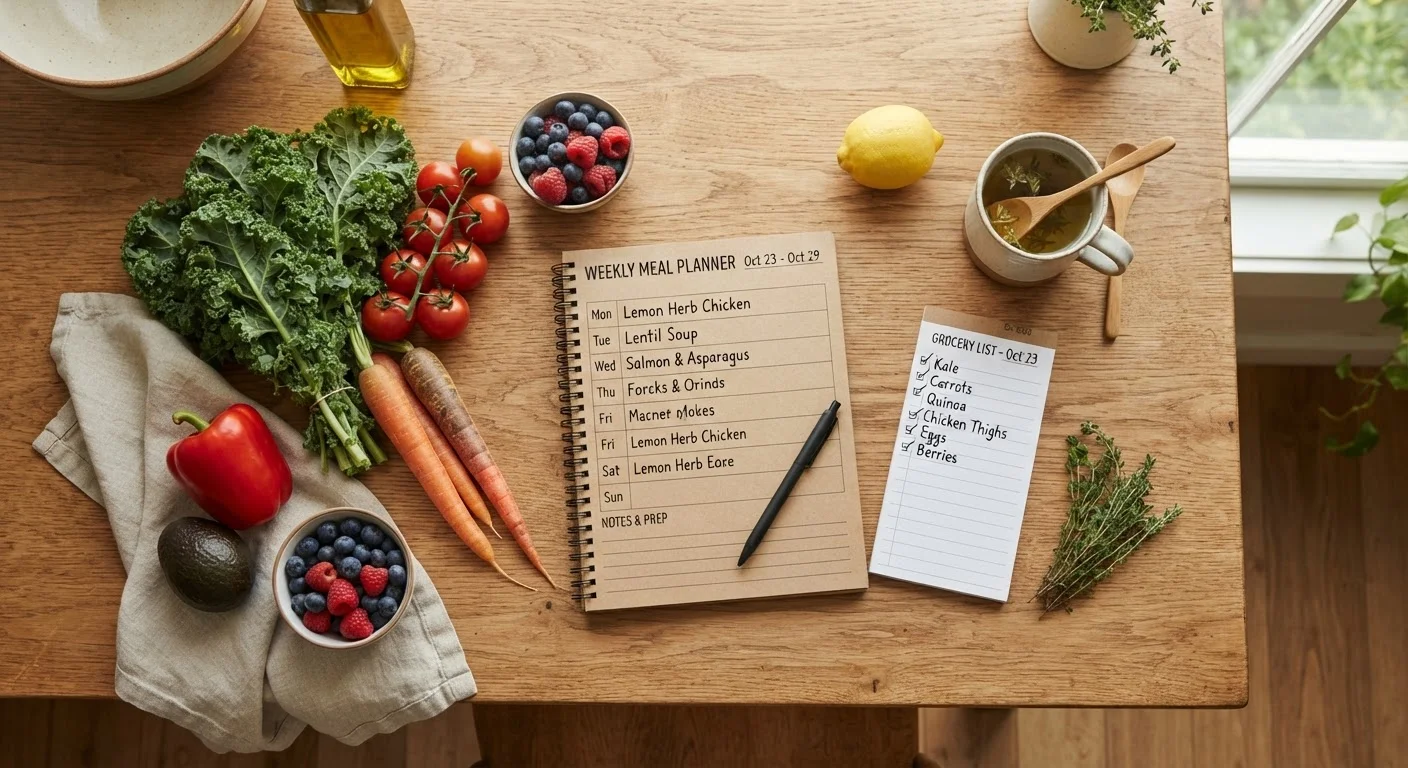
Photo credit: TopInfoTabs.com | Easy Insights For Inspiration
In this article
A straightforward approach to planning weekly meals — covering structure, flexibility, and how to avoid decision fatigue at dinner time.
Key Takeaways
- Meal planning reduces daily decision fatigue and helps support more consistent eating habits.
- A flexible framework - not a rigid schedule - is what makes planning sustainable long-term.
- Starting with just three to four dinners per week is an achievable and practical entry point.
- Repeating a handful of core recipes reduces cognitive load without sacrificing variety.
- Linking your plan to a grocery list cuts food waste and can support household budget goals.
Why Meal Planning Feels Hard - and Why It Doesn't Have To
For many people, "meal planning" conjures images of colour-coded spreadsheets, elaborate Sunday prep sessions, and a refrigerator full of identical containers. That version of planning is neither realistic nor necessary for most households. The actual goal is simpler: reduce the number of decisions you need to make about food during the week.
Research on decision fatigue suggests that the quality and ease of our choices deteriorate as the day progresses. By the time dinner rolls around on a busy weeknight, even motivated people default to convenience - often not the option they'd prefer if they had more bandwidth. A basic meal plan sidesteps this by moving the decision earlier, when you have more energy and perspective.
The approach described here is designed for flexibility, not perfection. Much like streamlining your morning routine, the payoff comes from building simple defaults - not from optimizing every detail.
Reduce Decision Fatigue Before It Starts
Decision fatigue - the diminished quality of decisions after a long day - is a real barrier to healthy eating. The same logic that helps with outfit formula approaches applies to food: building repeatable, low-effort defaults removes the need to make fresh choices every evening. A posted weekly plan means dinner is already decided before you walk through the door.
What You'll Need Before You Start
The tools required are minimal. You don't need a subscription service or a specialized app - though these can help if you enjoy them. The essentials are a way to record your plan, a linked grocery list, and a willingness to spend a short, focused block of time once per week.
What you will need
Weekly planner (paper or digital)
Maps out which meals are planned for which days, giving you a visual anchor for the week.
Grocery list (linked to the plan)
Ensures you buy only what you need, reducing waste and unplanned spending.
Meal planning app
Automates grocery list generation and stores favourite recipes for quick reuse.
Reusable storage containers
Makes batch-cooked components easy to store and grab throughout the week.
How to Plan Your Week
Follow these steps each week, ideally at the same time - many people find that pairing this task with a consistent weekend routine helps anchor it as a habit. The full process typically takes between 20 and 45 minutes once you're familiar with it.
Set a realistic scope for the week
Before choosing a single recipe, decide how many meals you actually need to plan. Most people benefit from planning three to five dinners rather than every meal, every day. Lunches can often be handled by leftovers or simple staples; breakfasts tend to be habitual. Narrowing your scope makes the task feel manageable and avoids the all-or-nothing trap that derails most planning attempts.
Take stock of what you already have
Check your pantry, fridge, and freezer before planning anything new. Identify ingredients that need to be used soon and build at least one meal around them. This step reduces food waste and often saves money - two goals that align well with broader budgeting basics many households are working toward.
Build your meal rotation
Choose meals from a short rotation of recipes your household already enjoys. Aim for a mix of cooking effort: one or two quick weeknight meals (under 30 minutes), one slightly more involved dish, and perhaps one slow-cooker or batch option. Repeating familiar recipes regularly isn't boring - it's a proven way to reduce the mental effort of cooking. Research on habit formation supports the idea that routine lowers the threshold for action.
Write your plan and build the grocery list simultaneously
Once you've selected your meals, write them onto your weekly planner and immediately generate your grocery list from the ingredients required. Cross-reference against what you already have. A plan without a linked grocery list frequently falls apart by Tuesday when key ingredients are missing. Keeping these two tasks together - planning and listing - closes the gap between intention and execution.
Build in at least one flexible night
Designate one evening per week as a flex night: leftovers, takeout, or a simple improvised meal. Life is unpredictable, and rigid plans that leave no room for deviation are abandoned more quickly than flexible ones. Flex nights also make it easier to honour unexpected social plans or low-energy days without feeling like the whole plan has collapsed. This kind of flexibility is supported by the same principles that make mental well-being strategies sustainable rather than stressful.
Prep one or two components in advance
You don't need a full Sunday batch-cook session. Simply prepping one or two components - a cooked grain, a chopped vegetable, a marinated protein - dramatically reduces weeknight effort. Think of these as building blocks that plug into multiple meals rather than complete dishes. Pairing this habit with a consistent weekly movement routine on the same day can help anchor both habits together.
Perfection Undermines Consistency
A common pitfall is abandoning the entire plan when one meal doesn't happen as scheduled. Meal planning is a tool for reducing friction, not a commitment to flawless execution. If you miss a planned meal, simply shift it to the next available day or swap it out entirely. Consistency over time matters far more than any single week's accuracy.
This Is General Information, Not Dietary Advice
The guidance here is intended as general lifestyle and organizational information. It is not a substitute for advice from a registered dietitian or qualified healthcare professional. If you have specific nutritional needs, a medical condition, or concerns about your diet, please consult a qualified professional before making significant changes to your eating habits.
This article is for general informational and organizational purposes only and does not constitute dietary, nutritional, or medical advice. Please consult a qualified healthcare professional or registered dietitian for guidance tailored to your individual needs.

Author
Health & Wellness Editorial Team
Health & Wellness Editorial Team is the collective byline for our editorial team and contributor network. Articles published under this byline or an editorial pen name are researched, written, and reviewed according to our editorial standards for clarity, consistency, and independence before publication.
View all articles →