
Whole Foods vs Ultra-Processed Foods: Understanding the Spectrum
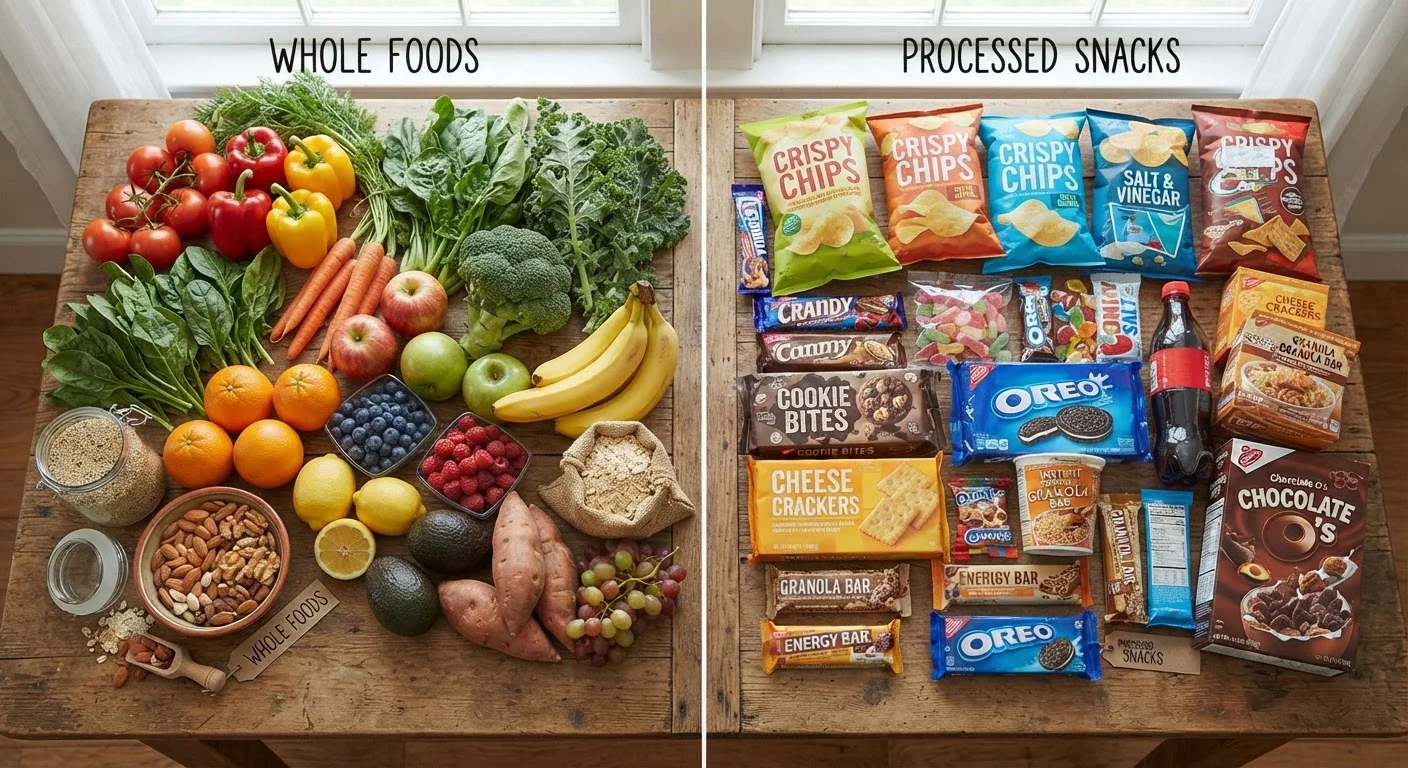
Photo credit: TopInfoTabs.com | Easy Insights For Inspiration
In this article
Not all packaged food is equal. Learn where foods fall on the processing spectrum and what that means for your everyday diet.
Key Takeaways
- Food processing exists on a spectrum - not all processed foods are nutritionally equivalent or harmful.
- Whole foods retain most of their original nutrients, fiber, and phytocompounds with little to no alteration.
- Ultra-processed foods are industrially formulated with additives, flavorings, and ingredients not found in home kitchens.
- Research associates high ultra-processed food intake with elevated risk for several chronic health conditions.
- Practical eating patterns matter more than eliminating every processed item from your diet.
- Reading ingredient lists is a reliable starting point for identifying where a food sits on the spectrum.
What Food Processing Actually Means
The word "processed" is used so broadly it has nearly lost its meaning. Freezing peas is processing. So is adding artificial colorings, emulsifiers, and flavor enhancers to a snack cake. These are not the same thing - and conflating them creates unnecessary confusion for consumers trying to eat well.
Nutrition researchers developed the NOVA classification system to bring order to this complexity. NOVA groups foods into four categories based on the extent and purpose of processing, not simply whether a food has been altered. Group 1 covers unprocessed or minimally processed foods (fresh vegetables, plain meats, eggs). Group 2 includes culinary ingredients like oils and salt. Group 3 is processed foods (canned fish, artisan cheese). Group 4 - the focus of most current research concern - is ultra-processed foods (UPFs): industrially formulated products containing substances rarely used in home cooking.
Understanding this spectrum is the foundation for making sense of competing diet claims. For a practical companion to this framework, nutrition label literacy can help you apply it at the grocery shelf.
Whole Foods: What Sets Them Apart
Whole foods - vegetables, fruits, legumes, whole grains, nuts, seeds, eggs, and plain meats or fish - share a defining characteristic: they reach your plate largely as nature produced them. Minimal processing may occur (washing, cutting, freezing, fermenting), but the food's nutritional structure remains largely intact.
This structural integrity matters. The fiber in an apple slows glucose absorption differently than apple juice stripped of that fiber. The protein matrix in a whole grain affects digestion differently than the same grain ground into a refined flour. These aren't just abstract nutritional concepts - research in food matrix science suggests the physical form of a food influences how the body absorbs and uses its nutrients.
| Criterion | Whole Foods | Ultra-Processed Foods |
|---|---|---|
| Degree of alteration | Minimal - close to natural state | Extensive industrial formulation |
| Typical ingredients | One or few recognizable items | Long list including additives and stabilizers |
| Fiber content | Generally high and intact | Often low due to refining |
| Nutrient density | High relative to calories | Varies widely; often energy-dense |
| Satiety effect | Generally promotes fullness | May blunt satiety signals |
| Shelf stability | Usually limited without preservatives | Engineered for long shelf life |
| Research association | Linked to lower chronic disease risk | Associated with higher risk in observational studies |
Whole foods also tend to be higher in micronutrients (vitamins, minerals) and phytocompounds - plant-based molecules like polyphenols and carotenoids associated with reduced inflammation markers in observational research. While no single food is a cure-all, diets rich in a variety of whole foods are consistently associated with favorable health outcomes in large population studies.
Ultra-Processed Foods: Why They're Different
Ultra-processed foods (UPFs) are not simply "junk food" - the category includes many items marketed as healthy: flavored yogurts, packaged granola bars, plant-based meat alternatives, and certain breakfast cereals. What unites them is their industrial formulation: they typically contain additives such as emulsifiers, stabilizers, artificial or "natural" flavors, colorings, and sweeteners not found in a home pantry.
A growing body of epidemiological research - including large cohort studies from Europe and the Americas - associates high UPF consumption with elevated risk for obesity, cardiovascular disease, type 2 diabetes, and depression. It's important to note that most of this evidence is observational: it shows association, not confirmed causation. Researchers are still working to isolate whether the harm comes from specific additives, the displacement of more nutritious foods, or other dietary and lifestyle factors.
57%
Share of US calories from ultra-processed foods
Research published in the BMJ estimated that ultra-processed foods account for roughly 57% of daily caloric intake in the average American diet.
4 groups
NOVA food classification categories
The NOVA system, developed by researchers at the University of São Paulo, classifies all foods into four groups based on the extent and purpose of processing.
~10%
Higher all-cause mortality association per 10% UPF increase
A large prospective cohort study published in JAMA Internal Medicine found each 10% increase in UPF consumption was associated with a roughly 14% higher all-cause mortality risk, though causation was not established.
One practical signal: if an ingredient list includes substances you wouldn't find in a standard kitchen - carrageenan, maltodextrin, sodium stearoyl lactylate - you're likely looking at an ultra-processed product. Your overall eating pattern matters more than whether any single item on your shopping list falls into this category.
This article is for general informational purposes only and does not constitute medical or dietary advice. Consult a qualified healthcare professional or registered dietitian for guidance specific to your health needs.

Author
Health & Wellness Editorial Team
Health & Wellness Editorial Team is the collective byline for our editorial team and contributor network. Articles published under this byline or an editorial pen name are researched, written, and reviewed according to our editorial standards for clarity, consistency, and independence before publication.
View all articles →