
Zero-Based Budgeting vs. the Envelope Method
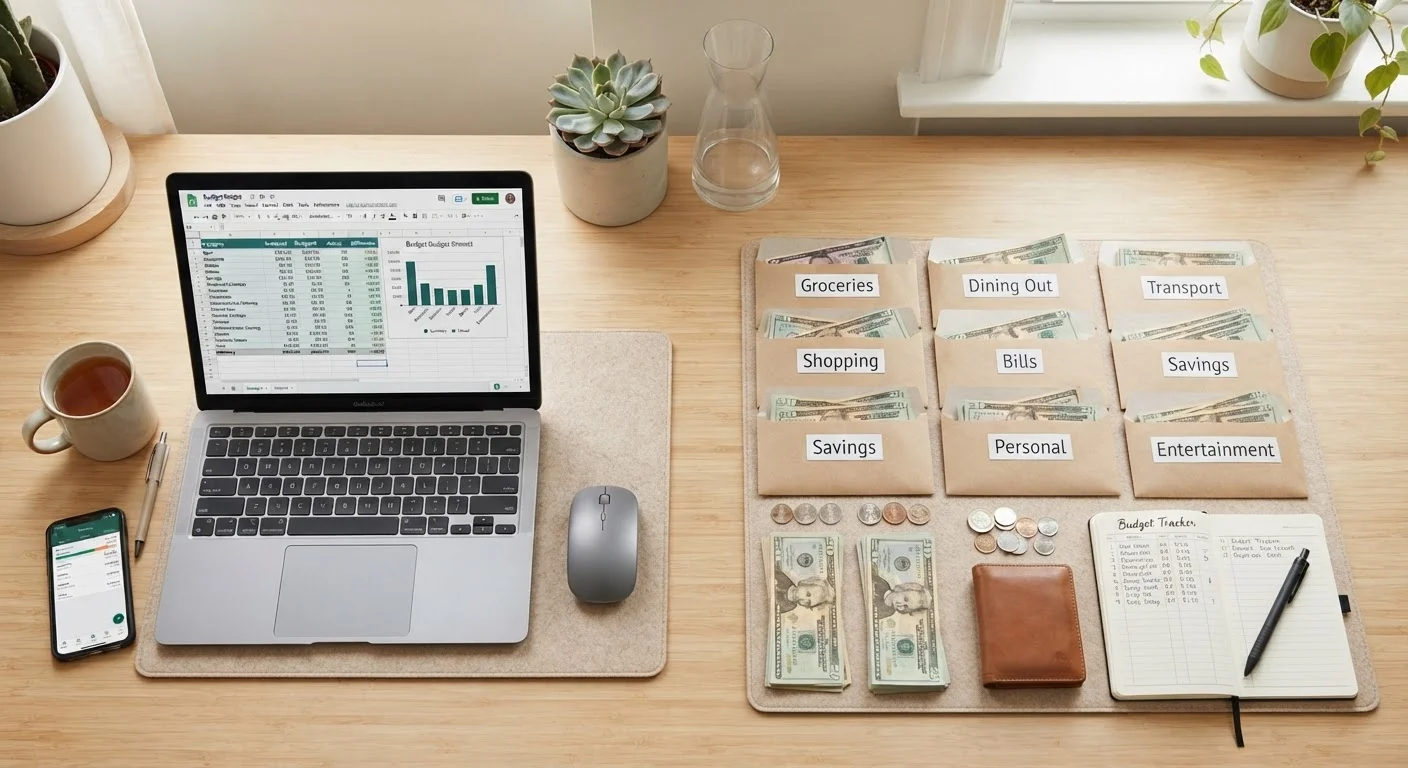
Photo credit: TopInfoTabs.com | Easy Insights For Inspiration
In this article
Two popular budgeting approaches, side by side. Understand how each works, who it suits, and the trade-offs of each system.
Key Takeaways
- Zero-based budgeting assigns every dollar of income to a specific expense or savings category, leaving a balance of zero.
- The envelope method uses physical (or virtual) cash envelopes capped per category - when the envelope is empty, spending stops.
- Both systems require intentional planning upfront but differ significantly in flexibility and execution style.
- Zero-based budgeting suits variable-income earners and those who want granular financial control.
- The envelope method works well for reining in habitual overspending in specific categories like groceries or dining out.
How Each System Works
Despite different mechanics, both methods share one foundational principle: every dollar has a job. The similarity ends there.
Zero-based budgeting starts with your total monthly take-home pay and works downward, allocating amounts to every category - rent, utilities, groceries, savings, debt payments, entertainment - until the sum of all allocations equals your income. The result is a budget that technically reaches zero, not because you've spent everything, but because every dollar is deliberately placed somewhere, including savings and investment accounts. If your income changes, you rebuild the budget from scratch that month. For a deeper look at core budgeting concepts, see our grounded introduction to personal budgeting.
The envelope method typically focuses on discretionary spending categories - groceries, dining, clothing, entertainment. You fund each labeled envelope with cash at the start of the pay period. Purchases in that category come only from its envelope. When it's empty, spending in that category stops until the next funding cycle. Digital versions replicate this with virtual envelopes or sub-accounts. The method doesn't always address fixed bills or savings explicitly, which means it often works best as a complement to broader financial planning rather than a standalone system.
| Criterion | Zero-Based Budgeting | The Envelope Method |
|---|---|---|
| Core mechanism | Assign every dollar to a category | Limit cash per spending category |
| Setup effort | High - full monthly rebuild | Low - fund envelopes each pay period |
| Ongoing maintenance | Moderate - track and reconcile | Minimal - spend only what's in envelope |
| Handles variable income | Well - rebuilt from actual income | Less naturally - envelopes need refunding |
| Works with digital payments | Yes - fully compatible | Partially - physical method less compatible |
| Covers savings & fixed bills | Yes - explicitly included | Not always - often discretionary only |
| Best for overspending control | By category awareness and planning | By hard cash limits per category |
Trade-offs and Practical Realities
Choosing between these systems isn't about which one is objectively better - it's about which one you'll actually maintain.
Zero-based budgeting demands consistent time investment. You need to revisit the budget monthly, categorize spending, and reconcile actuals against your plan. This level of detail is powerful for spotting leaks and adjusting priorities, but it can feel burdensome for people who find spreadsheets stressful. Those with variable income often find it especially useful because each month's budget reflects real, current figures rather than averaged estimates. You can also compare it against simpler percentage-based frameworks - our article on the 50/30/20 rule explains where that approach diverges.
The envelope method removes the cognitive load of ongoing tracking - you don't need to reconcile transactions if you only spend what's in the envelope. Its main limitation is that modern life is largely cashless. Paying rent, utilities, and subscriptions by card or auto-draft doesn't fit neatly into physical envelopes. Digital adaptations solve some of this, but they reintroduce the app-or-spreadsheet friction the original method was designed to avoid. For a balanced look at digital versus manual tracking approaches, see tracking spending by hand vs. using a budgeting app.
Can You Use Both Systems Together?
Some budgeters use zero-based budgeting for the full financial picture - covering rent, savings, and debt - while applying envelope-style limits specifically to discretionary categories where overspending tends to occur. This hybrid approach captures the planning rigor of zero-based budgeting and the behavioral guardrails of the envelope method. If you're exploring how various budgeting frameworks fit together, our complete personal budgeting framework guide walks through each stage in depth.
This article is for general informational and educational purposes only and does not constitute personalized financial advice. Consider consulting a qualified financial professional for guidance tailored to your individual circumstances.

Author
Money & Finance Editorial Team
Money & Finance Editorial Team is the collective byline for our editorial team and contributor network. Articles published under this byline or an editorial pen name are researched, written, and reviewed according to our editorial standards for clarity, consistency, and independence before publication.
View all articles →