
Wet Food vs. Dry Food for Cats and Dogs
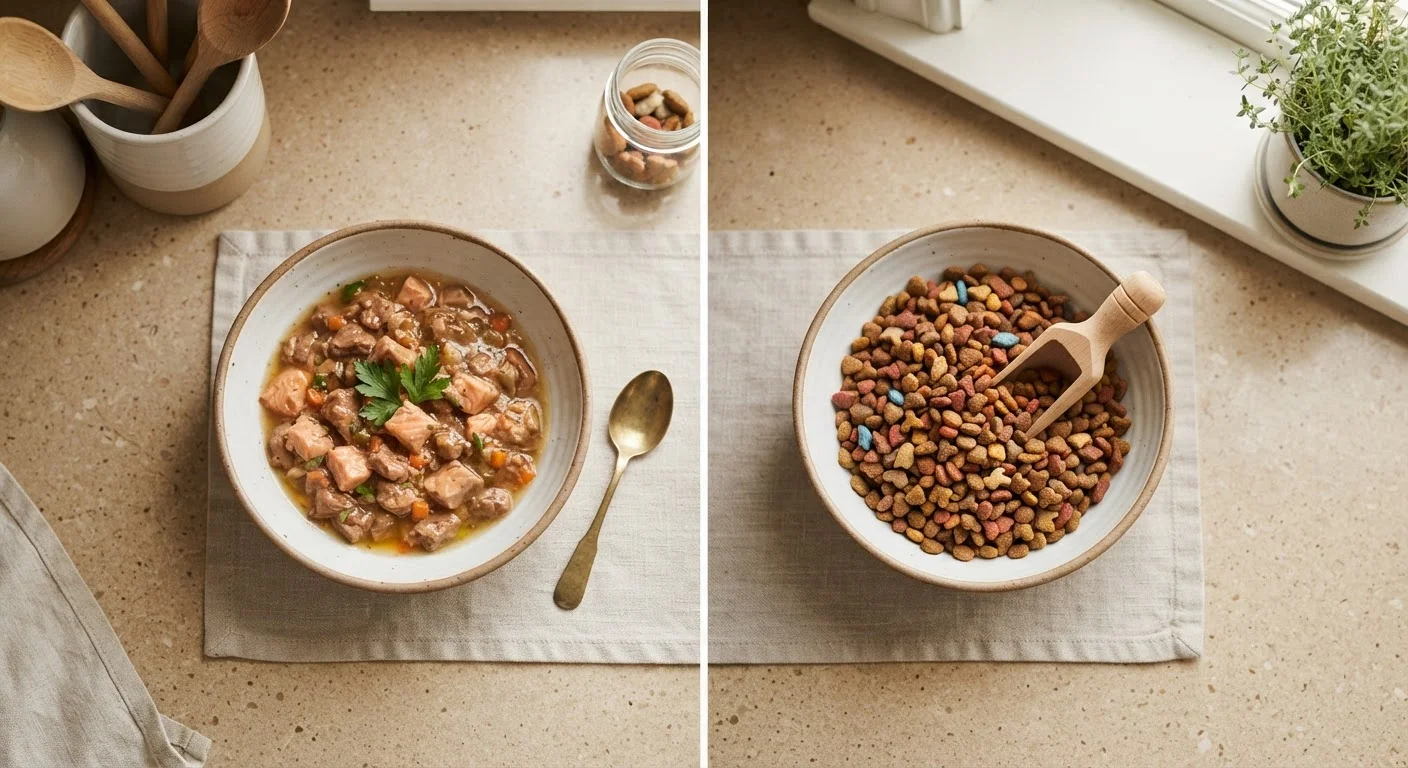
Photo credit: TopInfoTabs.com | Easy Insights For Inspiration
In this article
Explore the nutritional trade-offs between wet and dry pet food formats to better understand what suits different animals and life stages.
Key Takeaways
- Wet food contains 70-85% moisture, making it a significant source of hydration for cats and dogs.
- Dry kibble is calorie-dense and easier to store, but may not suit pets with urinary or kidney concerns.
- Neither format is universally superior - the right choice depends on the individual animal's health, age, and preferences.
- Many veterinarians support feeding a combination of both formats to balance benefits.
- Always read the nutritional label carefully; format alone does not guarantee a balanced diet.
What Sets Wet and Dry Food Apart
The most fundamental difference between wet and dry pet food is water content. Wet food - whether sold in cans, pouches, or trays - typically contains 70-85% moisture. Dry kibble, by contrast, usually sits at around 8-12% moisture. That single variable has cascading effects on nutrition, palatability, calorie density, and how the food functions in an animal's body.
Wet food tends to be higher in protein and fat on a dry-matter basis (that is, once water is removed from the equation), while dry food packs more carbohydrates and calories per gram. This matters when comparing labels: a can of food that appears low-calorie may simply reflect its high water content rather than fewer nutrients. Our guide on reading pet food labels breaks down how to interpret guaranteed analysis figures across formats accurately.
| Criterion | Wet Food | Dry Kibble |
|---|---|---|
| Moisture Content | 70-85% | 8-12% |
| Calories per gram | Lower (due to water) | Higher, more energy-dense |
| Palatability | Generally higher | Variable by animal |
| Dental health support | Minimal mechanical action | Some plaque reduction via chewing |
| Storage convenience | Refrigerate after opening | Room temperature, long shelf life |
| Cost per serving | Higher | Generally lower |
| Best life stage fit | Kittens, seniors, ill pets | Most adult dogs and cats |
Manufacturing processes also differ significantly. Kibble is typically heat-extruded at high temperatures, which can degrade some heat-sensitive nutrients (manufacturers often add these back). Wet food is steam-cooked in sealed containers, which helps preserve certain proteins but requires preservatives or airtight packaging to remain shelf-stable once opened.
Hydration, Kidney Health, and Why Cats Are a Special Case
For cats especially, hydration is a persistent challenge. Cats evolved as desert predators whose prey supplied most of their daily water needs - their thirst drive is naturally low, and many cats simply won't drink enough from a bowl to compensate for a dry-food-only diet. Our article on why cats drink so little water explores this instinct in depth.
Chronic low-level dehydration in cats is associated with a higher risk of urinary crystals, bladder inflammation, and kidney disease over time. For cats with an existing diagnosis of kidney disease or lower urinary tract disease, many veterinarians recommend wet food as a primary dietary strategy - though any dietary change for a sick animal should be guided by a licensed vet, not general advice.
70-80%
Moisture content in typical wet cat food
Compared to roughly 10% in dry kibble, wet food contributes meaningfully to a cat's total daily water intake.
~60%
Of US cat owners who feed exclusively dry food
According to survey data compiled by the American Pet Products Association, many cats remain on an all-kibble diet despite low natural thirst drive.
Dogs are less physiologically prone to under-drinking, but wet food still provides a meaningful hydration boost, which can be valuable for active dogs in hot climates, post-surgical patients, or older animals with reduced kidney function. As always, individual health history matters more than broad format rules.
Practical Realities: Cost, Convenience, and Feeding Habits
Wet food costs more per calorie than dry food - often significantly so for large dogs whose daily portions are substantial. It must be refrigerated after opening and discarded within 24-48 hours. Dry kibble can sit in a bowl for hours, stores at room temperature in a sealed container, and is easy to measure accurately for weight management.
Weight management is another area where kibble has a practical edge: the calorie density makes it easier to dial in exact portions, which matters when you're trying to address or prevent obesity. For context on assessing your pet's weight without fixating on the scale, see our piece on body condition scoring.
That said, wet food's higher palatability can be genuinely useful. Picky eaters, recovering animals, and seniors who've lost interest in food often respond better to the stronger aroma and softer texture of wet food. Many owners find a mixed approach - dry kibble as the base with wet food as a meal topper several times a week - gives them the best of both without the full cost of an all-wet diet.
Transitioning Between Food Formats
If you're shifting your pet from one food format to another, do so gradually over 7-10 days by mixing increasing proportions of the new food into the current one. Abrupt switches can cause digestive upset, especially in cats. Pets with existing gastrointestinal conditions should have any dietary change supervised by a veterinarian.
It's worth noting that neither format automatically guarantees a nutritionally complete diet. Whether wet or dry, look for a statement on the label indicating the product meets established nutritional standards for your pet's life stage. Format is a delivery mechanism - what's inside it still matters most. Our article on common pet nutrition myths addresses several misconceptions about what makes a diet genuinely balanced.

Author
Pets & Animals Editorial Team
Pets & Animals Editorial Team is the collective byline for our editorial team and contributor network. Articles published under this byline or an editorial pen name are researched, written, and reviewed according to our editorial standards for clarity, consistency, and independence before publication.
View all articles →