
Dark Patterns in Online Shopping and How to Spot Them
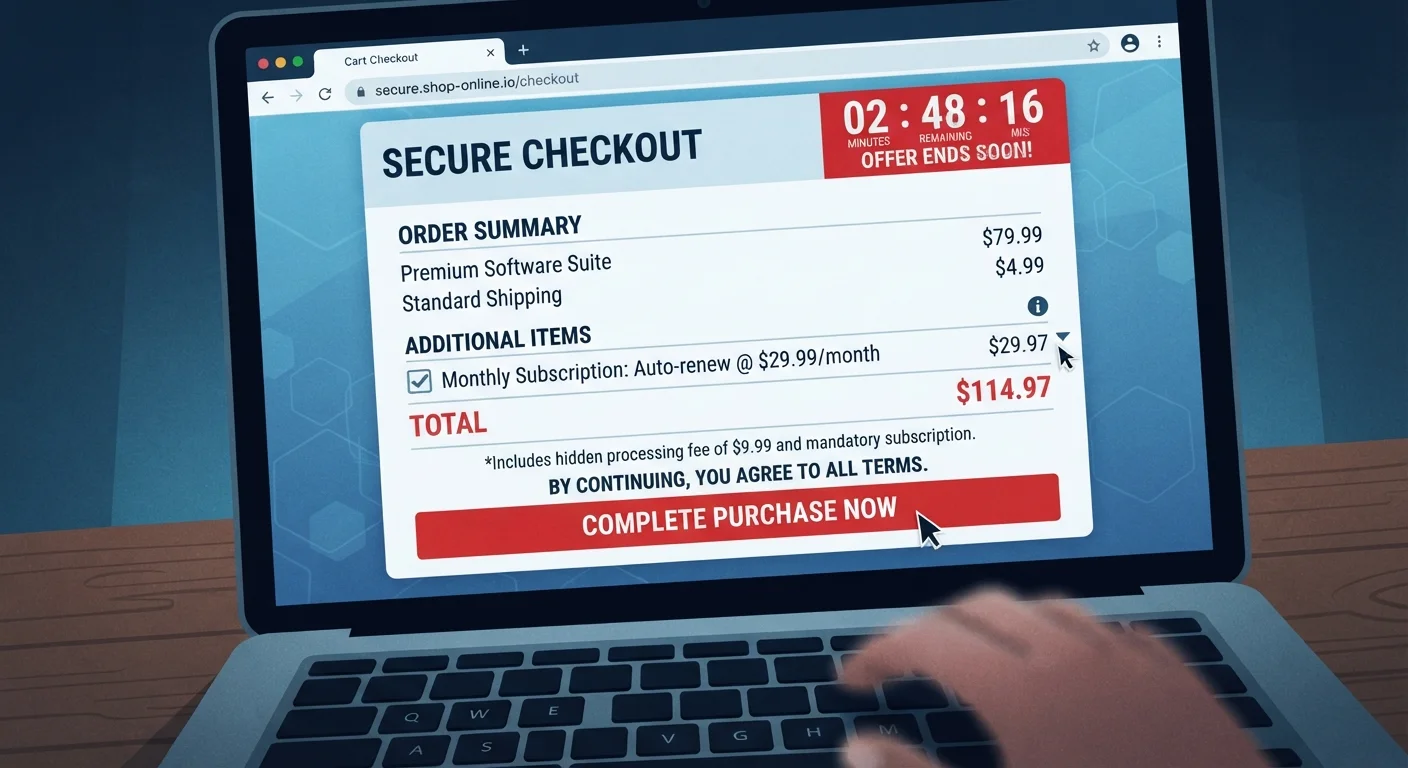
Photo credit: TopInfoTabs.com | Easy Insights For Inspiration
In this article
Countdown timers, hidden fees, and pre-ticked boxes — understand the design tricks used to manipulate shopping decisions.
Key Takeaways
- Dark patterns are deliberate design tricks, not accidental bad UX - they are built to benefit retailers, not shoppers.
- Pre-ticked boxes, hidden fees, and fake countdown timers are among the most common types.
- Slowing down at checkout and reading every line is the simplest defense against most dark patterns.
- Regulators like the FTC are increasingly pursuing enforcement action against deceptive design, but legal protection remains inconsistent.
- Recognizing the pattern is the first step - once you've seen it, you can't unsee it.
What Dark Patterns Look Like in Practice
Dark patterns take many forms, but most fall into a handful of recognizable categories. Understanding the taxonomy helps you spot them faster.
Hidden or drip-pricing is arguably the most financially costly. A product is advertised at one price; fees for shipping, handling, service, or processing are added incrementally during checkout. By the final confirmation screen, the total may be significantly higher than the headline figure. For a deeper look at how these charges quietly cancel out perceived savings, see how hidden costs erase discounts.
Pre-selected options embed unwanted add-ons - travel insurance, extended warranties, auto-renewing memberships - as checked boxes you must actively notice and remove. Retailers rely on inertia: most people click through checkout quickly and miss them.
Confirmshaming is the practice of labeling the opt-out button with self-deprecating language, such as "No thanks, I don't want to save money." It's designed to make declining feel socially uncomfortable rather than neutral.
Roach motels make it easy to sign up for something - a free trial, a loyalty program - but deliberately difficult to cancel. Cancellation requires a phone call during limited hours, a multi-step web process, or buried menu options.
Pause Before the Final Confirmation
The most effective moment to catch a dark pattern is the order review screen - the last page before you submit payment. Take 30 seconds to compare the itemized total against your original expected price. Any unexplained line item deserves scrutiny before you click confirm.
The Psychology Behind Why They Work
Dark patterns are effective precisely because they exploit well-documented cognitive tendencies rather than relying on outright deception. Three mechanisms are most relevant to shoppers.
Sunk cost and checkout commitment: The further along a purchase process you are, the harder it feels to abandon your cart. Retailers reveal fees late in the process because you've already invested attention and time - and walking away feels like a loss. The psychological traps in discount shopping article covers related cognitive distortions in more detail.
Urgency and scarcity cues: Countdown timers and "only 2 left!" banners activate loss aversion - the fear of missing out is neurologically stronger than the pleasure of gaining. Many of these signals are artificially generated and bear no relation to actual stock levels.
Default bias: People tend to accept pre-set defaults rather than actively changing them. Pre-ticked boxes exploit this directly. If a box is checked, a large proportion of users will leave it checked - not because they want the add-on, but because opting out requires a deliberate action.
1,818
Dark patterns identified across major retail sites
A 2019 Princeton and University of Chicago study examined roughly 11,000 shopping websites and identified 1,818 instances of dark pattern design across 183 sites.
~$500M
FTC settlement in a major drip-pricing case
The FTC has pursued multi-hundred-million-dollar enforcement actions related to deceptive subscription and fee practices, signaling regulatory seriousness around manipulative design.
58%
Shoppers who missed a pre-ticked add-on
Consumer research by the UK's Competition and Markets Authority found that a majority of participants failed to notice pre-selected options during timed checkout simulations.
How to Protect Yourself at Checkout
Awareness is protective, but a few practical habits make a meaningful difference.
- Slow down at the payment stage. Read every line on the order summary before entering payment details. Check the final total against what you expected when you added the item to your cart.
- Audit every pre-ticked box. Scroll through the full checkout form. Uncheck anything you did not deliberately select.
- Open a new tab to verify prices. If a "deal" appears with a countdown timer, reload the page or return the next day. A genuinely expiring price will not reset.
- Screenshot your cart total before checkout. If the final charge differs from what you saw, you have documentation to support a dispute.
- Check cancellation terms before starting any free trial. Look for instructions before signing up, not after the trial ends.
Becoming a more skeptical online shopper is part of a broader set of consumer habits covered in our consumer awareness primer. You may also find it useful to cross-reference how to evaluate online reviews, since manipulated social proof is another tool in the same playbook.
Finally, if you encounter a pattern you believe is deceptive, report it. The FTC's complaint system aggregates reports and uses them to identify enforcement priorities. Individual reports contribute to systemic accountability even when they don't produce immediate personal remedies.
Regulatory Landscape Is Still Evolving
The FTC has increased enforcement activity around deceptive design, and the EU's Digital Services Act explicitly targets dark patterns. In the US, protection varies by state, and not all dark patterns meet the legal threshold for enforcement action. Filing a complaint remains valuable even when immediate legal remedy isn't guaranteed - regulators use complaint data to identify patterns across industries.
Frequently Asked Questions

Author
Smart Shopping Editorial Team
Smart Shopping Editorial Team is the collective byline for our editorial team and contributor network. Articles published under this byline or an editorial pen name are researched, written, and reviewed according to our editorial standards for clarity, consistency, and independence before publication.
View all articles →