
Subscription Traps: How Free Trials Turn Into Ongoing Charges
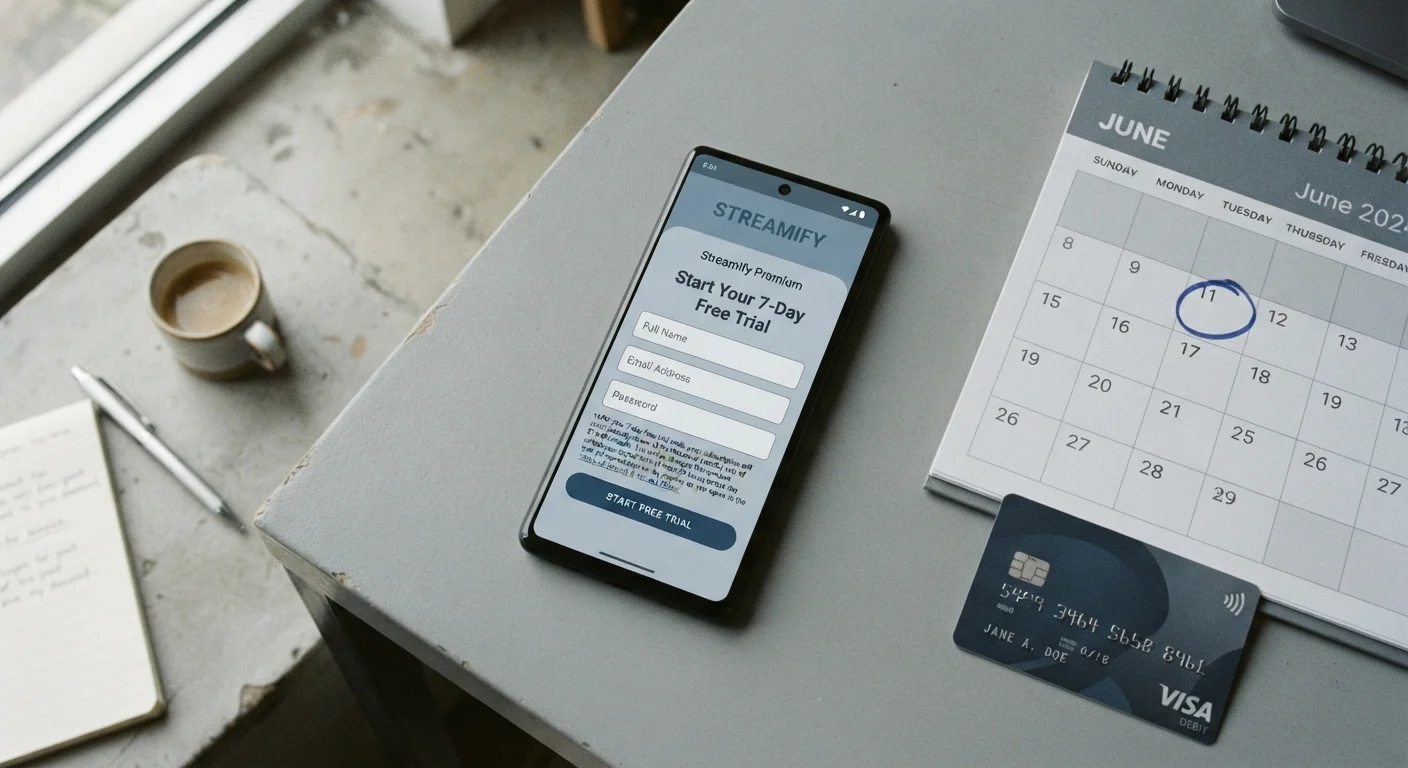
Photo credit: TopInfoTabs.com | Easy Insights For Inspiration
In this article
From streaming to beauty boxes, auto-renewing subscriptions are designed to persist. Understand the mechanics and how to stay in control.
Key Takeaways
- Free trials automatically convert to paid subscriptions unless you cancel before the trial deadline.
- Subscription terms are often disclosed in fine print, not in the headline offer.
- The FTC requires clear disclosure of negative-option billing, but enforcement is complaint-driven.
- Virtual payment cards and calendar reminders are practical tools to prevent unwanted charges.
- Cancellation processes are often intentionally complex - document every step you take.
- Reviewing your bank or credit card statements monthly is the most reliable way to catch unknown charges.
How Free Trials Are Designed to Convert
The mechanics behind free trial offers are straightforward once you see them clearly. A company offers 7, 14, or 30 days of free access in exchange for your payment details. The trial period ends, a charge posts automatically, and the subscription continues until you cancel. This is called a negative-option billing model - your inaction is treated as ongoing consent.
What makes these arrangements effective isn't deception in the crude sense. It's friction asymmetry: signing up is fast and frictionless, while canceling requires navigating menus, waiting on hold, or finding a buried account settings page. That asymmetry is rarely accidental. It's a documented design choice. These tactics share DNA with broader manipulation techniques - the dark patterns in online shopping that shape purchasing decisions across the web.
$219
Average annual spend on forgotten subscriptions
A 2022 survey by C+R Research found U.S. consumers underestimate their monthly subscription spending by an average of $133, with many unaware of all active charges.
42%
Consumers who forgot a free trial converted to paid
Research from West Monroe Partners found roughly four in ten consumers had been charged for a subscription they forgot to cancel after a free trial.
4-6 weeks
Typical delay before noticing an unwanted charge
Consumer behavior research consistently shows most people do not review individual line items on statements until a charge appears noticeably large or irregular.
Where the Terms Are Hidden - and Why It Matters
Subscription terms are almost never in the headline. The offer reads "Try free for 30 days"; the binding detail - "then $14.99/month, cancel anytime" - appears in smaller text below a colorful call-to-action button. 'Cancel anytime' sounds reassuring, but it's a description of a permission, not a promise that cancellation will be easy.
Under the FTC's Negative Option Rule, businesses must disclose recurring billing terms clearly and conspicuously before collecting payment information. What counts as 'clear' has historically been contested. In practice, burying terms in pre-checked boxes or lengthy terms-of-service pages has drawn enforcement actions - but those actions affect a fraction of non-compliant companies.
The practical upshot: read the fine print at sign-up, not after you see the charge. Screenshot the terms page. Note the exact cancellation deadline and method required.
Use a Virtual Card for Every Trial
Many major card issuers allow you to generate a temporary virtual card number tied to your real account. Set the spending limit low - or to zero after the trial period - so any automatic renewal attempt simply fails. This shifts the burden back to the company to contact you, rather than requiring you to remember to cancel. Check whether your card issuer offers this feature in your account settings or mobile app.
Industries Where This Pattern Is Most Common
Subscription traps appear across nearly every consumer category, but several sectors are particularly active:
- Streaming and digital media: Video, music, and software platforms have normalized the auto-renewing model. Annual plans billed upfront carry higher financial exposure when forgotten.
- Beauty and wellness boxes: Curated product subscriptions often require cancellation before a specific monthly cutoff - missing it by a day can trigger another full shipment and charge.
- Health and fitness apps: Many offer a short trial then bill annually, sometimes for sums that surprise users who assumed they were paying monthly.
- Financial and identity-protection services: These sometimes attach as add-ons during unrelated sign-up flows, making them easy to miss entirely.
The pattern connects to a broader reality: headline discounts often have costs attached that aren't visible at the moment of decision. The hidden costs that quietly erase your discount are a recurring theme in consumer-facing pricing.
Practical Steps to Protect Yourself
Awareness is the foundation, but specific habits make the real difference:
- Use a virtual card number with a temporary or zero limit for trials. Many major card issuers offer this feature. Once the trial ends and the limit is set to zero, automatic charges simply fail - prompting the company to contact you instead.
- Set a calendar alert three days before any trial expires. That buffer gives you time to evaluate and cancel without scrambling.
- Document your cancellation. Screenshot confirmation screens, save confirmation emails, and note the date and time. If a charge appears afterward, this documentation supports a dispute.
- Audit your statements monthly. Recurring charges from forgotten subscriptions are common. A 10-minute monthly review of your bank or credit card statements catches most of them early.
If you encounter a cancellation process designed to exhaust your patience - repeated retention offers, multi-step flows, or vague error messages - that experience itself is worth documenting. It may constitute an unfair or deceptive practice under consumer protection law. These tactics belong to a larger family of manipulative design choices explored in our piece on psychological traps in discount shopping.
This article is for general informational purposes only and does not constitute legal or financial advice. Consumer protection regulations vary by state; consult a qualified professional for guidance specific to your situation.
Frequently Asked Questions

Author
Smart Shopping Editorial Team
Smart Shopping Editorial Team is the collective byline for our editorial team and contributor network. Articles published under this byline or an editorial pen name are researched, written, and reviewed according to our editorial standards for clarity, consistency, and independence before publication.
View all articles →