
What Smart Lighting Actually Does - Beyond Turning Off Automatically
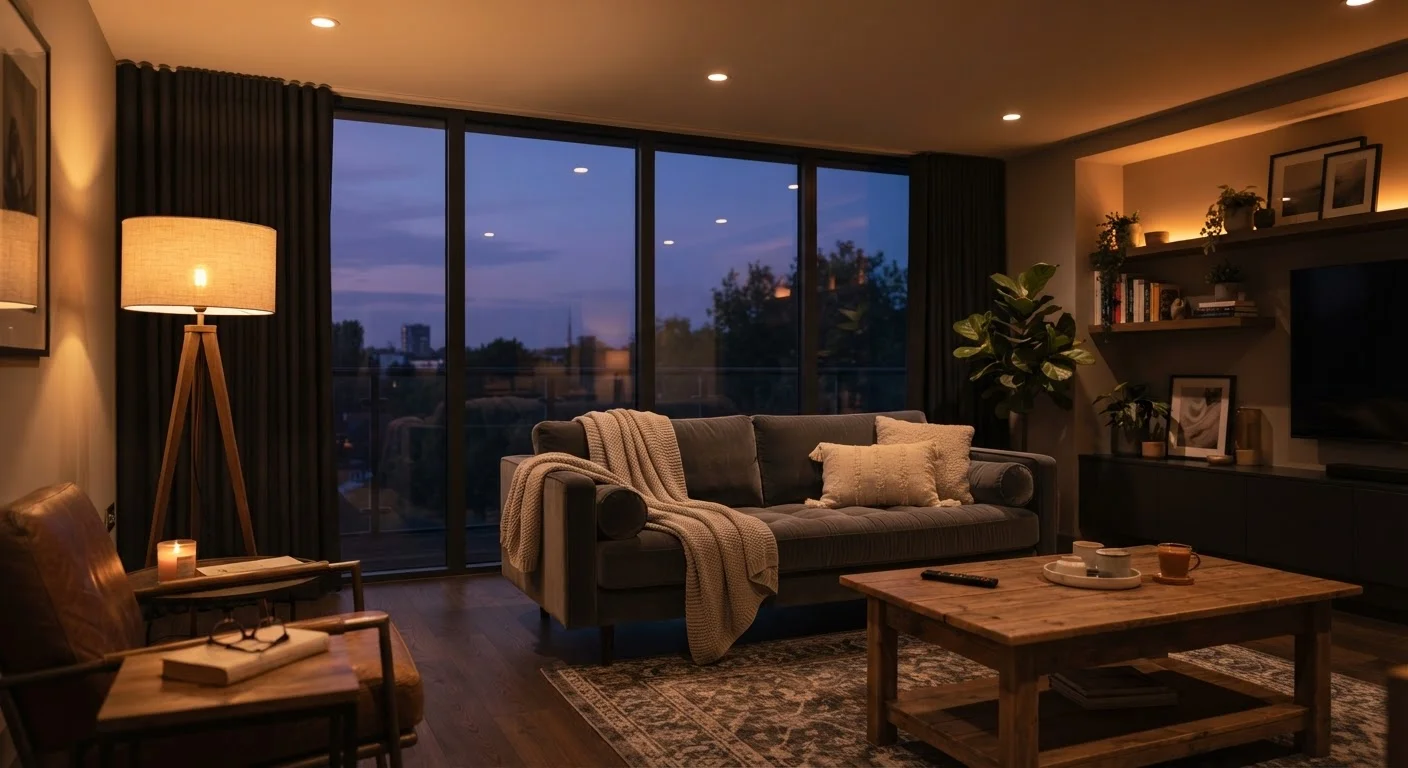
Photo credit: TopInfoTabs.com | Easy Insights For Inspiration
In this article
Smart lighting is often misunderstood as just voice-controlled switches. Learn about colour temperature, circadian routines, and energy monitoring.
Key Takeaways
- Smart lighting does far more than voice control - it can shift colour warmth throughout the day.
- Circadian lighting routines can align your home's light with natural daylight cycles.
- Energy monitoring features help you see actual consumption data, not just estimates.
- Scene and group controls let you adjust every light in a room with a single command.
- Integration with sensors and other smart devices enables genuinely hands-free automation.
The Misconception That Limits How People Use Smart Lighting
When most people think of smart lighting, they picture one thing: asking a voice assistant to turn a light on or off. That single use case - while genuinely convenient - barely scratches the surface of what modern smart lighting systems are capable of. Treating them as glorified voice-controlled switches means leaving most of the value on the table.
Smart lighting is better understood as a programmable layer of your home environment. It responds to time, location, occupancy, and even mood - and it can communicate with other devices to create routines that run without any input from you. Understanding the full feature set helps you decide which capabilities are actually worth pursuing for your household.
Smart Lighting Is Not One Product
The term 'smart lighting' covers a wide range of products: individual smart bulbs, in-wall smart switches (which work with standard bulbs), smart light strips, and whole-room fixture systems. Each has different installation requirements, capability levels, and protocol support. The features described in this article may not apply equally to every type of smart lighting product.
Colour Temperature: The Feature That Changes How a Room Feels
Many smart bulbs support what's called tunable white or white ambiance lighting - the ability to shift the colour temperature of the light they emit. Colour temperature is measured in Kelvin (K). A warm, candlelight-like glow sits around 2,200K-2,700K, a neutral white around 3,500K-4,000K, and a crisp daylight quality around 5,000K-6,500K.
This matters because light profoundly affects how a space feels and how alert we feel within it. Cooler, brighter light in a home office can support focus during working hours. Warmer, dimmer light in a living room after 8 p.m. signals wind-down time. A smart bulb that adjusts colour temperature automatically - without you touching a switch - turns this from a design choice into a daily habit your home maintains for you.
~1W
Typical standby draw per smart bulb
Smart bulbs maintain a small network connection even when 'off'; most draw under 1 watt in standby, though this varies by manufacturer and protocol.
2,700K-5,000K
Typical tunable white range in smart bulbs
Most white-ambiance smart bulbs cover this range, spanning warm evening tones to crisp daylight-equivalent output.
Up to 80%
Energy reduction vs. incandescent equivalents
LED smart bulbs generally consume significantly less power than incandescent bulbs at comparable brightness levels, according to widely cited energy efficiency data.
Circadian Routines: Lighting That Follows Your Day
Some smart lighting platforms take colour temperature adjustment a step further with circadian rhythm lighting - schedules that gradually shift from energising cool-white light in the morning to warm amber tones by evening, roughly mirroring the arc of natural daylight. Research into light's effect on the body's internal clock (the circadian rhythm) suggests that light exposure timing may influence sleep quality and alertness, though the science on artificial lighting's impact is still developing.
Setting up a circadian routine typically involves defining a schedule in your lighting app tied to sunrise and sunset times for your location. The system handles the gradual transitions automatically. This is one of the genuinely useful automation features that operates invisibly once configured - you benefit without having to think about it.
Start With One Room Before Scaling
If you're new to smart lighting, configure a single room completely before expanding to the rest of your home. This lets you learn the app, understand scheduling options, and identify any compatibility issues without a large upfront commitment. Bedrooms and home offices tend to offer the most noticeable quality-of-life improvements from circadian and scene features.
Energy Monitoring and Scenes: Practical Daily Utility
Beyond ambiance, smart lighting systems increasingly include energy monitoring - data on how much power individual bulbs or circuits are consuming. This moves beyond the vague promise that LED bulbs save energy and gives you actual consumption figures to review. Some platforms display this within the same app used to control your lights, making it easy to identify which fixtures are on longest or drawing the most power.
Scenes and groups are another underappreciated feature. A scene stores a specific combination of brightness and colour temperature across multiple lights, retrievable with a single tap or voice command. "Reading" might dim ceiling lights and brighten a lamp to 4,000K. "Movie night" might drop everything to 10% warm white. Groups let you control all lights in a room simultaneously rather than individually. Together, these features reduce the friction of adjusting your environment throughout the day.
For a broader view of how smart lighting fits alongside other connected devices, see our balanced look at smart home trade-offs before committing to a full setup.
Automation and Integration: Where Smart Lighting Gets Genuinely Useful
The real power of smart lighting emerges when it connects to the rest of your home. Motion sensors can trigger hallway lights when someone gets up at night - no switches, no blinding brightness. Door sensors can turn on entry lights when you arrive home. A smart thermostat reaching a certain time-based schedule can coordinate with lighting to signal a morning wake-up. These integrations depend on compatible protocols and platforms, which is worth researching before purchasing. Our guide to smart home ecosystems and protocols explains how Matter, Zigbee, and Wi-Fi differences affect device compatibility.
If you're managing multiple smart devices through a central controller, configuring a smart home hub well can significantly improve how reliably these lighting automations fire. And it's worth checking common home tech myths - particularly around the assumption that smart devices automatically reduce energy bills without any deliberate setup.
Frequently Asked Questions

Author
Tech & Gadgets Editorial Team
Tech & Gadgets Editorial Team is the collective byline for our editorial team and contributor network. Articles published under this byline or an editorial pen name are researched, written, and reviewed according to our editorial standards for clarity, consistency, and independence before publication.
View all articles →