
How to Read a Vehicle Service Schedule
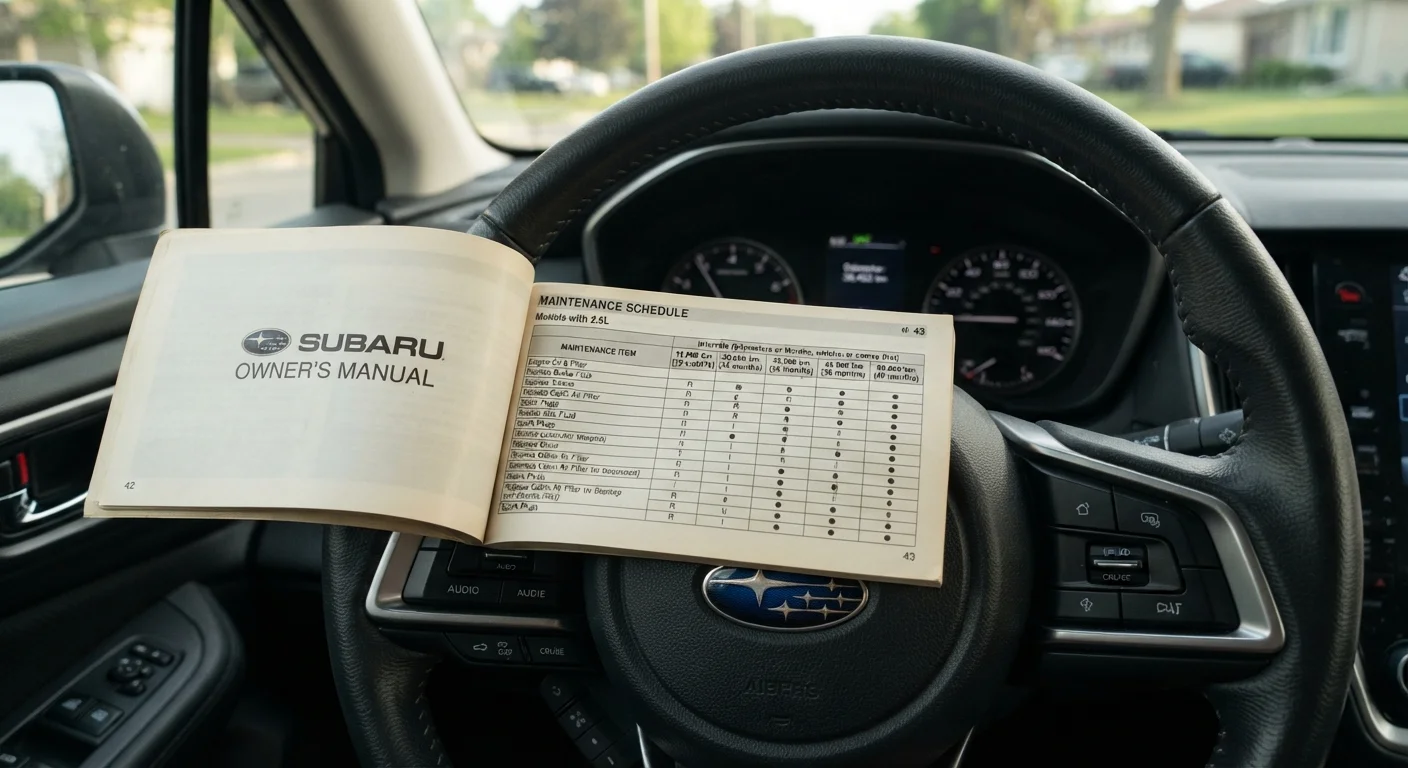
Photo credit: TopInfoTabs.com | Easy Insights For Inspiration
Your owner's manual contains a maintenance schedule most drivers ignore. Learn how to interpret it and build a realistic upkeep plan.
Key Takeaways
- Your owner's manual contains the authoritative maintenance schedule for your specific vehicle.
- Service intervals are expressed in mileage and time - both thresholds matter, whichever comes first.
- Normal and severe driving conditions have separate schedules; most urban drivers qualify as severe.
- Understanding the schedule helps you verify shop recommendations and avoid unnecessary services.
- Keeping a simple log of completed services protects resale value and prevents missed intervals.
Why the Owner's Manual Is Your Best Source
Third-party maintenance guides, shop recommendations, and general advice online offer useful context - but your vehicle's owner's manual is the only document written specifically for your engine, transmission, and climate control system by the engineers who designed them. Generic advice like "change your oil every 3,000 miles" may not apply to your car at all; modern vehicles often specify intervals of 5,000 to 10,000 miles or more depending on oil type and engine design.
If you're new to car ownership and want broader context on routine upkeep, our introduction to keeping a car running covers the fundamentals before you dive into the schedule itself.
What you will need
For high-mileage vehicles, the manufacturer schedule remains relevant but may need to be supplemented - see our guide on keeping a high-mileage car in good shape for additional considerations once you pass the 100,000-mile mark.
How to Read and Apply the Schedule
Follow the steps below to locate, interpret, and act on your vehicle's service schedule. You'll need about 10-20 minutes and no mechanical expertise - just your manual and your current mileage.
Owner's Manual
Contains the manufacturer's official maintenance schedule, fluid specifications, and service interval tables.
Mileage Log or Maintenance Record
Tracks completed services so you can calculate exactly where you stand against each interval.
Smartphone or Calendar App
Set reminders for upcoming service milestones based on typical monthly mileage.
Locate the Maintenance Schedule Section
Open your owner's manual and look for a chapter titled Maintenance, Scheduled Maintenance, or Service Schedule. In most manuals it appears in the latter third of the book. If you've misplaced the physical copy, search the manufacturer's website using your vehicle's year, make, and model - many offer downloadable PDFs at no cost.
Understand the Two-Axis Format
Most schedules are laid out as a table with service items listed in rows (oil change, tire rotation, spark plugs, brake fluid, etc.) and mileage or time intervals across columns (every 5,000 miles / 6 months, every 30,000 miles / 2 years, and so on). Each cell typically contains a check mark, an I for Inspect, or an R for Replace.
The key rule: service is due at whichever threshold - mileage or time - arrives first. A driver who covers only 5,000 miles per year still needs to change engine oil on schedule because oil degrades chemically with age, not only with use.
Identify Your Driving Condition Category
Nearly every owner's manual defines two condition categories: Normal and Severe (sometimes called Special Operating Conditions). Severe driving typically includes:
- Frequent short trips under five miles
- Stop-and-go city driving or heavy traffic
- Towing, hauling, or carrying heavy loads regularly
- Driving on dusty, unpaved, or salted roads
- Extreme heat or cold climates
If several of these apply to your routine, use the severe schedule - it calls for more frequent service. Many urban and suburban drivers qualify as severe even though the term sounds alarming.
Cross-Reference Your Current Mileage
Note your odometer reading, then find the most recent mileage column in the table that your vehicle has already passed. The next column to the right is your upcoming service milestone. Subtract your last recorded service mileage from your current reading to see how close you are. If you don't have those records, a licensed mechanic can often inspect components and estimate what's overdue.
Map Out the Full Service Calendar
Work through the schedule row by row and write down the mileage and estimated calendar date for each upcoming service item. Estimate your annual mileage by dividing total odometer miles by years of ownership, or by checking trip logs. This gives you a forward-looking picture - not just the next oil change, but when spark plugs, coolant flush, and timing belt replacement are approaching.
For ongoing tracking, see our guide to tracking and scheduling routine maintenance, which covers apps, mileage logs, and record-keeping methods in detail.
Use the Schedule to Evaluate Shop Recommendations
When a service advisor recommends an add-on service, cross-check it against your owner's manual before agreeing. If the manual doesn't list a service until 60,000 miles and you're at 35,000, it's reasonable to ask why it's being recommended now. Some services - like fuel system cleaning - are not universally required by manufacturers, and the schedule is your evidence-based reference for the conversation.
Don't Rely Solely on Dashboard Reminders
Oil life monitors and service reminder lights are useful prompts, but they don't cover every item in your maintenance schedule. Components like timing belts, coolant, and brake fluid have no dedicated warning light - they appear only in the manual. Treat dashboard alerts as a supplement to the schedule, not a replacement for it.
Timing Belt Intervals Are Non-Negotiable
If your engine uses a timing belt (rather than a timing chain), the replacement interval in your owner's manual is critical. A failed timing belt can cause severe, sometimes irreparable engine damage. Check your manual now for the mileage and age limit, and ensure this service is on your radar well in advance.
Pair Your Schedule With Seasonal Checks
A manufacturer schedule covers interval-based services, but seasonal conditions introduce additional inspection needs. Combining your schedule with a seasonal maintenance checklist gives you a complete picture of what your vehicle needs throughout the year.
Once you're comfortable reading the schedule, you may want to explore which maintenance tasks you can handle at home versus those that require a qualified mechanic. Understanding the schedule is the first step toward confident, informed vehicle ownership.
This article is for general informational purposes. Always consult a qualified mechanic for diagnosis, repairs, or safety-critical maintenance decisions specific to your vehicle.

Author
Cars & Driving Editorial Team
Cars & Driving Editorial Team is the collective byline for our editorial team and contributor network. Articles published under this byline or an editorial pen name are researched, written, and reviewed according to our editorial standards for clarity, consistency, and independence before publication.
View all articles →