
Nutrition Through Every Life Stage: What Changes and Why
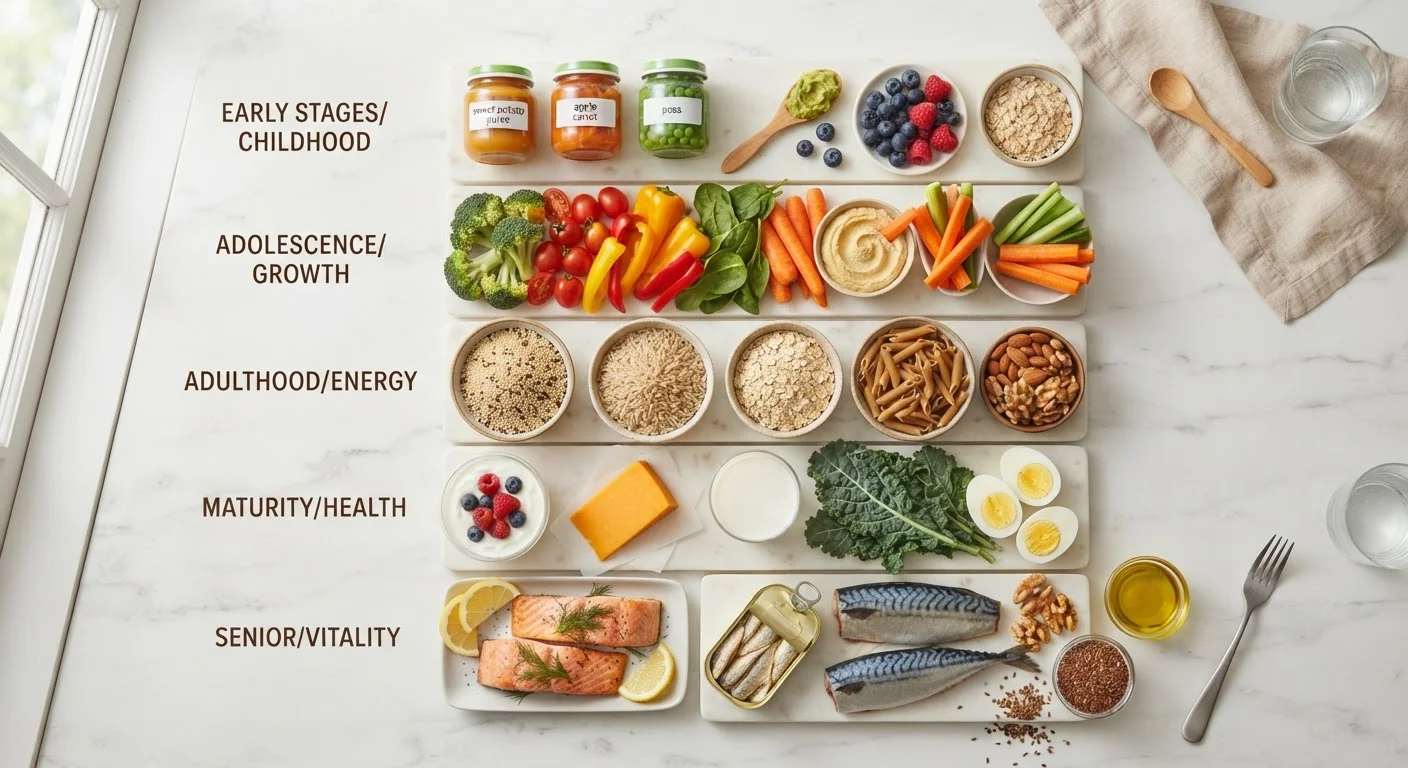
Photo credit: TopInfoTabs.com | Easy Insights For Inspiration
In this article
From childhood to older adulthood, nutritional needs shift considerably. An overview of key changes and what they mean for everyday eating.
Key Takeaways
- Calorie and nutrient needs shift significantly across each life stage.
- Protein, calcium, iron, and vitamin D are commonly under-consumed at multiple life stages.
- Older adults often need more protein and vitamin D despite eating fewer total calories.
- Overall dietary patterns matter more than fixating on individual nutrients.
- Always consult a registered dietitian or healthcare provider for personalized guidance.
Why Nutritional Needs Change Over a Lifetime
The human body is not static, and neither are its nutritional demands. Growth, hormonal shifts, changes in metabolism, and evolving health risks all influence what the body needs from food at any given stage of life. Understanding these shifts can help you make more informed everyday choices - and recognize when general advice may not apply to your current situation.
This overview draws on established dietary science to walk through the major life stages and highlight what tends to change, and why. It is intended as general health education, not personalized medical or dietary advice. For guidance tailored to your individual circumstances, a registered dietitian or qualified healthcare professional is the right resource.
If you're also navigating persistent diet myths that make these shifts harder to understand, our piece on common nutrition myths offers useful context.
Infancy and Early Childhood: Building Blocks
No stage of life sees faster physical development than infancy. During the first two years, the brain nearly triples in size, bones are mineralizing rapidly, and organ systems are maturing. Breast milk or iron-fortified formula provides a remarkably complete nutritional profile for infants, with iron, zinc, and vitamin D often requiring supplementation depending on feeding method and pediatric guidance.
As toddlers transition to solid foods, dietary variety becomes the goal. Iron-rich foods, healthy fats (particularly for brain development), and a range of fruits and vegetables establish taste preferences and gut microbiome diversity that research suggests may have long-term health effects. Portion expectations should be age-appropriate - a toddler's stomach is roughly the size of their fist.
Introduce Variety Early for Long-Term Benefit
Exposing young children to a wide range of flavors and textures - particularly vegetables and legumes - during the complementary feeding window (roughly 6-24 months) is associated with broader food acceptance later in childhood. Don't interpret rejection of a new food as a permanent preference; repeated, low-pressure exposure is the evidence-backed approach.
This content is general health information. For infant feeding decisions, always follow guidance from your child's pediatrician.
Adolescence: High Demands, High Stakes
The adolescent growth spurt creates some of the highest nutrient demands of any life stage, yet it coincides with a period when eating habits often become less structured. Calcium and vitamin D requirements rise sharply - peak bone mass is largely established during the teenage years, making this window critical for long-term skeletal health. Iron needs increase as well, particularly for those who menstruate.
Protein requirements also climb to support rapid muscle and tissue development. Zinc, folate, and B vitamins all play essential roles during this period. Irregular meals, social pressures around eating, and high consumption of ultra-processed foods can make adequate intake genuinely challenging.
~90%
Americans not meeting fiber recommendations
According to dietary intake data from the USDA, the vast majority of U.S. adults consume well below the recommended daily fiber intake.
~40%
U.S. adults with vitamin D insufficiency
The CDC's National Health and Nutrition Examination Survey (NHANES) has consistently found high rates of vitamin D insufficiency across the adult population.
Peak by ~30
Age at which bone mass typically peaks
According to the National Institutes of Health, most people reach peak bone mass by their late twenties to early thirties, underscoring the importance of calcium and vitamin D in earlier decades.
For a broader view of how eating patterns - not just individual nutrients - drive health outcomes, see our article on why overall dietary patterns matter.
Adulthood: Maintenance, Prevention, and Balance
Through the twenties, thirties, and forties, nutritional focus largely shifts from growth to maintenance and disease prevention. Total calorie needs tend to stabilize or gradually decline as metabolic rate slows with age, while the importance of nutrient density - getting more nutrition per calorie - increases.
Fiber deserves particular emphasis here. Most American adults fall short of recommended intakes, yet adequate fiber supports digestive health, blood sugar regulation, and cardiovascular function. Our deep dive on dietary fiber and how to get more of it covers this in practical detail.
Rather than overhauling your diet all at once, identify the one or two nutrients most relevant to your current life stage and focus your attention there first.
Behavioral research consistently shows that targeted, incremental changes are more sustainable than broad dietary overhauls, which tend to be abandoned within weeks.
During adulthood, prioritize nutrient-dense foods - leafy greens, legumes, whole grains, lean proteins - over calorie-counting, since metabolic efficiency means quality matters more than quantity.
As basal metabolic rate declines gradually through the thirties and forties, squeezing more nutritional value per calorie becomes the more effective long-term strategy.
Pregnancy and lactation represent a significant nutritional exception within adulthood, with substantially increased requirements for folate, iron, calcium, iodine, and omega-3 fatty acids. Anyone who is pregnant or planning to become pregnant should work directly with a healthcare provider for personalized guidance rather than relying on general recommendations.
Older Adulthood: Shifting Priorities
From approximately age 65 onward, several meaningful nutritional shifts occur simultaneously. Appetite often decreases, absorption of certain nutrients becomes less efficient, and the risk of deficiency in vitamin B12, vitamin D, calcium, and magnesium rises. Yet protein needs actually increase relative to body weight in older adults - muscle preservation (sarcopenia prevention) becomes an active nutritional goal, not a passive one.
Hydration is another underappreciated concern; the sensation of thirst becomes less reliable with age, increasing dehydration risk. Sodium intake warrants attention given higher rates of hypertension in this group, while vitamin D and calcium together remain central to bone density and fall-prevention strategies.
Appetite Loss in Older Adults Isn't Harmless
A reduced appetite in older adulthood is common, but it can quietly lead to protein-energy malnutrition, accelerated muscle loss, and micronutrient deficiencies. If an older adult in your household is eating noticeably less over weeks or months, raise it with their healthcare provider rather than assuming it's a normal part of aging.
Understanding how nutrition changes in aging can also offer perspective when caring for elderly pets - the concept of age-related physiological change isn't unique to humans. Our article on recognizing aging versus health decline in pets explores this in an animal health context.
Nutrients That Deserve Attention at Every Stage
Across all life stages, a handful of nutrients consistently show up as underconsumed in population studies: vitamin D, calcium, iron (particularly in those who menstruate), potassium, and dietary fiber. These aren't obscure micronutrients - they're foundational, and many people fall short simply due to overall dietary patterns rather than lack of effort.
“Nutrition is not one-size-fits-all. The same dietary pattern that supports a growing teenager may be inadequate for an older adult trying to preserve muscle mass and bone density.”
— Dietary Guidelines Advisory Committee, Federal advisory body that informs U.S. Dietary Guidelines
Learning to read food labels accurately is a practical tool for improving intake across all stages. Our guide to nutrition label literacy explains what the numbers on packaged food actually mean in everyday terms.
Pairing nutrition awareness with consistent physical activity also reinforces many of these benefits - the Fitness & Movement hub offers practical movement guidance for every level.
This article is for general informational and educational purposes only and is not a substitute for professional medical or dietary advice. Consult a qualified healthcare provider or registered dietitian before making significant changes to your diet, especially during pregnancy, childhood, or if you have an existing health condition.

Author
Health & Wellness Editorial Team
Health & Wellness Editorial Team is the collective byline for our editorial team and contributor network. Articles published under this byline or an editorial pen name are researched, written, and reviewed according to our editorial standards for clarity, consistency, and independence before publication.
View all articles →