
Training a Puppy vs. an Adult Dog: Key Differences Every Owner Should Know
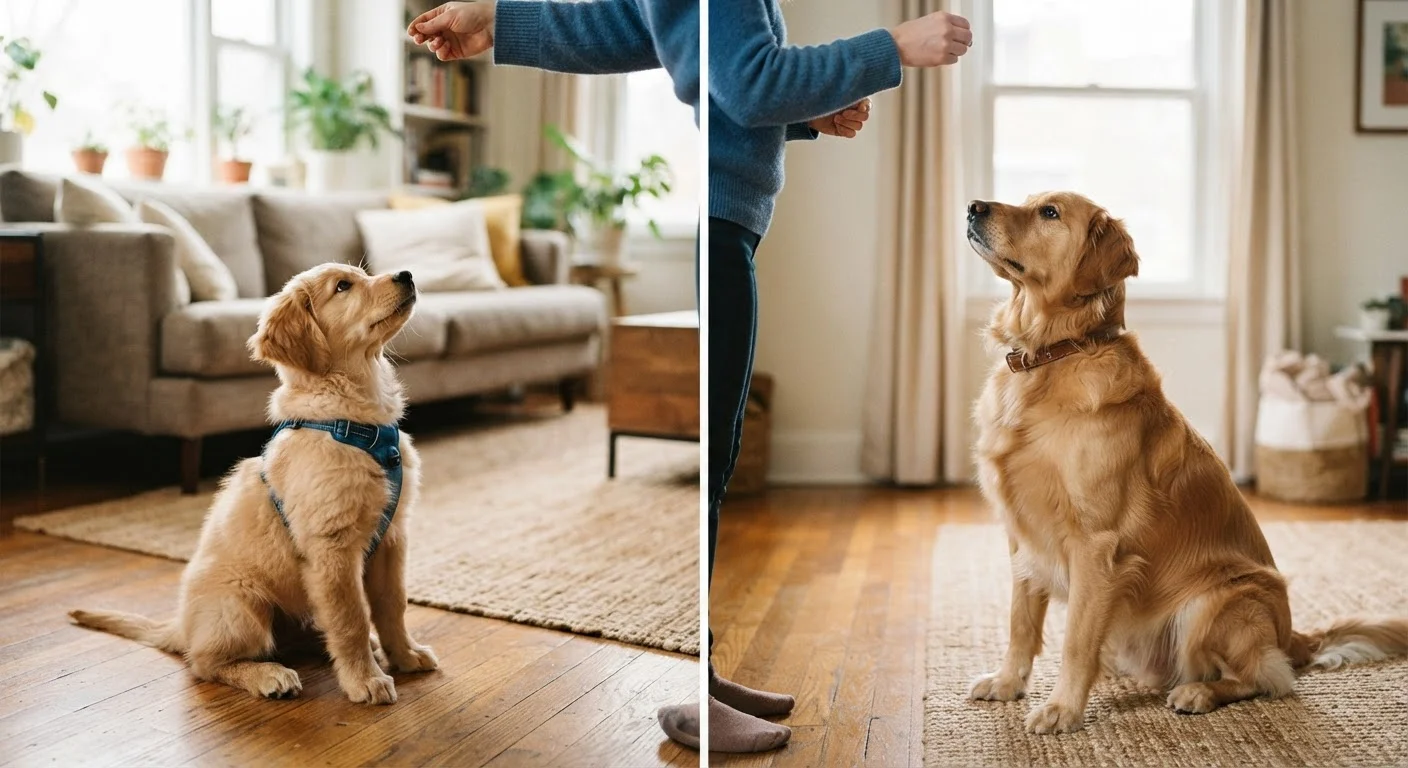
Photo credit: TopInfoTabs.com | Easy Insights For Inspiration
In this article
Age shapes how dogs learn. Here's what changes between puppy and adult training and how to adjust your approach.
Key Takeaways
- Puppies have shorter attention spans and need frequent, brief training sessions to absorb new skills.
- Adult dogs often learn commands faster than puppies but may need extra work unlearning prior habits.
- Socialization is most impactful during a puppy's early critical window, roughly 3 to 14 weeks of age.
- Both age groups respond well to positive reinforcement; the delivery and pacing simply differ.
- Patience and consistency matter more than the dog's age when it comes to long-term training success.
How Age Shapes the Way Dogs Learn
Dog training isn't one-size-fits-all, and age is one of the biggest variables at play. A 10-week-old puppy and a 4-year-old rescue dog are both capable of learning - but their brains, bodies, and life experiences create very different starting points. Before your first session begins, it helps to understand what's actually happening under the surface. See our preparation checklist for everything to have in place before you start.
Canine learning is rooted in association, repetition, and reinforcement regardless of age. What changes is how quickly those associations form, how long a dog can hold focus, and what competing factors - fear, habit, arousal - are already in the picture. Understanding the core principles of how animals learn helps you apply the right technique at the right moment, whether you're working with a puppy or a seasoned adult.
| Puppy Training | Adult Dog Training | |
|---|---|---|
| Attention span | 2-5 minutes per session | 10-20+ minutes per session |
| Socialization urgency | Critical window 3-14 weeks | Beneficial but less time-sensitive |
| Command acquisition speed | Slower; more repetitions needed | Often faster once motivated |
| Existing habits to overcome | Minimal; mostly starting fresh | May have ingrained behaviors |
| Physical stamina for training | Limited; tires quickly | Greater endurance |
| Recommended session length | 3-5 minutes, multiple times daily | 10-15 minutes, once or twice daily |
| Primary training priorities | Housetraining, bite inhibition, socialization | Impulse control, leash manners, advanced commands |
Training a Puppy: Working With a Developing Brain
Puppies are neurologically primed to absorb new information, but that window comes with real constraints. Attention spans are short - most puppies under 12 weeks can sustain focused engagement for only two to five minutes at a time. Sessions should be brief, upbeat, and end before the puppy loses interest. Multiple short sessions throughout the day outperform one long one.
The socialization window - roughly 3 to 14 weeks - is the most influential period in a dog's behavioral development. Positive exposure to people, sounds, environments, and other animals during this stage shapes how the dog perceives the world as an adult. Missing this window doesn't doom a dog, but it does make later social confidence harder to build.
Keep Puppy Sessions Short and Positive
Aim for three to five minute training sessions with puppies and always end on a successful repetition, even if you have to simplify the task to get there. Stopping while the puppy is still engaged - rather than waiting for frustration - builds a positive association with training that pays off over the long term. Several brief sessions spread through the day are far more effective than one extended sit-down.
Physical limitations also matter. Young puppies tire quickly, and their joints are still developing. Keep movement-based exercises gentle and age-appropriate. Exercise needs vary significantly across life stages, and overdoing it early can cause harm.
Housetraining and impulse control are typically the first priorities with puppies. Expect accidents, expect mouthing, and expect inconsistency - these are developmental, not defiance.
Training an Adult Dog: Experience Cuts Both Ways
Adult dogs bring genuine advantages to training. Their longer attention spans allow for more complex, sustained sessions. Many have already learned that calm behavior earns rewards, which speeds up new command acquisition. They're also physically capable of more demanding exercises and often more resilient to mild frustration.
The complication is history. An adult dog has already formed associations - some helpful, some not. A dog that was never taught to walk calmly on leash may have spent years practicing pulling. Changing an established behavior takes longer than building a new one from scratch, and it requires patience rather than force.
Adopted adult dogs, particularly rescues with unknown backgrounds, may also carry fear responses or avoidance behaviors that require careful, gradual desensitization before standard training can proceed effectively. Choosing the right training format - group class, private sessions, or self-directed - can make a real difference for dogs with behavioral histories.
3-14 weeks
Puppy socialization critical window
Animal behaviorists widely recognize this developmental period as the most influential for shaping a dog's long-term social behavior.
~47%
Shelter dogs surrendered for behavioral issues
Studies on shelter intake data suggest behavioral problems - many stemming from insufficient early training - are among the most common reasons owners relinquish dogs.
One enduring misconception is that adult dogs can't learn new things. Research in animal cognition consistently shows that dogs remain capable learners well into adulthood and old age. The process may look different, but it works.
Adapting Your Approach at Any Stage
Regardless of age, positive reinforcement - rewarding the behavior you want - is the most widely supported training method by animal behaviorists and veterinary professionals. What adapts is the delivery: reward frequency, session length, and the complexity of tasks you introduce.
For puppies, reward often and keep criteria simple. For adults, you can gradually raise the bar and work toward generalization - practicing commands in new environments, around distractions, and with variable reward schedules. A consistent daily routine reinforces training gains by giving dogs predictable structure outside of formal sessions.
Progress plateaus happen with both age groups. When they do, returning to basics - a simpler version of the task in a low-distraction setting - almost always helps. The goal at every stage is to keep learning associated with something the dog finds rewarding, so they show up for the next session ready to engage.
This article is for general informational purposes only and does not constitute professional veterinary or behavioral advice. If your dog displays significant behavioral concerns, consult a certified professional dog trainer or veterinary behaviorist.

Author
Pets & Animals Editorial Team
Pets & Animals Editorial Team is the collective byline for our editorial team and contributor network. Articles published under this byline or an editorial pen name are researched, written, and reviewed according to our editorial standards for clarity, consistency, and independence before publication.
View all articles →