
Making Sense of Mobile Specs: A Glossary for Non-Technical Buyers
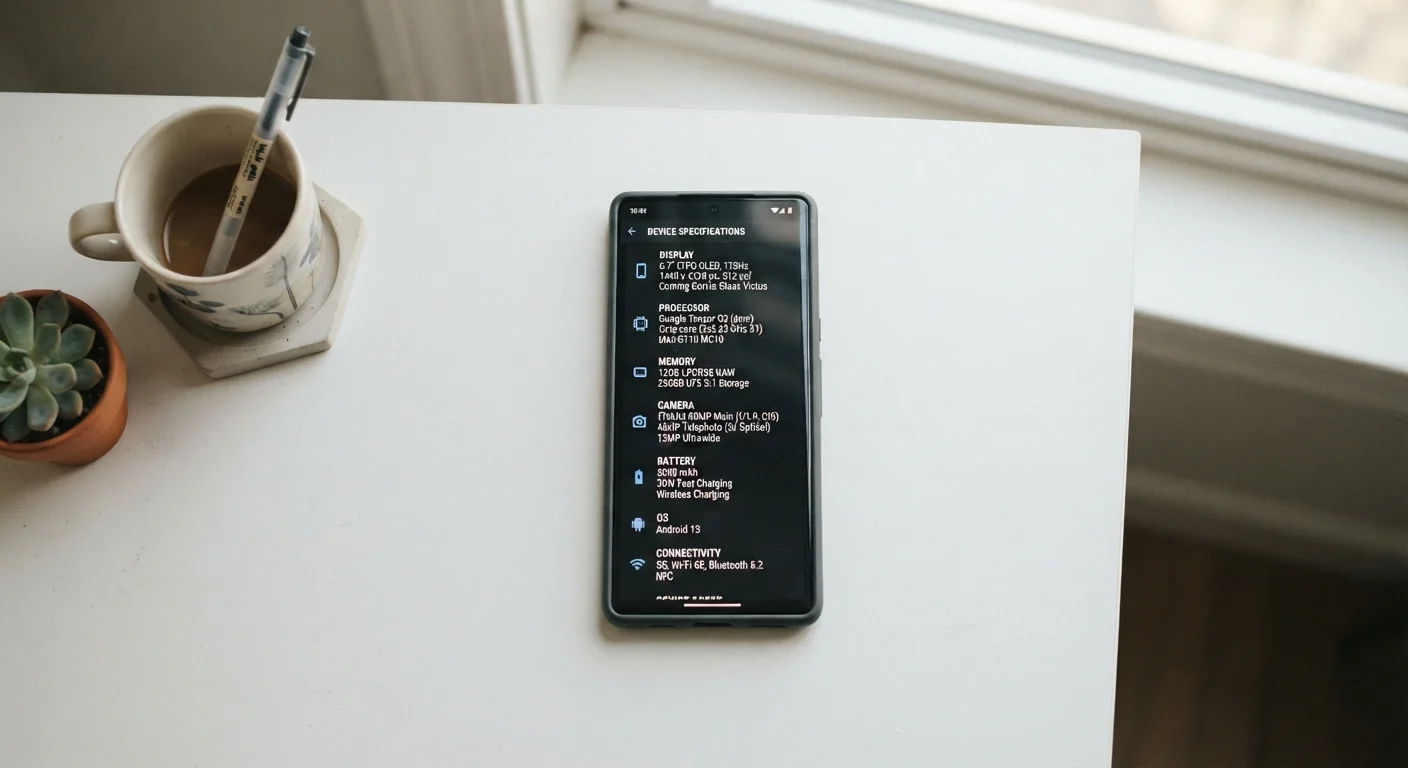
Photo credit: TopInfoTabs.com | Easy Insights For Inspiration
In this article
Processor cores, refresh rates, IP ratings — a plain-language reference to the terms you'll encounter when reading any smartphone specification sheet.
Why Spec Sheets Feel Designed to Confuse
Smartphone spec sheets list dozens of figures, acronyms, and proprietary brand names - often in no particular order. Manufacturers are not legally required to define the terms they use, and marketing language frequently stretches technical definitions. The result is that comparing two phones by their listed specs can feel like reading two documents written in different languages.
This reference is organized around the categories you'll actually encounter: processing power, display, camera, connectivity, battery, and durability. Each term is defined plainly, with enough context to judge whether a given number actually matters for the way you use a phone. For a parallel look at how similar confusion plays out with computer components, see our guide to RAM, storage, and processors.
| IP68 Water Resistance | Typically rated for submersion up to 1.5 m for 30 minutes (IEC 60529 standard) |
| Common Refresh Rates | 60 Hz, 90 Hz, 120 Hz, 144 Hz |
| Typical Flagship RAM Range | 8 GB - 16 GB (General market observation, varies by region and model year) |
| NFC Range | Generally under 4 cm (approx. 1.5 inches) (NFC Forum specification) |
| UFS vs eMMC Read Speed | UFS can be 2-4× faster than eMMC in sequential reads (JEDEC storage standards) |
| Outdoor Readability Threshold | ~800-1000 nits for comfortable sunlight use (General display industry guidance) |
Processing and Performance Terms
The processor section of a spec sheet is where jargon density peaks. A few grounding concepts make it navigable.
SoC stands for System on a Chip - the integrated unit that houses the CPU, GPU, and often the cellular modem. The SoC model is usually a more meaningful indicator of performance than any individual sub-spec. CPU cores describe how many parallel processing threads the chip can run; more cores help with multitasking but raw core count is less predictive of speed than core architecture.
GPU (Graphics Processing Unit) handles visual rendering - relevant not just for gaming but for smooth video playback and high refresh rate displays. NPU (Neural Processing Unit) is increasingly listed as a distinct component; it accelerates on-device AI tasks such as photo processing and voice recognition.
For a deeper look at how these concepts translate to computers, this guide on computer processors and RAM covers much of the same underlying logic.
SoC (System on a Chip)
A single chip that combines the processor, graphics unit, modem, and other key components. It determines overall speed, efficiency, and capability more than any single spec number.
CPU Cores
Individual processing units within a chip. More cores can handle more tasks simultaneously, though real-world speed depends on core design and software optimization as much as count.
Refresh Rate (Hz)
How many times per second the display redraws its image. A 60 Hz screen refreshes 60 times per second; 120 Hz appears noticeably smoother for scrolling and animation.
IP Rating
A standardized measure of a device's resistance to dust and water. The two digits after 'IP' indicate solid-particle and liquid protection levels respectively - IP68 is currently the most common high-protection rating on smartphones.
nit
A unit of screen brightness. Higher nit values mean the display is more readable in bright sunlight. Outdoor usability generally improves noticeably above 800-1000 nits.
RAM (Working Memory)
Short-term memory the phone uses to keep apps active and responsive. More RAM allows more apps to run in the background without reloading when you switch between them.
NFC
Near Field Communication - a short-range wireless standard that enables contactless payments, data transfers, and pairing with accessories when two devices are held close together.
mAh (Battery Capacity)
Milliampere-hours measure how much charge a battery can hold. Higher mAh generally means longer battery life, though software efficiency and screen size also affect real-world endurance.
PPI (Pixels Per Inch)
A measure of display sharpness based on how many pixels fit in each inch of the screen. Higher PPI produces finer text and crisper images, with diminishing returns above roughly 400 PPI.
5G Sub-6 vs mmWave
Two different 5G frequency bands. Sub-6 GHz offers broader coverage at moderate speeds. Millimeter wave (mmWave) delivers very high speeds over very short distances and is less widely deployed.
OIS (Optical Image Stabilization)
A physical mechanism in the camera module that counteracts hand movement to reduce blur in photos and video. It works independently of software processing.
UFS / eMMC Storage
Two types of internal storage technology. UFS (Universal Flash Storage) is faster and more efficient than the older eMMC standard, affecting how quickly apps launch and files transfer.
Display, Camera, and Connectivity Decoded
Display specs matter more than many buyers realize because you interact with the screen constantly. Resolution (expressed as pixel dimensions or as HD/FHD/QHD labels) and PPI together determine sharpness. Refresh rate - measured in Hz - determines how fluid motion looks; anything above 60 Hz feels perceptibly smoother. Brightness (nits) determines outdoor visibility. Panel technology (OLED vs LCD) affects color depth, contrast, and power draw. Our monitor specs explainer covers these same display fundamentals in detail.
Camera specs are heavily marketed but frequently misrepresented. Megapixel count measures sensor resolution, not image quality - sensor size, aperture (expressed as an f/ number, where lower means more light), and OIS collectively matter more. Aperture figures are often listed per lens since most phones now carry multiple cameras. For a full breakdown, see the article on megapixel myths.
Connectivity covers both cellular (4G LTE vs 5G, and which 5G bands) and short-range standards. Wi-Fi versions (Wi-Fi 6, Wi-Fi 6E, Wi-Fi 7) indicate maximum wireless speed and efficiency. Bluetooth version affects audio quality and accessory compatibility. NFC enables contactless payments and quick pairing. For SIM-related connectivity, our eSIM vs physical SIM explainer explains what the shift to embedded SIMs means practically.
Specs Are a Starting Point, Not the Full Story
Manufacturers choose which numbers to highlight, and raw specs rarely capture real-world experience. A phone with a lower processor generation but well-optimized software can outperform a higher-specced device in day-to-day use. Use this glossary to read spec sheets critically, not to rank devices by numbers alone.
Where to Find Official Spec Definitions
Industry bodies such as the IEC (International Electrotechnical Commission) publish the official standards behind ratings like IP codes, while organizations like the Wi-Fi Alliance define wireless certifications. Checking a manufacturer's own spec page alongside these standards is a reliable way to verify what a claimed rating actually covers.
Battery, Storage, and Durability Ratings
Battery specs center on capacity in mAh, but longevity is shaped equally by software and display efficiency. Charging speed is expressed in watts (W) - higher wattage means faster charging, though the cable and charger in the box (if included) must also support that wattage. Wireless charging and reverse wireless charging (the ability to share power with another device) are often listed separately.
Storage involves two separate specs that are easy to conflate. Internal storage (measured in GB or TB) is where apps, photos, and files live permanently. RAM is working memory - it keeps active apps loaded for fast switching. These numbers appear side by side on spec sheets and are not interchangeable. Our mobile storage guide separates these concepts clearly.
IP ratings are among the most practically useful specs to understand. The two digits encode dust and water resistance on a standardized scale. IP68 - the most common high-end rating - indicates complete dust protection and resistance to immersion under controlled test conditions. Note that IP ratings are tested in laboratory conditions with still, fresh water; real-world exposure may differ, and coverage under warranty for water damage varies by manufacturer.
For a broader look at tech terminology beyond smartphones, our home tech glossary applies the same plain-language approach to smart home devices.

Author
Tech & Gadgets Editorial Team
Tech & Gadgets Editorial Team is the collective byline for our editorial team and contributor network. Articles published under this byline or an editorial pen name are researched, written, and reviewed according to our editorial standards for clarity, consistency, and independence before publication.
View all articles →