
What a Balanced Plate Actually Looks Like
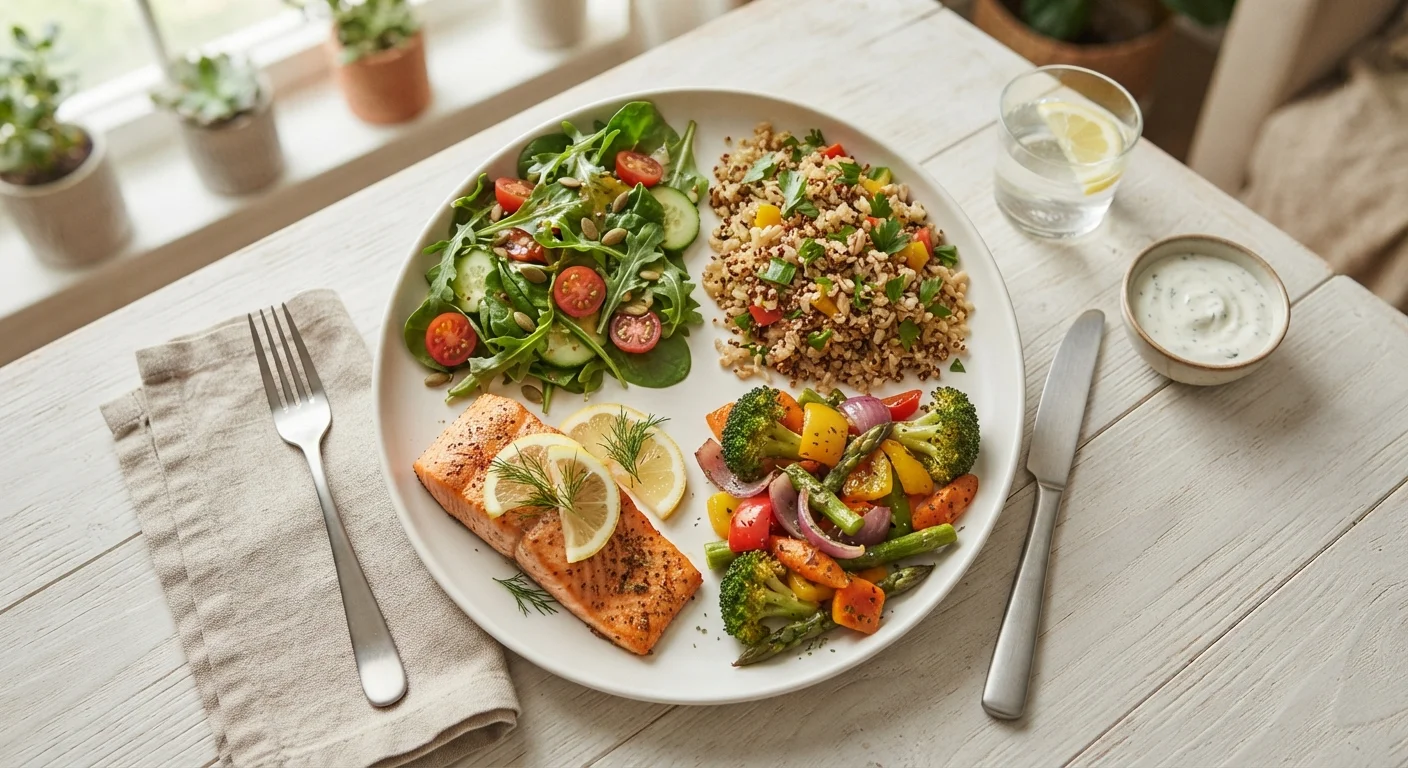
Photo credit: TopInfoTabs.com | Easy Insights For Inspiration
In this article
Beyond food pyramids and portion charts — a clear, practical breakdown of what nutritional balance means at every meal.
Key Takeaways
- Half your plate being vegetables or fruit is a well-supported starting point for most adults.
- Protein, whole grains, and healthy fats all belong at the table - none should be eliminated.
- Balance happens across meals and days, not necessarily within every single dish.
- Portion awareness matters more than strict measuring for most people.
- Context counts: activity level, age, and health status all affect what balance looks like for you.
The Problem With Eating Advice
Nutrition headlines are exhausting. One week carbohydrates are the enemy; the next, fat is back and protein is king. This constant churn makes it genuinely difficult to know what a reasonable, everyday meal should look like.
The good news is that the core principles of a balanced plate have been relatively consistent across major dietary guidelines for decades. The details get refined as research evolves, but the broad strokes - plenty of vegetables, adequate protein, quality carbohydrates, and some healthy fat - hold up well. To get grounded in the building blocks, our practical introduction to macronutrients is a useful starting point before diving into how those pieces combine on your plate.
This Is Education, Not a Prescription
The information here reflects broadly accepted nutritional frameworks and is intended for general educational use. Individual needs vary based on age, health status, activity level, and other factors. For personalized dietary guidance, consult a registered dietitian or your healthcare provider.
A Simple Visual Framework
Instead of weighing food or tracking grams, a plate-based model offers an intuitive way to check proportion at a glance. Here's a reliable starting framework:
- Half the plate: vegetables and fruit. Prioritize non-starchy vegetables - leafy greens, broccoli, peppers, zucchini - and use fruit as a complement rather than the foundation.
- One quarter: lean protein. This includes poultry, fish, eggs, legumes, tofu, or dairy. Variety across the week adds micronutrient breadth.
- One quarter: whole grains or starchy vegetables. Brown rice, quinoa, whole-wheat pasta, sweet potato, or oats. These provide sustained energy and dietary fiber.
- A smaller portion: healthy fat. Olive oil used in cooking, sliced avocado, or a small handful of nuts rounds out satiety and helps your body absorb fat-soluble vitamins.
This isn't a rigid template - it's a proportion check. A grain bowl, a stir-fry, or a hearty soup can all reflect these ratios without looking like the diagram.
~50%
Recommended plate share for vegetables and fruit
Both the USDA MyPlate and Harvard's Healthy Eating Plate recommend filling at least half the plate with vegetables and fruit at most meals.
1 in 10
U.S. adults meeting vegetable intake recommendations
According to CDC data, fewer than one in ten American adults meets federal recommendations for daily vegetable consumption.
25g+
Daily fiber target for most adults
The Dietary Guidelines for Americans suggest most adults consume at least 25-38 grams of dietary fiber per day, primarily from vegetables, legumes, and whole grains.
What Balance Really Means Day to Day
One of the most freeing shifts in how nutrition experts think about eating is moving from meal-by-meal perfection to pattern-based balance. A breakfast of oatmeal and fruit is light on protein; a protein-forward dinner compensates. That's still balance - just spread across the day.
This flexibility is particularly useful for people with busy schedules or limited cooking time. A simple lunch of canned salmon, whole-grain crackers, and a side salad qualifies. So does a veggie-heavy pasta dish with olive oil. The framework adapts.
Understanding what's actually in your food supports this kind of intuitive eating. Nutrition label literacy helps you decode packaged items quickly so you can make proportionate choices even on convenience-heavy days.
Use Your Hand as a Portion Guide
No scale needed: a cupped palm is roughly one serving of grains or starchy vegetables; a flat palm approximates a protein serving; a fist mirrors about a cup of vegetables. These rough guides work across body sizes because hands scale with the person. They're a practical starting point - not a clinical measurement.
Putting It Into Practice
Knowing the framework is one thing; building it into daily life is another. A few habits make a real difference:
- Start with vegetables. If you build your plate around vegetables first, protein and grains naturally take up less visual - and physical - space.
- Prep in batches. Cooked grains and washed greens in the fridge make balanced assembly much faster on weekday evenings.
- Vary your protein sources. Rotating between animal and plant-based proteins across the week broadens your nutrient profile without requiring major meal overhauls.
If you want to make this sustainable, meal planning without the overwhelm walks through a realistic approach to structuring your week around these principles. And when it comes to stocking your kitchen to support balanced eating, a practical grocery checklist can help translate the plate model into what you actually buy.
This article is for general informational and educational purposes only and is not a substitute for personalized medical or nutritional advice. Please consult a qualified healthcare professional or registered dietitian for guidance specific to your health needs.
Frequently Asked Questions

Author
Health & Wellness Editorial Team
Health & Wellness Editorial Team is the collective byline for our editorial team and contributor network. Articles published under this byline or an editorial pen name are researched, written, and reviewed according to our editorial standards for clarity, consistency, and independence before publication.
View all articles →