
Active Ingredients in Skincare: A Plain-Language Reference
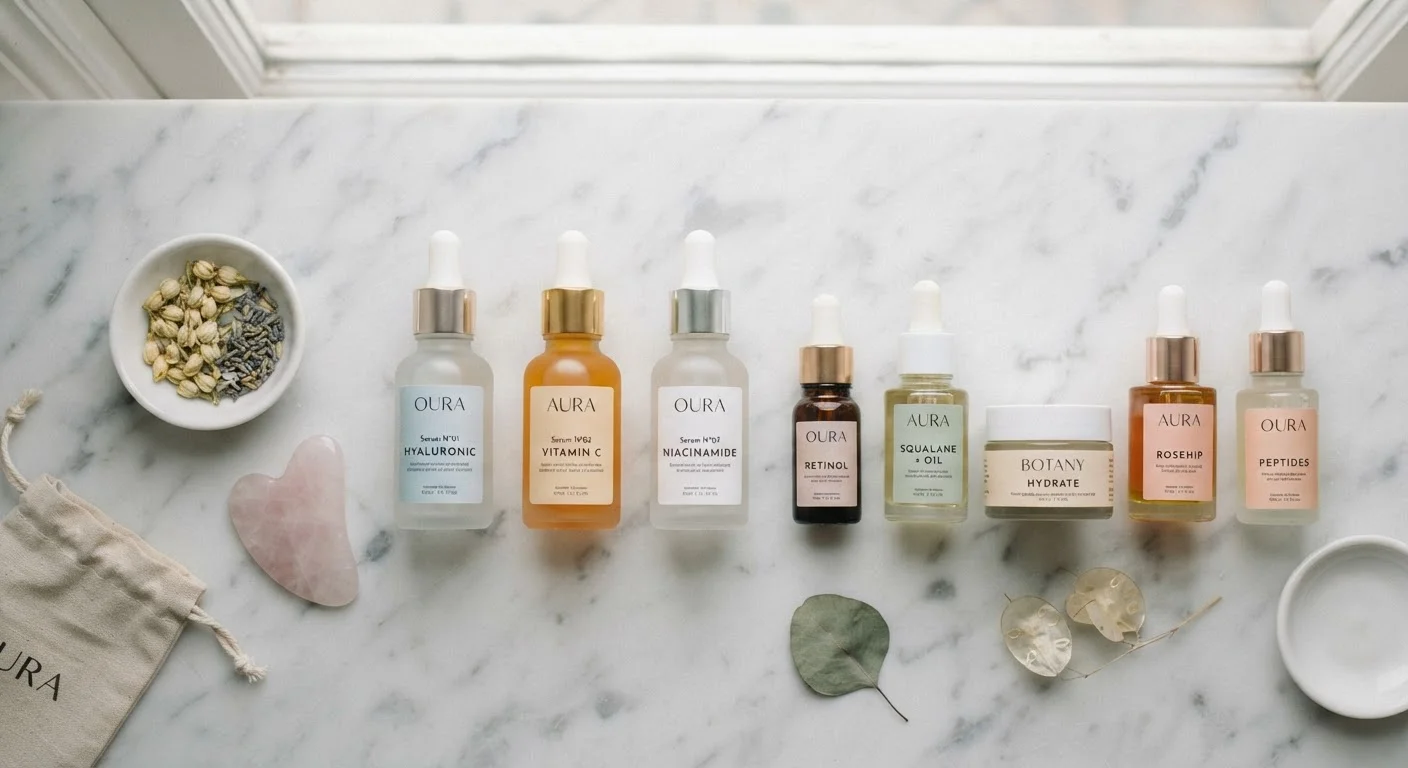
Photo credit: TopInfoTabs.com | Easy Insights For Inspiration
In this article
AHAs, BHAs, niacinamide, peptides — this reference guide explains what common actives do and which skin concerns they're typically used for.
What Makes an Ingredient 'Active'?
In skincare, an active ingredient is one that's scientifically shown to produce a measurable change in the skin - think exfoliation, increased cell turnover, or reduced pigmentation. Inactive ingredients (called excipients) keep a formula stable, spreadable, and pleasant to use, but they don't drive the skin benefit. Most products combine a small number of actives with a larger base of excipients.
Understanding which actives do what - and which skin concerns they're commonly paired with - is genuinely useful when you're standing in the skincare aisle feeling overwhelmed. For a deeper look at how to decode a full ingredient list, see how to read a skincare ingredient list. And if you're just starting out, building your first skincare routine is a great place to anchor this knowledge.
| What 'active' means | An ingredient clinically shown to change skin function or appearance |
| Common delivery formats | Serums, toners, exfoliants, moisturizers, and targeted treatments |
| Actives covered in this guide | AHAs, BHAs, niacinamide, retinoids, vitamin C, peptides, hyaluronic acid, azelaic acid |
| General introduction advice | Add one new active at a time to identify reactions and build tolerance (Widely recommended by dermatologists) |
| Sun protection note | Many actives (especially AHAs and retinoids) increase sun sensitivity - daily SPF is essential |
The Most Common Actives, Explained Simply
Here's a plain-language breakdown of the actives you'll encounter most often:
AHAs (Alpha Hydroxy Acids)
Water-soluble acids - such as glycolic and lactic acid - that exfoliate the skin's surface by loosening the bonds between dead skin cells. Commonly used for dullness, rough texture, and mild hyperpigmentation.
BHAs (Beta Hydroxy Acids)
Oil-soluble acids, most notably salicylic acid, that can penetrate into pores to dissolve excess sebum and dead skin. Often used for acne-prone and congested skin types.
Niacinamide
A form of vitamin B3 that helps support the skin barrier, reduce the appearance of pores, and calm redness. It's generally considered well-tolerated across most skin types.
Retinoids
Vitamin A derivatives (including retinol and prescription-strength tretinoin) that encourage cell turnover and collagen support. Used for fine lines, texture, and acne, but can cause initial irritation.
Vitamin C (L-Ascorbic Acid)
An antioxidant that can help brighten skin tone and defend against environmental stressors. Efficacy is closely tied to formulation stability and concentration.
Peptides
Short chains of amino acids that signal the skin to produce proteins like collagen. Often used in anti-aging formulations to support firmness and elasticity.
Hyaluronic Acid
A humectant that draws moisture to the skin's surface. Found in most hydrating serums; works best when applied to slightly damp skin.
Azelaic Acid
A naturally occurring acid with gentle exfoliating and anti-inflammatory properties. Frequently used for rosacea, post-acne marks, and sensitive skin prone to redness.
Keep in mind that concentration, formulation pH, and how you layer products all affect how well an active performs. Skincare layering order matters more than most people realize - applying actives in the wrong sequence can blunt their effect or increase irritation.
Some Actives Don't Play Well Together
Layering certain actives in the same routine - like a high-strength AHA with a retinoid - can increase irritation without adding benefit. Vitamin C at low pH and niacinamide are sometimes discussed as a combination to approach thoughtfully, though research on this interaction is nuanced. When in doubt, use strong actives on alternating nights or consult a dermatologist for a personalized pairing plan.
Matching Actives to Skin Concerns
No single active solves everything, and most people's skin benefits from a selective, thoughtful combination rather than piling on every trending ingredient. Knowing your skin type is the essential first step before introducing any new active. Here's a general pairing guide:
- Uneven tone or dullness: Vitamin C, AHAs, niacinamide
- Texture and congestion: BHAs (especially salicylic acid), AHAs
- Fine lines and firmness: Retinoids, peptides
- Dryness and barrier support: Hyaluronic acid, ceramides, peptides
- Redness and sensitivity: Niacinamide, azelaic acid
Actives like retinoids and high-strength acids can cause irritation during a transition period - introducing one new active at a time, a few nights a week, is a widely recommended approach. If you have persistent skin concerns, a dermatologist can give guidance tailored to your situation. Actives delivered in serums, essences, and ampoules are often the most concentrated; see what serums, essences, and ampoules are actually for to understand which formats tend to carry which types of actives.
1 at a time
New actives to introduce per routine change
Introducing actives gradually is broadly recommended by dermatologists to minimize irritation and identify any reactions.
pH matters
Why formulation details affect active performance
AHAs and BHAs require a low pH (typically 3-4) to exfoliate effectively; higher-pH formulations may deliver little benefit.
This article is for general informational and educational purposes only and is not medical or dermatological advice. Consult a qualified skincare professional or dermatologist for concerns about your individual skin.

Author
Style & Beauty Editorial Team
Style & Beauty Editorial Team is the collective byline for our editorial team and contributor network. Articles published under this byline or an editorial pen name are researched, written, and reviewed according to our editorial standards for clarity, consistency, and independence before publication.
View all articles →