
The Outfit Formula Approach: Dressing Well Without Making Daily Decisions
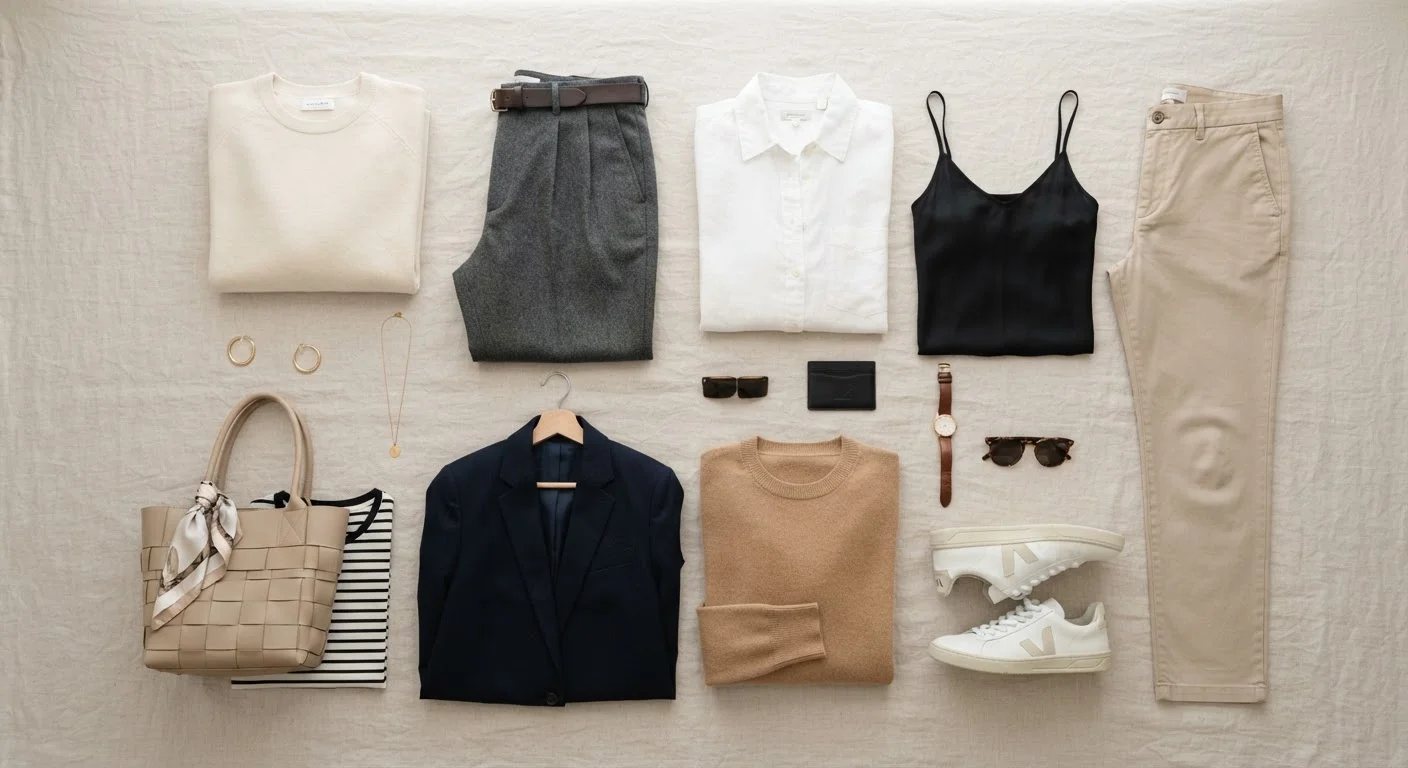
Photo credit: TopInfoTabs.com | Easy Insights For Inspiration
In this article
Outfit formulas reduce decision fatigue and make everyday dressing feel effortless. Here's how to identify and use the combinations that work for you.
Key Takeaways
- Outfit formulas are repeatable clothing combinations that remove daily decision fatigue entirely.
- You don't need more clothes - you need reliable patterns built from what you already own.
- Proportion, fit, and colour harmony matter far more than following current trends.
- Identifying three to five personal formulas gives you enough variety for a full week.
- Small adjustments - swapping a shoe or layering piece - keep formulas feeling fresh.
What an Outfit Formula Actually Is
An outfit formula is a repeatable structural combination - think tailored trousers + fitted knit + loafers, or midi skirt + tucked tee + flat sandals - that you already know looks and feels good on you. It isn't a rigid uniform, and it doesn't mean wearing identical clothes every day. It means trusting a proven blueprint so your brain doesn't have to start from scratch each morning.
The concept borrows from the same logic as meal planning - you're not deciding what to eat at 6 p.m. when you're hungry; you're deciding in advance when it's easier to think clearly. Outfit formulas do the same for your wardrobe. Once a pattern is established, getting dressed becomes execution, not invention.
If you've ever pulled on a specific combination and thought this just works, you've already discovered a formula. The practice is simply about recognising, naming, and repeating it intentionally. For a deeper look at what makes outfits click or fall flat, see the hidden reasons your outfits feel off.
How to Identify Your Personal Formulas
Start by looking backwards, not forwards. Go through your camera roll or simply recall the outfits you've worn on days when you felt pulled-together without much effort. What do they have in common? Look for structural patterns: the silhouette balance (fitted top, relaxed bottom, or vice versa), the number of colours or prints, the shoe style, and whether you added a layer.
Audit your recent outfits before building any new combinations.
Looking at what you've actually worn - rather than what you aspire to wear - reveals honest patterns. It prevents you from building formulas around clothes that never leave the hanger.
Name each formula in plain structural terms, not mood or aesthetic labels.
Describing a formula as 'tapered trouser + tucked shirt + pointed flat' is actionable; 'Parisian chic' is not. Concrete descriptions make it easy to execute the formula quickly and adapt it across seasons.
Identify at least one item that works across multiple formulas before buying anything new.
Versatile anchor pieces - a well-fitting white shirt, a straight-leg trouser in a neutral - multiply the number of outfits you can build without multiplying your wardrobe. This reduces both spending and clutter.
Test each formula in real conditions before relying on it.
A combination that looks right on a hanger may feel uncomfortable or impractical once you're moving through your actual day. Testing surfaces fit issues, proportion problems, or comfort gaps before they become morning-of stressors.
Build formulas around fit and comfort first, then refine for aesthetics.
Clothes that don't fit well or feel uncomfortable will be avoided regardless of how good the combination looks in theory. Comfort and correct fit are what make a formula sustainable over hundreds of wearings.
Most people naturally gravitate toward two or three structures without realising it. Writing them down - even informally - transforms a vague instinct into a usable tool. From there, it becomes easy to see which items in your wardrobe serve multiple formulas and which ones don't serve any, which is useful information on its own.
For guidance on the structural principles that make combinations work, proportion and fit is a practical place to start.
Keeping Formulas Fresh Without Overthinking
The worry most people have is that formulas will feel monotonous. In practice, the opposite tends to be true - because the structure is stable, small variations feel intentional rather than random. Swapping a white tee for a striped one within the same formula reads as a deliberate choice rather than a last-minute compromise.
Colour, texture, and proportion shifts do the heavy lifting. A formula built around straight-leg jeans and a neat top works equally well in winter with a chunky cardigan and ankle boots as it does in summer with a linen shirt and slides. The bones of the outfit stay the same; the season-appropriate materials change.
If you'd like to build habits that make this kind of dressing feel automatic rather than effortful, wardrobe confidence habits walks through the day-to-day practices that reinforce a reliable personal style. And for readers curious about where the outfit formula approach diverges from the idea of a strict daily uniform, the personal uniform trade-offs offers a balanced look at both approaches.
Start With Three Formulas, Not Ten
Three solid, tested formulas cover most of your week. Trying to build a comprehensive system all at once leads to the same overwhelm you're trying to escape. Add a new formula only when a gap in your week genuinely can't be filled by an existing one - not because a new combination looks appealing in theory.

Author
Style & Beauty Editorial Team
Style & Beauty Editorial Team is the collective byline for our editorial team and contributor network. Articles published under this byline or an editorial pen name are researched, written, and reviewed according to our editorial standards for clarity, consistency, and independence before publication.
View all articles →