
The Upsides and Downsides of Having a Rigid Personal Uniform
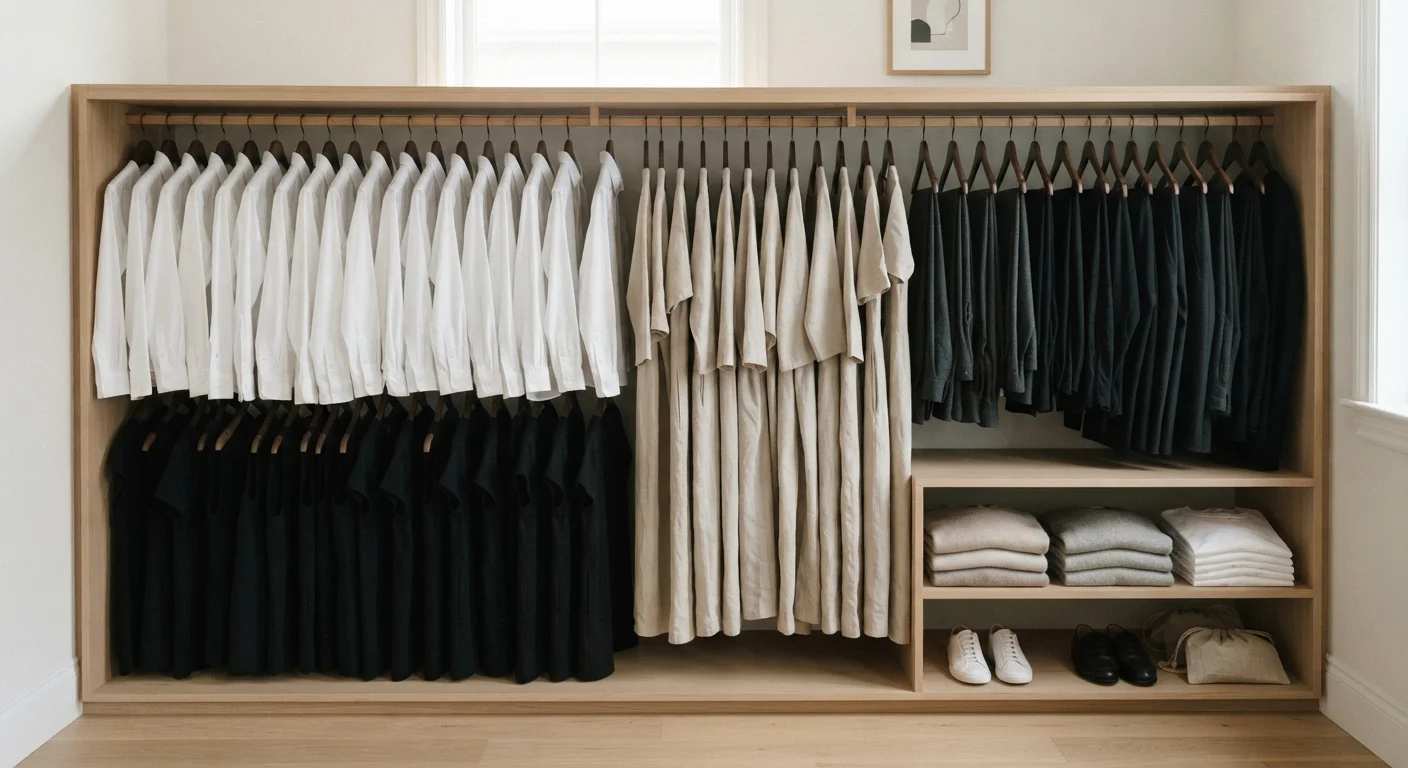
Photo credit: TopInfoTabs.com | Easy Insights For Inspiration
In this article
Wearing the same type of outfit every day has real advantages — but also genuine trade-offs. A balanced look at the personal uniform approach.
Key Takeaways
- A personal uniform reduces daily decision fatigue by removing outfit choices from your morning routine.
- Wearing a consistent look can sharpen your personal identity and make you more memorable to others.
- Rigid uniforms may limit self-expression and make dressing for varied occasions feel awkward.
- Shopping becomes more intentional but less spontaneous when you commit to a single formula.
- The approach suits some lifestyles and personalities far better than others - there's no universal answer.
Dramatically reduces morning decision fatigue
Eliminating outfit choices from your daily mental load frees up cognitive energy for things that actually require your attention. Research on decision fatigue suggests that the quality of our choices can decline the more decisions we make - dressing on autopilot sidesteps that drain entirely.
Builds a clear, recognizable personal identity
A consistent visual presentation tells the world something deliberate about who you are. Over time, your aesthetic becomes a shorthand for your values and personality - something that feels grounding rather than restrictive.
Makes shopping more intentional and less wasteful
When you know exactly what you wear, impulse purchases lose their pull. You buy to replace or upgrade specific pieces rather than chasing trends, which generally means spending less money on clothes that actually get worn.
Reduces wardrobe clutter significantly
A uniform naturally limits how much you own, since variety isn't the goal. A smaller, more curated wardrobe is easier to maintain, store, and get dressed from - the physical space benefit is real.
Encourages investment in quality over quantity
When you're buying the same types of pieces repeatedly, it makes sense to buy the best version you can reasonably afford. Over time, this tends to mean better-fitting, longer-lasting clothing.
Limits creative self-expression through clothing
For many people, getting dressed is genuinely playful - a daily micro-creative act. A rigid uniform removes that outlet entirely, which can feel like a real loss if fashion has been part of how you process or express mood and identity.
Can feel awkward for varied social occasions
A formula built for your standard workday may not translate to a wedding, a beach holiday, or a formal dinner. Navigating these exceptions can become stressful precisely because they fall outside the rules you've built your wardrobe around.
Risks locking in a style you'll eventually outgrow
Personal style naturally evolves with age, body changes, and life shifts. A very rigid uniform can make it harder to update your look gradually - changes feel more disruptive when they require rethinking an entire system.
May be perceived as monotonous by others
While consistency can read as intentional, some social and professional environments still equate variety with effort or creativity. This is worth factoring into your context, even if you personally disagree with that perception.
Requires deep self-knowledge to get right from the start
Committing to a uniform before you truly understand your style preferences often backfires - you risk embedding choices that felt good temporarily into a rigid system. The initial investment of self-discovery is real and shouldn't be skipped.
What Is a Personal Uniform, Exactly?
A personal uniform isn't about wearing a literal identical outfit every day - though some people do. It's a deliberate commitment to a narrow set of clothing combinations that you return to consistently, often built around a single silhouette, color palette, or fabric category. Think: dark jeans, a clean white shirt, and loafers. Every day, slight variations of the same formula.
The idea gained cultural traction partly because several well-known public figures adopted it openly - citing focus and efficiency as reasons. But beyond high-profile adoption, it resonates with everyday people who are exhausted by the volume of choices modern wardrobes demand. If you're curious about how outfit formulas work as a slightly less rigid alternative, see The Outfit Formula Approach for a nuanced breakdown.
The Real Advantages Worth Considering
There's a reason smart, busy people swear by the personal uniform. The benefits aren't just aesthetic - they ripple into productivity, confidence, and spending habits.
Dramatically reduces morning decision fatigue
Eliminating outfit choices from your daily mental load frees up cognitive energy for things that actually require your attention. Research on decision fatigue suggests that the quality of our choices can decline the more decisions we make - dressing on autopilot sidesteps that drain entirely.
Builds a clear, recognizable personal identity
A consistent visual presentation tells the world something deliberate about who you are. Over time, your aesthetic becomes a shorthand for your values and personality - something that feels grounding rather than restrictive.
Makes shopping more intentional and less wasteful
When you know exactly what you wear, impulse purchases lose their pull. You buy to replace or upgrade specific pieces rather than chasing trends, which generally means spending less money on clothes that actually get worn.
Reduces wardrobe clutter significantly
A uniform naturally limits how much you own, since variety isn't the goal. A smaller, more curated wardrobe is easier to maintain, store, and get dressed from - the physical space benefit is real.
Encourages investment in quality over quantity
When you're buying the same types of pieces repeatedly, it makes sense to buy the best version you can reasonably afford. Over time, this tends to mean better-fitting, longer-lasting clothing.
35,000
Decisions the average adult makes per day
Commonly cited estimates in decision-science literature suggest adults make tens of thousands of decisions daily, with many researchers pointing to cognitive load as a reason to automate low-stakes choices.
~30%
Clothes in a typical wardrobe never worn
Consumer behavior studies and wardrobe audits have repeatedly found that a significant portion of owned clothing goes unworn, suggesting that variety in wardrobes often outpaces actual use.
Beyond decision fatigue, a uniform can strengthen how others perceive you. Consistency in appearance often reads as intentionality, and that matters in professional and social contexts alike. For more on building everyday wardrobe confidence, these grounded daily habits are worth a read.
The Downsides You Shouldn't Ignore
The personal uniform isn't a frictionless solution. Before committing, it's worth sitting honestly with what you might give up.
Limits creative self-expression through clothing
For many people, getting dressed is genuinely playful - a daily micro-creative act. A rigid uniform removes that outlet entirely, which can feel like a real loss if fashion has been part of how you process or express mood and identity.
Can feel awkward for varied social occasions
A formula built for your standard workday may not translate to a wedding, a beach holiday, or a formal dinner. Navigating these exceptions can become stressful precisely because they fall outside the rules you've built your wardrobe around.
Risks locking in a style you'll eventually outgrow
Personal style naturally evolves with age, body changes, and life shifts. A very rigid uniform can make it harder to update your look gradually - changes feel more disruptive when they require rethinking an entire system.
May be perceived as monotonous by others
While consistency can read as intentional, some social and professional environments still equate variety with effort or creativity. This is worth factoring into your context, even if you personally disagree with that perception.
Requires deep self-knowledge to get right from the start
Committing to a uniform before you truly understand your style preferences often backfires - you risk embedding choices that felt good temporarily into a rigid system. The initial investment of self-discovery is real and shouldn't be skipped.
There's also a subtler psychological cost: if you adopted a uniform before you had a clear sense of your own style, it can lock you into an identity that no longer fits. Owning a signature style explores exactly this tension - when a consistent look feels liberating versus when it starts to feel like a cage.
Who Thrives With a Uniform - and Who Doesn't
The personal uniform isn't universally right or wrong. It suits specific lifestyles and temperaments far better than others.
It tends to work well for:
- People with consistent daily routines (same workplace, similar social calendar)
- Those who find decision-making genuinely draining in the mornings
- Anyone who already knows their body, fit preferences, and color comfort zone
- Minimalists who want fewer, higher-quality pieces rather than variety
It tends to chafe for:
- People whose social or professional life spans very different dress codes
- Anyone who uses fashion as a form of daily creative expression
- Those still exploring what styles genuinely suit them
- Shoppers who find joy in browsing and discovering new pieces
The Uniform vs. Routine Connection
Adopting a personal uniform is essentially a style-specific form of structured routine - and the psychological effects overlap with those seen in other rigid daily structures. If you're weighing how much structure generally helps or hinders your wellbeing, structured routines vs. flexible schedules offers a broader perspective on how predictability affects mood and stress. Your relationship with routine in other areas of life is a useful signal for how a clothing uniform might land.
If your main goal is simply a faster, less stressful morning, a full uniform isn't the only path. Getting dressed faster without sacrificing how you look covers practical wardrobe organization strategies that add speed without rigidity. And if your outfit frustrations feel deeper - like clothes that look fine but feel off - The Hidden Reasons Your Outfits Feel 'Off' may surface what's actually going on.

Author
Style & Beauty Editorial Team
Style & Beauty Editorial Team is the collective byline for our editorial team and contributor network. Articles published under this byline or an editorial pen name are researched, written, and reviewed according to our editorial standards for clarity, consistency, and independence before publication.
View all articles →